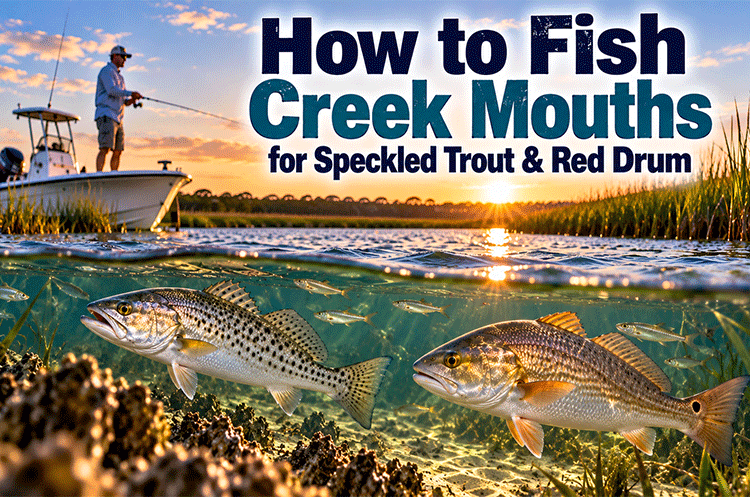
Some of the most productive inshore fishing locations around Topsail Island are also among the easiest to overlook. A small opening in the marsh grass, where a tidal creek empties into the Intracoastal Waterway or a larger channel, may not look especially impressive. But beneath the surface, that narrow opening can become a natural feeding station for speckled trout and red drum.
Creek mouths concentrate several ingredients that predatory fish need: moving water, baitfish, shrimp, changing depths and access to protected marsh habitat. As the tide rises and falls, these locations become natural travel corridors for both bait and predators.
Learning how to fish creek mouths means understanding more than where to cast. Successful anglers learn to identify current seams, deeper channels, oyster points, marsh drains and the subtle differences in how speckled trout and red drum use the same structure.
Whether you’re fishing from a boat, kayak or accessible shoreline around Topsail Island, understanding creek-mouth fishing can help turn an ordinary-looking stretch of marsh into one of your most reliable inshore fishing locations.
Why Creek Mouths Attract Speckled Trout and Red Drum
A creek mouth is the point where a smaller tidal creek connects with a larger body of water. Around Topsail Island, these connections occur throughout the marsh systems bordering the Intracoastal Waterway, Topsail Sound, New River and nearby coastal waterways.
Twice each tidal cycle, water moves into and out of these smaller creeks. That movement transports shrimp, mud minnows, finger mullet, small crabs and other forage between the marsh and deeper channels.
For predators, creek mouths provide an opportunity to feed without constantly chasing prey across open water.
Speckled trout often position along current seams, channel edges and deeper pockets where moving water carries bait within striking distance. Red drum frequently patrol shallower creek edges, oyster points and marsh grass where crabs, shrimp and small fish become concentrated.
Both species may feed around the same creek mouth, but they don’t always occupy exactly the same water.
The key is recognizing how moving water positions the bait—and how predators position themselves to intercept it.
Learn to Read the Anatomy of a Creek Mouth
Not every creek mouth is equally productive. Some are little more than shallow openings in the marsh, while others combine depth, structure and current in ways that consistently attract fish.
Before making your first cast, look for several important features.
1. The Main Creek Channel
Many tidal creeks have a deeper channel running through their center. This channel may continue beyond the creek mouth into the larger waterway.
During falling water, baitfish and shrimp often follow these deeper channels as the surrounding shallows become less accessible.
Speckled trout may hold near the channel edge, while red drum patrol the shallower margins.
2. Current Seams
When water flowing from a creek meets the current of the ICW or another larger channel, the two flows may create a visible seam.
Look for changes in surface texture, foam lines, floating grass or small eddies. These features can reveal where faster and slower water meet.
Predatory fish often use the slower side of a seam while watching for bait carried through the stronger current.
3. Oyster Points
Oyster bars frequently border creek mouths, creating hard edges that redirect tidal flow.
A creek mouth with oysters on one side and deeper water on the other can be particularly attractive because it combines food, current and structure.
Our How to Fish Oyster Bars for Red Drum & Speckled Trout guide explains how to identify productive oyster edges and fish them without constantly snagging shell.
4. Deeper Scour Holes
Strong tidal flow can carve deeper pockets immediately outside a creek mouth or around nearby points.
These holes provide holding water for fish when the surrounding flats become too shallow or when current becomes especially strong.
During cooler weather, deeper pockets near feeding areas can become increasingly valuable.
5. Marsh Grass Edges
Flooded marsh grass provides access to crabs, shrimp and small baitfish. Red drum may move close to these edges as the tide rises.
When water begins draining, fish can reposition near the creek mouth to intercept prey leaving the marsh.
The Falling Tide: When Creek Mouths Become Feeding Funnels
For many anglers, a falling tide is one of the most productive times to fish a creek mouth.
As water drains from the marsh, shrimp, minnows and other forage move toward deeper channels. In smaller creeks, that movement can concentrate bait into a relatively narrow opening.
Instead of searching an entire marsh system, predatory fish can wait near the creek mouth and let the current deliver food.
Look for water visibly flowing from the creek into the larger channel. Pay attention to the downstream side of oyster points, channel edges and small eddies.
Try positioning outside the creek mouth and casting toward the outgoing flow. Allow your lure to travel naturally through the current seam.
Speckled trout may hold slightly deeper along the edge of the outgoing current, while red drum often work closer to the shoreline, oysters or shallow channel margins.
However, avoid assuming that the strongest current always produces the best fishing. During extremely fast flow, fish may move into protected pockets immediately beside the main current.
Our Topsail Island Tide Guide provides additional guidance on understanding tidal movement and planning fishing trips around changing water levels.
The Rising Tide: Follow the Fish Into the Marsh
A rising tide changes the fishing pattern.
As water pushes into a creek, previously exposed oyster bars, mud flats and marsh edges become accessible to feeding fish.
Red drum may move progressively shallower, following shrimp and crabs into flooded grass edges and small side channels.
Speckled trout may remain near the creek entrance, particularly where deeper water, current and bait are still concentrated.
During the early stages of the incoming tide, begin by fishing the deeper creek-mouth edges. As water rises, expand your search toward shallow points and marsh grass.
A paddle tail worked along the flooded edge or a popping cork carrying shrimp through the creek entrance can be effective.
The important lesson is that fish location changes with water level. A productive position on the falling tide may be nearly empty once fish have moved farther into the marsh.
Slack Tide: Change Your Strategy
When tidal movement slows near high or low water, the feeding pattern can change.
Without strong current transporting bait, predators may become less concentrated around the creek entrance.
That doesn’t mean fish stop feeding, but the obvious current-driven ambush points may become less productive.
During slack water, investigate nearby depth changes, docks, oyster edges and areas where baitfish remain concentrated.
Slower presentations can be helpful, especially when speckled trout are holding in deeper water.
If the creek mouth appears lifeless, consider moving to another location until meaningful tidal flow returns.
Best Lures and Baits for Creek-Mouth Fishing
Creek mouths offer opportunities to use several effective inshore presentations. The best choice depends on current speed, water depth, bait activity and the species you’re targeting.
1. Paddle Tails on Jig Heads
A 3- to 4-inch paddle tail is one of the most versatile artificial lures for creek-mouth fishing.
Cast up-current or across the flow and allow the lure to move naturally along a channel edge. Retrieve just fast enough to maintain control while keeping the lure near the strike zone.
In shallow or moderate current, a 1/8-ounce jig head may be sufficient. Deeper water or stronger current may require a 1/4-ounce head or additional weight.
Use the lightest practical weight that allows you to maintain the intended depth and presentation.
2. Suspending Twitchbaits
Suspending twitchbaits can be particularly effective for speckled trout holding along deeper creek-mouth edges.
Cast across the current seam and retrieve using a twitch-twitch-pause cadence.
The pause allows the lure to remain in front of fish that may be reluctant to chase a fast-moving bait.
As water temperatures fall later in autumn, lengthening the pause can become increasingly productive.
3. Popping Corks with Shrimp
A popping cork rigged with live or artificial shrimp is an excellent way to cover creek-mouth edges while keeping the bait above oysters and other snag-producing structure.
Cast up-current and let the cork drift through the feeding lane.
Give the cork an occasional sharp pop, then allow the shrimp to settle naturally beneath it.
Adjust leader length to keep the bait near the fish without dragging bottom.
4. Live Shrimp and Mud Minnows
Natural bait can be highly effective when fish are feeding selectively.
Live shrimp and mud minnows can be presented beneath a float or on a light bottom-oriented rig, depending on depth and structure.
Avoid allowing the bait to settle into oyster beds or submerged debris where snags become likely.
The objective is to present bait where predators are waiting, not simply to let it drift wherever the current carries it.
5. Topwater Plugs
During warmer fall conditions, topwater plugs can produce exciting strikes around shallow creek mouths, especially during early morning and low-light periods.
Work a walking-style plug along marsh edges, shallow points and areas where baitfish are visibly active.
Topwater fishing is particularly useful when red drum and speckled trout are feeding near the surface.
How to Position Your Boat or Kayak
Boat positioning can determine whether your lure moves naturally through the feeding zone or misses it entirely.
Whenever possible, approach a creek mouth quietly and remain far enough away to avoid disturbing shallow fish.
Study the direction of the current before choosing your position.
For outgoing water, position where you can cast toward the creek mouth and allow your lure to sweep along the edge of the flow.
For incoming water, consider working the creek entrance from outside, allowing your presentation to move toward the interior structure.
Kayak anglers can often reach smaller creeks inaccessible to larger boats, but they must pay close attention to changing water levels. A creek that is easily navigated at high tide may become extremely shallow as the water falls.
Also watch for submerged oyster bars, strong currents and narrow channels where boat traffic may create hazardous conditions.
Speckled Trout: Target the Deeper Current Seams
Speckled trout often use creek mouths as ambush locations, especially during fall when baitfish and shrimp begin moving out of the marshes.
Instead of immediately casting into the shallowest water, begin by working the deeper channel edge and slower water beside the main current.
Pay particular attention to locations where the creek channel intersects a larger channel or where an oyster point creates a current break.
Trout frequently school, so one strike may indicate additional fish holding nearby.
After catching a trout, repeat the same presentation and retrieve angle before moving.
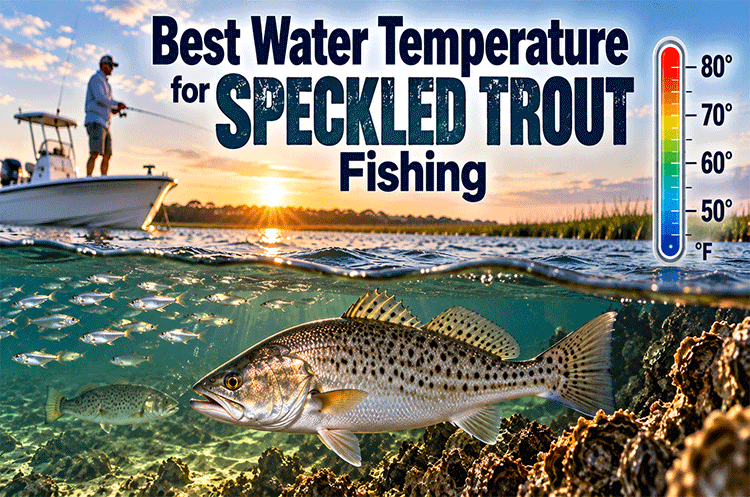
Water temperature also influences how trout use these areas. As fall cooling progresses, trout may become more concentrated around productive feeding locations before transitioning toward deeper winter habitat.
For more on that seasonal change, read our Best Water Temperature for Speckled Trout Fishing guide and our Fall Speckled Trout Blitz Topsail Island article.
Red Drum: Work the Shallow Edges and Marsh Drains
Red drum often approach creek mouths differently from speckled trout.
While trout may hold along deeper current seams, red drum frequently patrol the shallower edges, oyster points and marsh grass where crabs and shrimp are abundant.
During a rising tide, reds may move into shallow side creeks and flooded grass.
As water falls, they can retreat toward the main creek channel and feed along drains where bait is being concentrated.
Accurate casts are important. A paddle tail or live shrimp placed near a small drain or oyster point may produce a strike even when nearby open water appears lifeless.
Watch for nervous bait, jumping shrimp, small wakes and other signs of fish moving through shallow water.
Our Fall Red Drum Fishing: Topsail Island Tactics & Setup guide explores additional redfish behavior, tackle choices and seasonal presentations.
Where to Find Productive Creek Mouths Around Topsail Island
The Topsail Island area offers extensive tidal creek habitat. Rather than focusing on one specific location, learn to recognize the features that make creek mouths productive throughout the region.
Sneads Ferry and the New River
The New River and surrounding marsh systems contain numerous tidal creeks, oyster-lined shorelines and channel intersections.
Look for smaller creek mouths connecting to deeper river channels, particularly where moving water passes oyster points or creates noticeable current seams.
North Topsail Beach and Topsail Sound
The sound-side marshes near North Topsail Beach offer opportunities to explore shallow creek mouths and marsh drains.
Pay attention to water depth and tidal stage, especially when fishing by kayak or navigating smaller creeks.
Surf City and the Intracoastal Waterway
The ICW around Surf City provides access to marsh creek mouths, dock structure and channel edges.
Creek mouths where smaller tidal flows meet the larger waterway can be productive when bait is moving and current is favorable.
Remain alert to boat traffic and avoid anchoring or positioning where you obstruct navigation.
Topsail Beach and Southern Sound Waters
The southern Topsail area contains marsh edges, tidal creeks and connections toward New Topsail Inlet.
Look for creek mouths with nearby deeper water, oyster structure and visible bait activity.
Across all these areas, remember that productive creek mouths are identified by their features and conditions—not simply by their location on a map.
Common Creek-Mouth Fishing Mistakes
Even experienced anglers can overlook productive fish by making a few simple mistakes.
- Fishing only the center of the creek mouth: Fish may hold along the edges, behind oyster points or in slower current.
- Ignoring the tide: A creek mouth that produces fish on falling water may require a completely different approach on a rising tide.
- Retrieving too quickly: A lure moving unnaturally against strong current may spend very little time in the feeding zone.
- Positioning too close: Boat noise and shadows can disturb shallow red drum.
- Using excessive jig-head weight: Heavy lures can drag through oysters and debris instead of swimming naturally.
- Leaving immediately after one cast: Fish may be concentrated along a narrow seam that requires several casting angles to locate.
- Ignoring bait activity: Moving shrimp and baitfish often provide better information than the appearance of the structure alone.
Protect the Marsh Habitat You’re Fishing
Tidal creeks and marshes provide important habitat for fish, shrimp, crabs and numerous other coastal species.
Avoid damaging oyster beds, running boats through shallow marsh vegetation or disturbing sensitive shoreline habitat.
Use appropriate tackle to land fish efficiently and handle released fish carefully. Speckled trout are especially vulnerable to rough handling because of their delicate mouths and protective slime coating.
Before harvesting red drum or spotted seatrout, check current North Carolina Division of Marine Fisheries regulations for applicable size limits, bag limits and seasonal restrictions.
Protecting these habitats helps maintain the fishing opportunities that make Topsail Island’s inshore waters so productive.
Putting It All Together: Fish the Current, Not Just the Creek
Learning how to fish creek mouths for speckled trout and red drum begins with understanding what the tide is doing to the water.
On a falling tide, look for bait being pulled from marsh creeks toward deeper channels. Fish current seams, oyster points and the edges of outgoing flow.
On a rising tide, follow the expanding water toward flooded grass, shallow oyster edges and creek entrances where predators can access new feeding areas.
For speckled trout, concentrate on deeper current seams, channel edges and ambush points. For red drum, investigate shallow margins, marsh drains and oyster-lined banks.
Use paddle tails, suspending twitchbaits, popping corks or natural bait to match the conditions, and pay attention to how your presentation moves with the current.
Most importantly, remember that the best creek mouth isn’t necessarily the largest or most obvious one. It’s the one where moving water, bait, structure and depth come together at the right time.
Once you learn to recognize those ingredients, you’ll begin seeing productive fishing opportunities throughout the tidal creeks and marshes surrounding Topsail Island.
Stay Informed and Get Involved
North Carolina’s fisheries are constantly evolving as new research, public input, and management decisions shape future regulations. Whether you support the current flounder rules or believe changes are needed, staying informed is the best way to make your voice heard. The North Carolina Division of Marine Fisheries (NCDMF) provides fisheries research, stock assessments, proclamations, and recreational fishing information. The North Carolina Marine Fisheries Commission (MFC) establishes many of the policies and regulations governing coastal fisheries and regularly accepts public comment. The North Carolina Wildlife Resources Commission (NCWRC) oversees Inland and Joint Fishing Waters and publishes regulations affecting anglers across the state. We encourage every fisherman—whether recreational or commercial—to follow these agencies, review proposed rule changes, and participate in the public process. Well-informed anglers help build better fisheries for everyone.
Keep Building Your Topsail Fishing Skills
Want to put this technique to work on your next trip? Use these Topsail.Fish resources to check current fishing activity, match your tactics to the season, review local conditions, and find more step-by-step fishing guides.
🎣 Planning a fishing trip to coastal North Carolina? Before choosing a charter destination, discover why many anglers prefer Topsail Island’s less crowded waters, productive back bays, and outstanding inshore and surf fishing opportunities.
🎣 Planning a trip to the NC coast? Before you book a boat down south, check out why Topsail vs. Wilmington fishing offers a better backwater experience. 🎣
Own a Fishing Charter Around Topsail Island?
Get your business in front of local anglers searching for fishing charters, guides, and inshore adventures on Topsail.Fish. Our directory listings are designed to help captains improve online visibility, increase bookings, and build a stronger local presence.
Professional listings start at just $12/month.