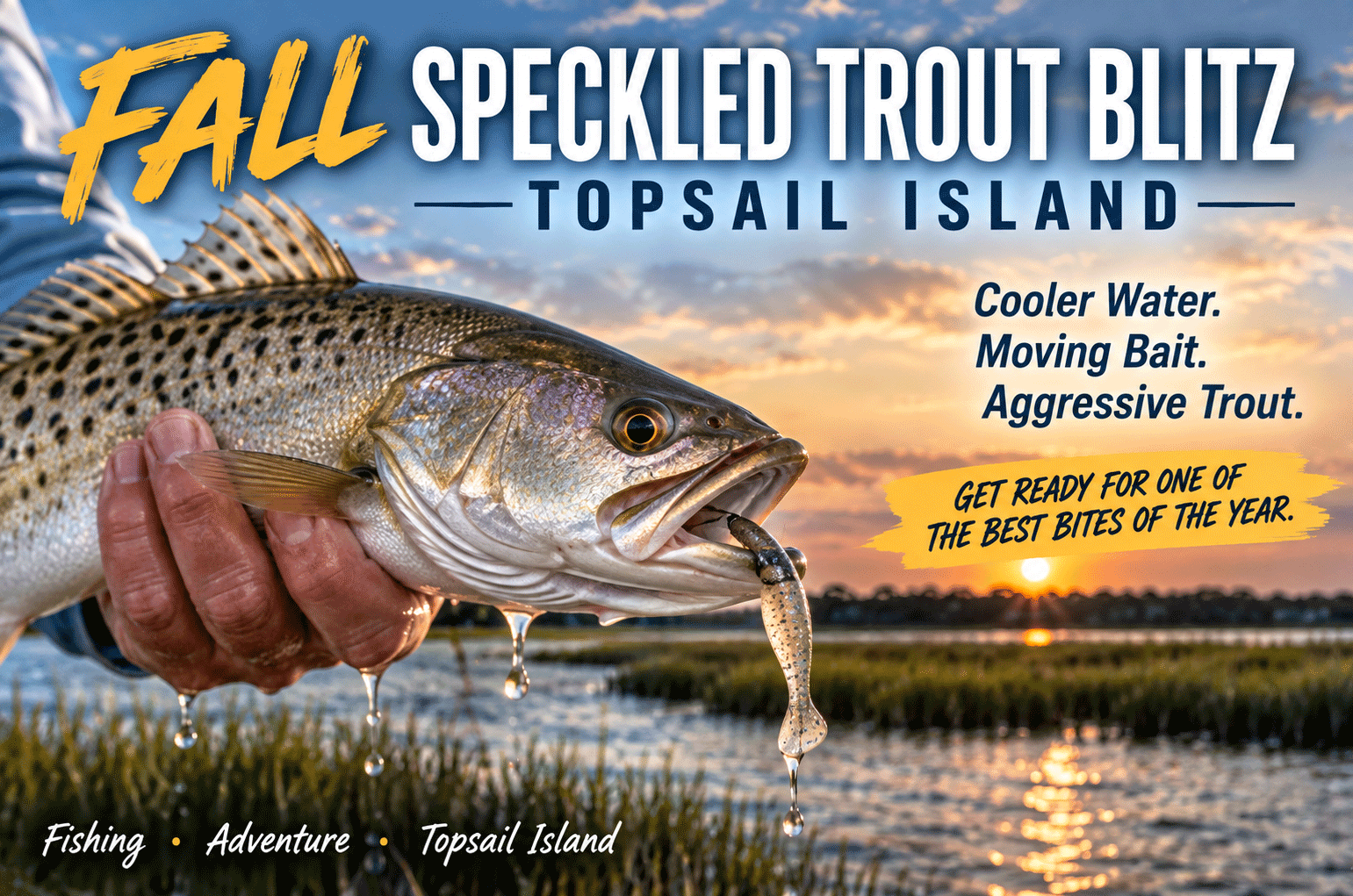
We have to wait for it but soon, summer’s blistering heat yields to crisp autumn mornings, a electrifying shift occurs in the inshore waters of Topsail Island. Water temperatures drop into the golden 60-to-70-degree window, baitfish pour out of the estuaries, and Cynoscion nebulosus—the spotted seatrout, or “speckled trout”—begins its legendary fall feeding frenzy. Along the North Carolina coast, this seasonal migration triggers what local anglers reverently refer to as the “fall trout blitz.”
During the blitz, specks abandon their deep summer haunts and gather in massive, aggressive schools across Topsail’s backwaters, inlets, and surf sloughs. They are on a mission to gorge on migrating finger mullet, glass minnows, and penaeid shrimp before winter settles in. For light-tackle anglers, there is no finer time of year to be on the water. In this comprehensive guide, we will break down the mechanics of the fall blitz, explore essential tackle setups, examine how trout perceive lures, and identify the top local hotspots across Topsail Island.
The Anatomy of the Fall Blitz: Why Autumn Heat Up the Bite
The fall speckled trout blitz is driven by three intersecting environmental triggers: water temperature drops, mass bait migrations, and tidal acceleration.
1. Thermal Activation
Speckled trout are cold-blooded predators that become sluggish in mid-summer’s 85-degree water. But as autumn cold fronts push down the Atlantic coast, dropping water temperatures into the lower 70s and 60s, a trout’s metabolism spikes. They transition into hyper-drive, actively hunting throughout the day rather than restricting their feeding to brief dawn or dusk windows.
2. The Baitfish Exodus
Fall forces millions of juvenile finger mullet, menhaden (pogies), and white shrimp out of shallow salt marshes and down primary creek channels toward the Intracoastal Waterway (ICW) and ocean inlets. Speckled trout set up ambush points at key “squeeze points”—creek mouths, oyster points, and bridge pilings—waiting to intercept this relentless conveyor belt of food.
3. Schooling Aggression & Competition
Unlike large winter “gator” trout that often hunt solo or in small packs, fall specks form dense, competitive schools. When one fish strikes a bait in a feeding frenzy, surrounding trout react instinctively to snatch competing prey. This creates fast-paced action where anglers can land fish on nearly every cast once a school is located.
Visual and Lateral Line Dynamics: Matching How Trout See
To consistently hook speckled trout during the fall blitz, you must understand how they target prey in varying water conditions. Speckled trout are apex visual hunters, possessing large eyes designed to look upward toward the surface or mid-water column for silhouetted prey. However, when fall wind, rain, or heavy tidal flow turns backwater channels murky, their lateral line—which detects tiny hydraulic vibrations—takes over.
Understanding how light, water clarity, and lure contrast dictate a trout’s strike response is what separates average days from limit-out days. For a masterclass on how fish process light, color spectrums, and contrast in coastal waters, check out our featured breakdown in The Parsons Perspective: How Fish See and What It Means to Fishing with Captain Lee Parsons. Captain Lee explains the precise optical mechanics fish use to track moving targets, giving you an undeniable edge when selecting lure colors and flash patterns for clear or discolored autumn water.
Essential Gear & Tackle for Fall Speckled Trout
Fall trout fishing demands light, highly sensitive tackle. Because speckled trout have delicate, paper-thin mouth tissue around their jaw hinges, heavy rods and tight drags will pull hooks free during violent head shakes.
1. The Ideal Rod & Reel Setup
- Rod: 6’6” to 7’0” Medium-Light to Medium power, Fast action spinning rod. The soft tip cushions sudden head shakes, while a fast action provides the backbone needed to work twitchbaits precisely.
- Reel: 2500 to 3000 size spinning reel with a buttery-smooth drag system.
- Main Line: 10 lb to 15 lb braided line. Braid offers zero stretch, allowing you to feel the faint “tick” of a trout inhaling a falling jig.
- Leader: 20 to 30 inches of 12 lb to 15 lb fluorocarbon leader connected via a double Uni knot or FG knot. Fluorocarbon is virtually invisible underwater and provides crucial abrasion resistance against sharp oyster shells.
Top 4 Lure Tactics for the Blitz
While specks will eat a variety of offerings when frenzied, four primary artificial presentations dominate the fall season around Topsail Island.
1. Suspending Twitchbaits (The MirrOlure Standard)
Suspending hard baits—most notably the iconic MirrOlure 17MR MirrOdine or Rapala X-Rap—are legendary fall producers. These lures hover suspended in the water column when paused, perfectly imitating a stunned or dying finger mullet.
- Retrieve Strategy: Use a “twitch-twitch-pause” cadence. Give the rod tip two crisp snaps, then let the lure hang motionless for 3 to 5 seconds. Over 80% of strikes occur during the dead pause as the lure hovers in the trout’s strike zone.
2. Soft Plastics on Light Jig Heads
The most versatile tool in an angler’s box is a 3 to 4-inch paddle tail (such as a Z-Man DieZel MinnowZ or Saltwater Assassin) or soft plastic shrimp rigged on a 1/8 oz to 1/4 oz lead jig head.
- Retrieve Strategy: Cast up-current across oyster points or creek ledges. Allow the jig to sink near the bottom, then snap the rod tip upward and reel slack as it falls back down. In fall’s clear water, natural baitfish colors like “Electric Chicken,” “Opening Night,” or pink/white excel.
3. Topwater Walking Plugs (Dawn & Dusk Thrills)
Few thrills in inshore angling rival a 4-pound speckled trout blowing up on a topwater plug in calm, early morning water. Walk-the-dog style lures like the Heddon Super Spook Jr. or MirrOlure Top Dog Jr. trigger instinctual topwater strikes.
- Retrieve Strategy: Maintain a rhythmic “walk-the-dog” side-to-side action across calm marsh flats or behind breakwaters. When a trout explodes on the lure, **do not jerk the rod immediately**. Wait until you feel the weight of the fish bending the rod, then sweep sideways to drive the treble hooks home.
4. Popping Corks with Artificial Shrimp
When trout are scattered across broad shallow flats or holding around deep oyster bars, a popping cork serves as an acoustic beacon. The chugging “pop” mimics the sound of a trout feeding on surface shrimp, drawing specks from yards away.
- Retrieve Strategy: Rig an artificial shrimp (like a D.O.A. or VuDu Shrimp) 18 to 24 inches beneath a cupped popping cork. Give the rod a sharp snap to pop the cork, then let it sit until the rings dissipate before snapping it again.
Local Focus: Topsail Island’s Fall Trout Hotspots
Finding fish during the fall blitz requires targeting structural features where currents concentrate moving bait. Across Topsail Island’s 26-mile stretch, three primary zones deliver top-tier action.
1. North Topsail & New River Inlet
The high-energy waters surrounding New River Inlet and the northern marsh complexes near Sneads Ferry are famous for holding massive schools of fall specks.
- Where to Fish: Target the deep scour holes, current rips, and rock jetties near the inlet mouth, as well as the mouths of major feeder creeks emptying into the New River.
- Tactic: Drift soft plastic jigs or suspending twitchbaits along the steep channel drop-offs during the middle two hours of an outgoing tide.
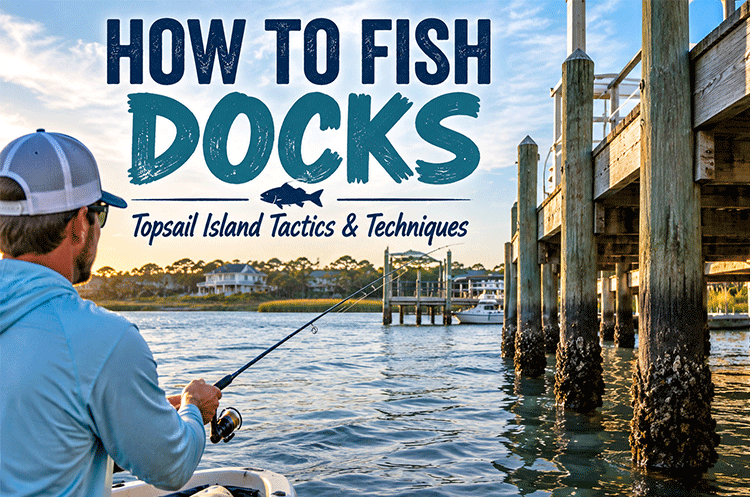
2. Surf City ICW, Creek Mouths & Bridge Pilings
Central Topsail features a dense network of marsh creeks flowing into the ICW, alongside deep-water dock structures and bridge pilings.
- Where to Fish: Focus on the mouth of deep marsh creeks (4+ feet of water) intersecting the ICW, and the shadow lines of dock pilings along the Intracoastal Waterway.
- Tactic: Position your boat or kayak up-current of a creek mouth during an ebb tide. Cast twitchbaits or paddle tails up-stream, letting the current sweep your lure naturally past ambush-minded trout. Night fishing around illuminated dock lights along the ICW is also exceptionally productive.
3. South Topsail (Topsail Beach) & Ocean Surf Sloughs
During late autumn (October through November), large schools of speckled trout move directly out into the ocean surf zone along Topsail Beach and New Topsail Inlet.
- Where to Fish: Walk the beach at low tide to identify deep sloughs (troughs) running parallel to the shore, especially near cuts through the outer sandbar.
- Tactic: Cast 1/4 oz jig heads with paddle tails or MirrOlure 52MRs directly into the dark green water of the slough, working the lure slowly just above the sand as ocean swells roll over the outer bar.
Conservation & Catch Handling
During the excitement of a fall blitz, it is easy to catch dozens of trout in a single session. Practicing responsible harvest ensures this world-class fishery remains healthy for seasons to come.
- Know the Limits: In North Carolina waters, check current NCDMF regulations for updated daily bag and size limits on spotted seatrout before keeping fish.
- Use a Rubber Mesh Net: Speckled trout possess delicate scales and a protective slime coat easily damaged by knotted nylon nets. Use a soft rubber landing net to protect fish slated for release.
- Keep Em’ In the Water: Limit air exposure, especially when unhooking undersized specks. Unhook fish gently in the water using needle-nose pliers or a dehooking tool.
Setting Your Course
The fall speckled trout blitz is the crown jewel of Topsail Island’s inshore fishing calendar. By timing your trips around moving tides, understanding how trout use their vision and lateral lines to ambush prey, and tailoring your presentations to local structure, you’ll be set up for an unforgettable autumn on the water. Rig your light-tackle rods, check your tide charts, and head out to experience the magic of Topsail’s fall trout run!
Stay Informed and Get Involved
North Carolina’s fisheries are constantly evolving as new research, public input, and management decisions shape future regulations. Whether you support the current flounder rules or believe changes are needed, staying informed is the best way to make your voice heard. The North Carolina Division of Marine Fisheries (NCDMF) provides fisheries research, stock assessments, proclamations, and recreational fishing information. The North Carolina Marine Fisheries Commission (MFC) establishes many of the policies and regulations governing coastal fisheries and regularly accepts public comment. The North Carolina Wildlife Resources Commission (NCWRC) oversees Inland and Joint Fishing Waters and publishes regulations affecting anglers across the state. We encourage every fisherman—whether recreational or commercial—to follow these agencies, review proposed rule changes, and participate in the public process. Well-informed anglers help build better fisheries for everyone.
Keep Building Your Topsail Fishing Skills
Want to put this technique to work on your next trip? Use these Topsail.Fish resources to check current fishing activity, match your tactics to the season, review local conditions, and find more step-by-step fishing guides.
🎣 Planning a fishing trip to coastal North Carolina? Before choosing a charter destination, discover why many anglers prefer Topsail Island’s less crowded waters, productive back bays, and outstanding inshore and surf fishing opportunities.
🎣 Planning a trip to the NC coast? Before you book a boat down south, check out why Topsail vs. Wilmington fishing offers a better backwater experience. 🎣

Are you a Topsail Area Captain?
Grow your charter business with an SEO-optimized listing in our directory. For just $12/month, we help you reach more anglers and secure the consistent bookings you need to thrive.