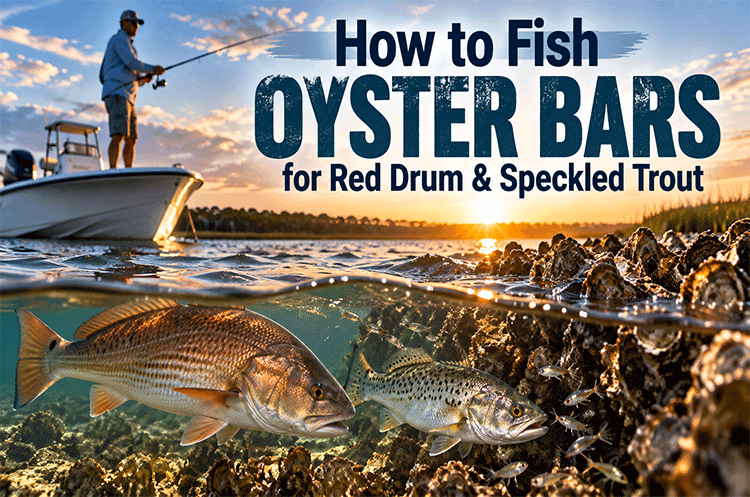
Oyster bars are some of the most productive—and sometimes overlooked—fishing structure in the inshore waters around Topsail Island. To an angler passing by at high tide, an oyster-covered shoreline or submerged shell bed may not look particularly impressive. Under the surface, however, that hard structure can create exactly what red drum and speckled trout are looking for: current breaks, ambush points, deeper edges and a steady supply of food.
During fall, oyster structure becomes especially important. Finger mullet, shrimp, small menhaden and other forage move through marsh creeks and along the Intracoastal Waterway, while red drum and speckled trout position themselves where they can intercept an easy meal. An oyster bar sitting beside moving water can become a natural feeding station.
Learning how to fish oyster bars isn’t simply a matter of casting toward the shells. The most productive anglers learn to identify the edges, points, drains, current seams and depth changes associated with the structure. Let’s look at how to find those high-percentage areas and fish them effectively.
Why Oyster Bars Attract Red Drum and Speckled Trout
An oyster bar provides much more than hard bottom. It changes the way water moves.
As tidal current encounters an oyster point or submerged shell mound, water is redirected around the structure. That can create faster current along one edge, slower water behind the bar and small eddies where baitfish and shrimp become disoriented.
Predatory fish don’t necessarily want to spend all day fighting the strongest current. Red drum and speckled trout frequently position themselves just outside it, allowing moving water to deliver food directly to them.
Oyster habitat also supports an entire food chain. Small crabs, shrimp, mud minnows and other organisms live around the shells. Larger baitfish use the structure for food and protection. Red drum, trout, flounder and sheepshead then arrive to feed on the smaller inhabitants.
For an angler, the important lesson is simple: don’t think of an oyster bar as just a pile of shells. Think of it as structure that changes current, depth and the movement of bait.
Look for the Edge, Not Just the Oysters
One of the most common mistakes when fishing oyster bars is casting directly onto the shallowest part of the structure.
Sometimes fish will push onto flooded oysters, particularly red drum during higher stages of the tide. But very often the best fishing occurs along the edge where the oyster bar meets deeper water.
That edge creates a natural travel lane.
Imagine an oyster bar extending from a marsh shoreline into a creek. The top may be exposed at low tide, while one side drops quickly from a foot of water into four or five feet. That drop is usually more interesting than the flat top of the bar.
Look for:
- Sharp depth changes beside oyster structure
- Points extending into moving water
- Small cuts running through an oyster bar
- Creek mouths bordered by oysters
- Current seams forming behind oyster points
- Small pockets of deeper water beside the shells
- Marsh drains emptying across or beside oyster structure
A depth finder can help locate submerged shell beds, but many productive areas can also be discovered at low tide. What you see exposed at low water provides a map of the structure you’ll be fishing when the tide returns.
The Tide Changes Everything
Oyster bars can fish very differently depending on the stage of the tide.
Rising Tide
As the tide rises, water begins covering shallow oyster structure and opens feeding areas that were inaccessible only an hour or two earlier. Red drum may move onto flooded oyster edges and adjacent marsh grass looking for crabs, shrimp and small baitfish.
Rather than immediately fishing the deepest water, follow the advancing water toward the structure. A redfish may be surprisingly shallow when enough water covers the shells.
Speckled trout are more likely to hold along the slightly deeper edges, points and current lanes where bait moves past the structure.
High Tide
High water can make fish more difficult to pinpoint because they have more territory available. Red drum may spread into flooded marsh edges, while trout can move along creek banks and submerged oyster points.
Concentrate on anything that still creates a current break or funnels water. A point, narrow opening or creek intersection becomes more valuable when everything else is covered.
Falling Tide
The falling tide can be one of the most productive periods around oyster structure.
As water drains from marshes and shallow creeks, shrimp, minnows and other forage are pulled toward deeper channels. Oyster points located near those drains become natural ambush locations.
Look for visible current moving out of a small creek or marsh opening. Fish the downstream edge and the seam where fast water meets slower water.
Red drum may patrol very close to the oysters, while speckled trout often sit slightly farther away where they can intercept bait being swept from the shallows.
If you’re unsure how tidal movement affects local fishing, our Topsail Island Tide Guide provides a deeper look at using the tides to plan your fishing.
How to Position Your Boat or Kayak
Good positioning can matter as much as lure selection.
Whenever possible, approach oyster structure quietly and position yourself so your lure moves naturally with the current.
If the tide is flowing past an oyster point, don’t park directly on top of the fish. Stay far enough away to cast toward the structure and allow your lure to sweep along the edge.
A useful approach is to position slightly up-current and cast across or toward the oyster bar. Retrieve the lure with the flow rather than forcing it unnaturally against strong current.
Kayak anglers have an advantage in extremely shallow areas because they can quietly reach oyster-lined creeks that larger boats cannot. But oyster shells are razor sharp. Pay close attention to wind and current so you aren’t pushed onto exposed structure.
Boat anglers should be equally cautious. Oyster bars can extend much farther from shore than they appear to, especially when the tide is rising and the shells disappear beneath stained water.
Best Lures for Fishing Oyster Bars
Several presentations consistently work around Topsail-area oyster structure.
1. Paddle Tails on Jig Heads
A 3- to 4-inch paddle tail on a light jig head is one of the most versatile choices for both red drum and speckled trout.
Cast beyond or alongside the oyster edge and retrieve the lure so it passes close to the structure without constantly dragging through the shells.
Use enough jig-head weight to maintain contact with the strike zone, but avoid unnecessarily heavy weights. A lighter presentation is easier to keep above jagged shell and often looks more natural in moderate current.
When our upcoming guide on choosing jig-head weight is published, it will take a closer look at matching weight to current, depth and presentation.
2. Suspending Twitchbaits
Suspending twitchbaits are particularly effective for speckled trout holding off deeper oyster edges.
Cast parallel to the structure whenever possible and work the lure with a twitch-twitch-pause retrieve. The pause allows the bait to remain in the strike zone without falling into the oysters.
This can be especially productive during fall when finger mullet and other small baitfish are moving through the creeks and ICW.
3. Popping Corks
A popping cork with a live or artificial shrimp can be an excellent way to fish oyster edges without constantly snagging bottom.
Adjust the leader so the shrimp rides above the shell. Cast up-current and allow the rig to drift naturally along the edge.
The popping sound attracts attention while the suspended bait stays above the most dangerous part of the oyster bed.
4. Live Shrimp and Baitfish
Live shrimp, finger mullet and mud minnows can all be productive around oyster structure.
The key is controlling where the bait travels. A bait allowed to settle directly into an oyster bed may quickly become snagged.
Fish it beneath a float, on an appropriately weighted rig, or along a deeper edge where you can maintain better control.
Red Drum: Fish Tight to the Structure
Red drum often feed surprisingly close to oyster shells.
Their diet includes crabs, shrimp and small fish that inhabit oyster habitat, so reds may cruise directly along the edge or move across flooded shell during higher water.
Make accurate casts to points, pockets and small openings rather than blindly covering open water.
If you see nervous water, jumping shrimp or bait suddenly scattering beside an oyster bank, make that cast immediately. A feeding redfish may only expose its location for a few seconds.
Our Fall Red Drum Fishing guide covers additional seasonal tactics and tackle setups for targeting reds around Topsail Island.
Speckled Trout: Back Off the Oysters
Speckled trout frequently use the same oyster bars as red drum, but their positioning can be different.
Instead of crawling directly across shallow shell, trout often hold along the deeper side, current seam or downstream end of the structure.
This is especially true when current is moving strongly.
Try making several casts at different angles before moving. One cast may pass through three feet of water while another crosses the five-foot drop beside it. That small difference can be where the entire school is holding.
During fall, don’t assume that catching one trout means you’ve found only one fish. Speckled trout frequently school, and a productive oyster edge can produce repeated strikes.
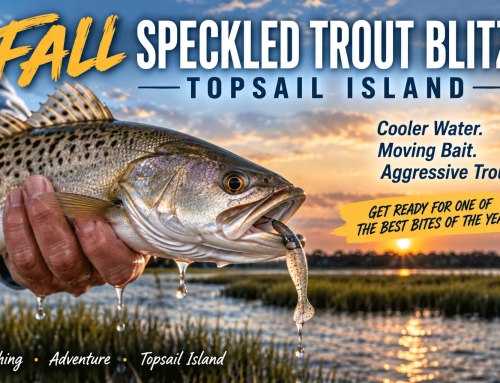
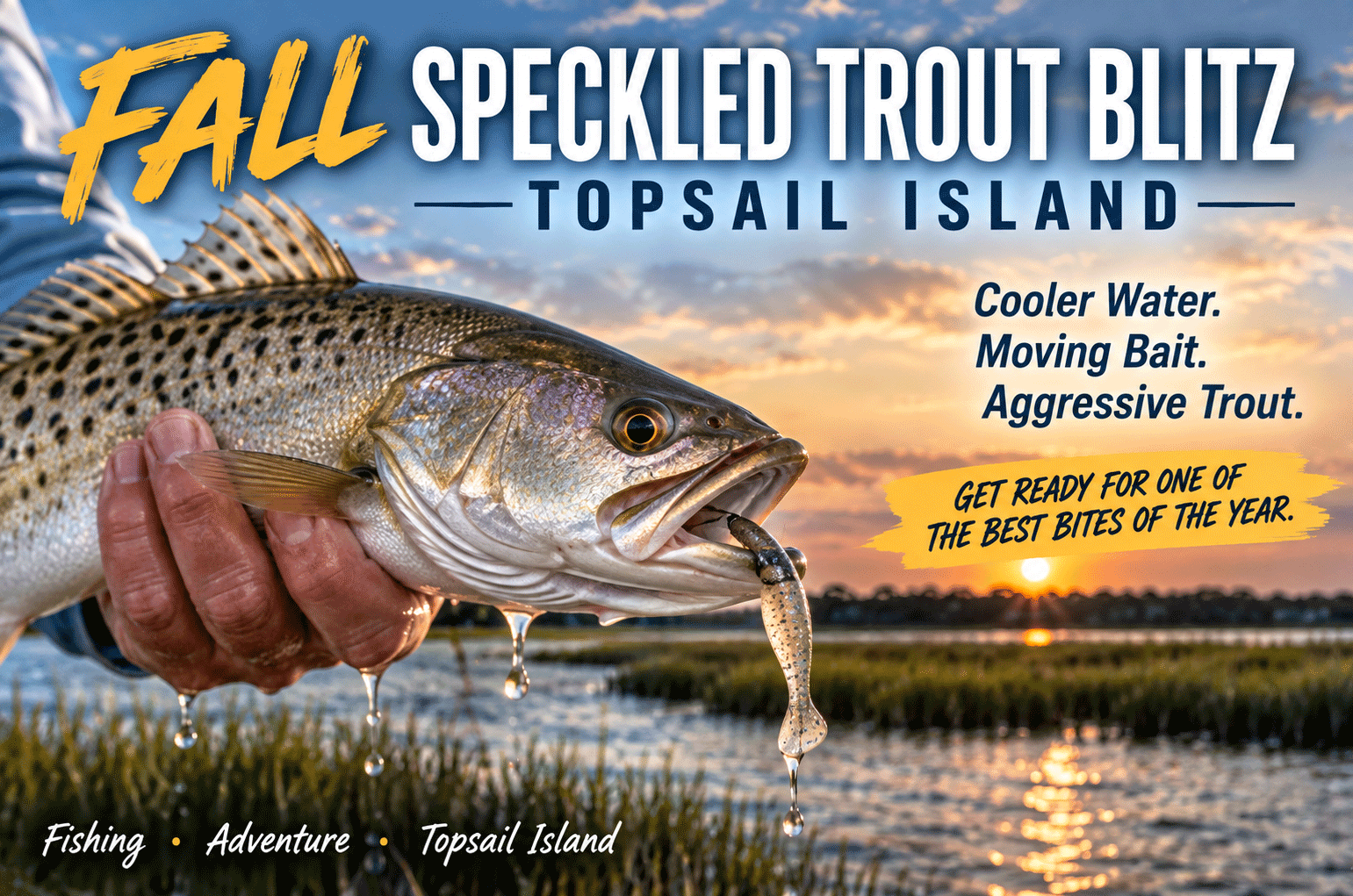
For more on the seasonal transition, lure choices and fall trout behavior, see our Fall Speckled Trout Blitz Topsail Island guide.
Oysters Are Unforgiving on Fishing Line
Oyster shells can cut fishing line remarkably quickly.
This is one place where leader material and abrasion resistance become particularly important. Even when using braided main line, adding a fluorocarbon or monofilament leader provides an additional layer of protection around sharp shell.
Check your leader frequently by running your fingers carefully along the final several inches. If it feels rough, nicked or frayed, retie before making another cast.
That thirty-second inspection is much easier than watching a good red drum swim away because a damaged leader parted beside the boat.
Also inspect jig heads and hooks. Repeated contact with oyster shell can dull a hook point, reducing penetration when the next fish strikes.
Don’t Ignore Small Oyster Bars
Bigger structure isn’t always better.
A small oyster point at the mouth of a marsh drain may concentrate fish more effectively than a huge oyster flat because it creates a clearly defined feeding lane.
Pay particular attention to places where several features come together:
- Oysters plus a creek mouth
- Oysters plus a depth change
- Oysters plus moving water
- Oysters beside marsh grass
- Oysters near a dock or piling
- Oysters at an intersection between two channels
The more reasons a fish has to use a particular piece of structure, the more carefully you should fish it.
This is the same principle that makes docks productive. Structure by itself isn’t magic. The best structure combines food, current, depth and cover. Our How to Fish Docks guide explores that concept with another important type of Topsail-area inshore structure.
Protect the Oyster Habitat You’re Fishing
Oyster reefs aren’t simply fishing spots. They are living habitat that helps support the coastal ecosystem.
Avoid running boats across shallow oyster beds, dragging anchors through oyster reefs or unnecessarily disturbing exposed shell. Besides damaging habitat, contacting an oyster bar can damage a propeller, lower unit, kayak or fishing gear.
When fishing shallow water, slow down and learn the area. A productive oyster bar should be treated as habitat worth protecting, not just another place to catch fish.
Responsible fishing also means checking current North Carolina regulations for red drum and spotted seatrout before keeping fish. Size limits, seasons and harvest regulations can change, so verify current requirements rather than relying on an old fishing report or article.
Putting It All Together
Learning how to fish oyster bars becomes much easier once you stop concentrating on the oysters themselves and start reading everything happening around them.
Where is the current strongest? Where does fast water meet slow water? Is there a creek draining beside the bar? Which edge drops into deeper water? Where is bait being pushed? How much of the structure becomes available to feeding fish as the tide rises or falls?
Those questions turn an ordinary-looking oyster bank into a map of potential feeding locations.
For red drum, begin by working tight to flooded shell, pockets, points and marsh drains. For speckled trout, expand your search toward deeper edges, current seams and downstream ambush points. Use paddle tails, twitchbaits, popping corks or natural bait to cover the water while keeping your presentation close to—but preferably not buried in—the oysters.
Most importantly, remember what oyster bars provide: structure, current, food and depth changes concentrated into a relatively small area. Find the places around Topsail Island where those ingredients come together, and you may find red drum and speckled trout using the same oyster bar throughout much of the season.
Stay Informed and Get Involved
North Carolina’s fisheries are constantly evolving as new research, public input, and management decisions shape future regulations. Whether you support the current flounder rules or believe changes are needed, staying informed is the best way to make your voice heard. The North Carolina Division of Marine Fisheries (NCDMF) provides fisheries research, stock assessments, proclamations, and recreational fishing information. The North Carolina Marine Fisheries Commission (MFC) establishes many of the policies and regulations governing coastal fisheries and regularly accepts public comment. The North Carolina Wildlife Resources Commission (NCWRC) oversees Inland and Joint Fishing Waters and publishes regulations affecting anglers across the state. We encourage every fisherman—whether recreational or commercial—to follow these agencies, review proposed rule changes, and participate in the public process. Well-informed anglers help build better fisheries for everyone.
Keep Building Your Topsail Fishing Skills
Want to put this technique to work on your next trip? Use these Topsail.Fish resources to check current fishing activity, match your tactics to the season, review local conditions, and find more step-by-step fishing guides.
🎣 Planning a fishing trip to coastal North Carolina? Before choosing a charter destination, discover why many anglers prefer Topsail Island’s less crowded waters, productive back bays, and outstanding inshore and surf fishing opportunities.
🎣 Planning a trip to the NC coast? Before you book a boat down south, check out why Topsail vs. Wilmington fishing offers a better backwater experience. 🎣
Own a Fishing Charter Around Topsail Island?
Get your business in front of local anglers searching for fishing charters, guides, and inshore adventures on Topsail.Fish. Our directory listings are designed to help captains improve online visibility, increase bookings, and build a stronger local presence.
Professional listings start at just $12/month.