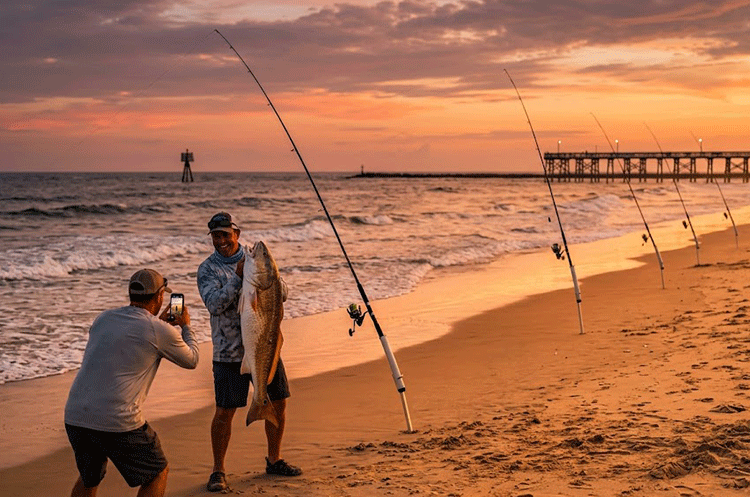
Topsail Island Red Drum Fishing: Mastering the Fall Run
As autumn arrives along coastal North Carolina, a dramatic shift occurs in our marine ecosystem. The air gets crisp, the massive schools of finger mullet begin their annual southward migration, and the legendary "Old Drum" (large adult Red Drum) return to our waters in massive numbers. Without question, this seasonal shift triggers the most explosive and anticipated window of the year for topsail island red drum fishing. Whether you are an inshore specialist or a surf-casting fanatic, autumn presents your best chance of the year to hook into a true fish of a lifetime.
Successfully targeting fall redfish requires a dual understanding of our local geography. During this run, you are dealing with two entirely distinct classes of fish: juvenile "puppy drum" that remain within the slot limits ($18 \text 27 \text$) and congregate in the shallow estuaries, and massive, mature "bull drum" (often exceeding $40 \text 50 \text$) that push through our primary ocean inlets to spawn. Landing either class requires specific tactical adjustments, targeted rigging, and an understanding of dynamic tidal movements.
Where to Find Fall Red Drum: Mapping Topsail's Hot Spots
The autumn migration routes force red drum through a highly predictable variety of local habitats. Success on the water depends on tracking how tidal stages move these schools across specific feeding shelves and structure lines:
1. The Surf Zone and Ocean Sloughs
Throughout the peak of the fall run, massive bull drum patrol the deep ocean troughs and sloughs running parallel just off the beach. They use the whitewater churned up by breaking waves to ambush disoriented baitfish. Surf fishing is highly productive now, particularly along the quieter stretches of North Topsail Beach and the remote southern spit. Look for "cuts" in the primary sandbar where the water transitions to a darker blue; these are the exact aquatic highways drum use to move closer to the beach during a rising tide.
2. New River Inlet & Topsail Inlet
These deep, high-flow ocean passes serve as the primary staging grounds for spawning adult bull drum. The deep scour holes, rocky ledges, and sweeping sand shoals within these inlets concentrate bait and predators alike. Fishing the deep drop-offs on a hard, outgoing tide is legendary. As the water flushes out of the sound, it creates a conveyor belt of food that drum sit beneath, waiting to intercept meals with minimal swimming effort.
3. ICW Docks and Shallow Oyster Bars
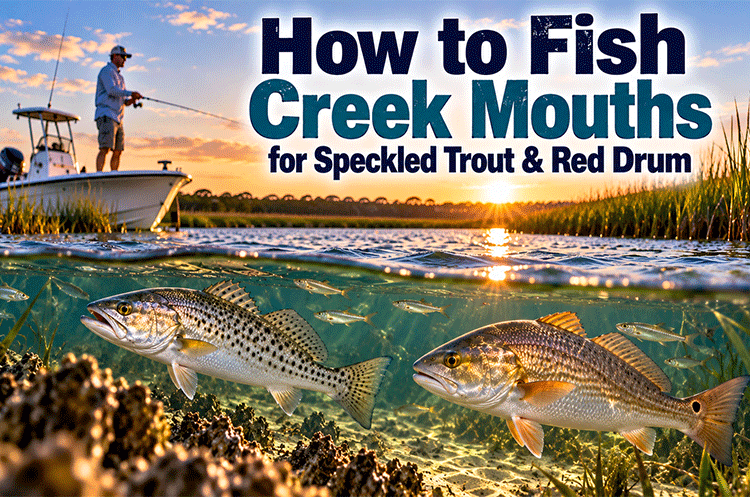
While the giants occupy the deep ocean boundaries, our internal marshes and the Intracoastal Waterway (ICW) are packed with slot-sized puppy drum. These younger fish group up into tight, aggressive schools, feeding heavily along the edges of Spartina grass walls and shallow mudflats. Structural dock pilings coated in barnacles and oyster rocks are premier areas to target, as they hold the small crabs and shrimp that supplement the drum's heavy autumn fish diet.
Local Structure Tip: If you are targeting puppy drum inside the sound-side marshes during low-water conditions, search for hidden creek drains that empty out into the main channels. To understand exactly how these moving waters position feeding schools along our shallow mud banks, reference our in-depth hub article, What Tide is Best for Fishing Around Topsail.
Proven Drum Rigs and Bait: Assembling Your Terminal Tackle
Fall drum are feeding aggressively to pack on calories, but your presentation must be technically flawless to handle their immense power and abrasive environments. Scaling up your tackle parameters prevents heartbreak in the breakers or around sharp bridge pilings.
The "Owen's" Drum Rig (Fish-Finder Setup)
For deep inlet or heavy surf fishing targeting mature bull drum, standard inshore tackle will result in immediate line failure. You must utilize a specialized fish-finder rig. This consists of a heavy plastic sinker slide threaded onto your braided main line, running down to a premium solid brass swivel. From the swivel, tie a remarkably short ($6 \text 10 \text$) leader composed of $80\text$ monofilament or fluorocarbon. Terminate the rig with a massive $8/0 \text 10/0$ inline circle hook. The ultra-short leader is critical; it prevents the heavy bait from helicoptering during long distance surf casts and ensures the circle hook sets perfectly in the corner of the fish's mouth.
Selecting the Ultimate Autumn Baits
- Fresh Cut Mullet: This is the absolute gold standard for fall drum fishing. Large, thick chunks of fresh-caught mullet exude a heavy oil and scent trail that drum can easily track through dark, turbulent surf conditions.
- Menhaden and Bluefish: If mullet are scarce, fresh cut menhaden (pogy) or a freshly filleted steak of oily bluefish serves as an incredible alternative. Change your baits every twenty minutes to ensure a potent scent trail remains active in the water column.
- Artificial Presentations: For anglers stalking puppy drum in the shallow marsh creeks, leave the heavy bait rods behind. Instead, throw a $4\text5\text$ soft plastic paddle tail swimbait pinned to a $1/4\text$ or $3/8\text$ saltwater jighead. Replicate the swimming action of migrating baitfish by utilizing a steady retrieving cadence punctuated by sharp upward rod twitches.
Practice Ethical Fishing: Protecting the Spawning Biomass
Many of the massive Red Drum caught during the autumn run are large, long-lived spawning adults that can be over thirty to forty years old. These large fish are completely protected under North Carolina state law and fall well outside the legal keep slot. They are the primary reproductive engine for the entire species, making proper catch-and-release handling an absolute requirement for every sustainable angler.
Always utilize inline circle hooks rather than traditional J-hooks; circle hooks are mechanically engineered to hook the fish safely in the jaw, eliminating the risk of lethal gut-hooking. Additionally, fight the fish with heavy, appropriately rated tackle ($30\text 50\text$ braid paired with a matching drag system) to bring the fish to the boat or beach quickly, preventing terminal lactic acid buildup and physical exhaustion. Keep these ancient giants submerged in the water as much as possible for photos, support their weight horizontally rather than hanging them vertically by their jaws, and revive them patiently facing into the current until they swim out of your hands under their own power.
Book a Local Drum Expert
Targeting large bull drum safely often requires highly specialized heavy tackle, custom-rigged vessels, and an intimate working knowledge of our tricky, shifting inlet currents and dangerous sandbar breaks. If you want to cut down the steep learning curve and experience this world-class fishery firsthand, hiring an experienced local guide is your best path forward. Check out our verified Topsail Island Charter Captains Directory to connect with a professional, USCG-licensed guide who can put you directly on the meat safely and ethically!
Master the Bite: Plan Your Next Catch
Now that you’ve learned about this species, take the next step by checking what’s biting this week, learning when this fish is at its seasonal peak, reviewing recent captain reports, improving your techniques, and finding a local captain to put you on the fish.
🎣 Planning a fishing trip to coastal North Carolina? Before choosing a charter destination, discover why many anglers prefer Topsail Island’s less crowded waters, productive back bays, and outstanding inshore and surf fishing opportunities.
🎣 Planning a trip to the NC coast? Before you book a boat down south, check out why Topsail vs. Wilmington fishing offers a better backwater experience. 🎣
Own a Fishing Charter Around Topsail Island?
Get your business in front of local anglers searching for fishing charters, guides, and inshore adventures on Topsail.Fish. Our directory listings are designed to help captains improve online visibility, increase bookings, and build a stronger local presence.
Professional listings start at just $12/month.