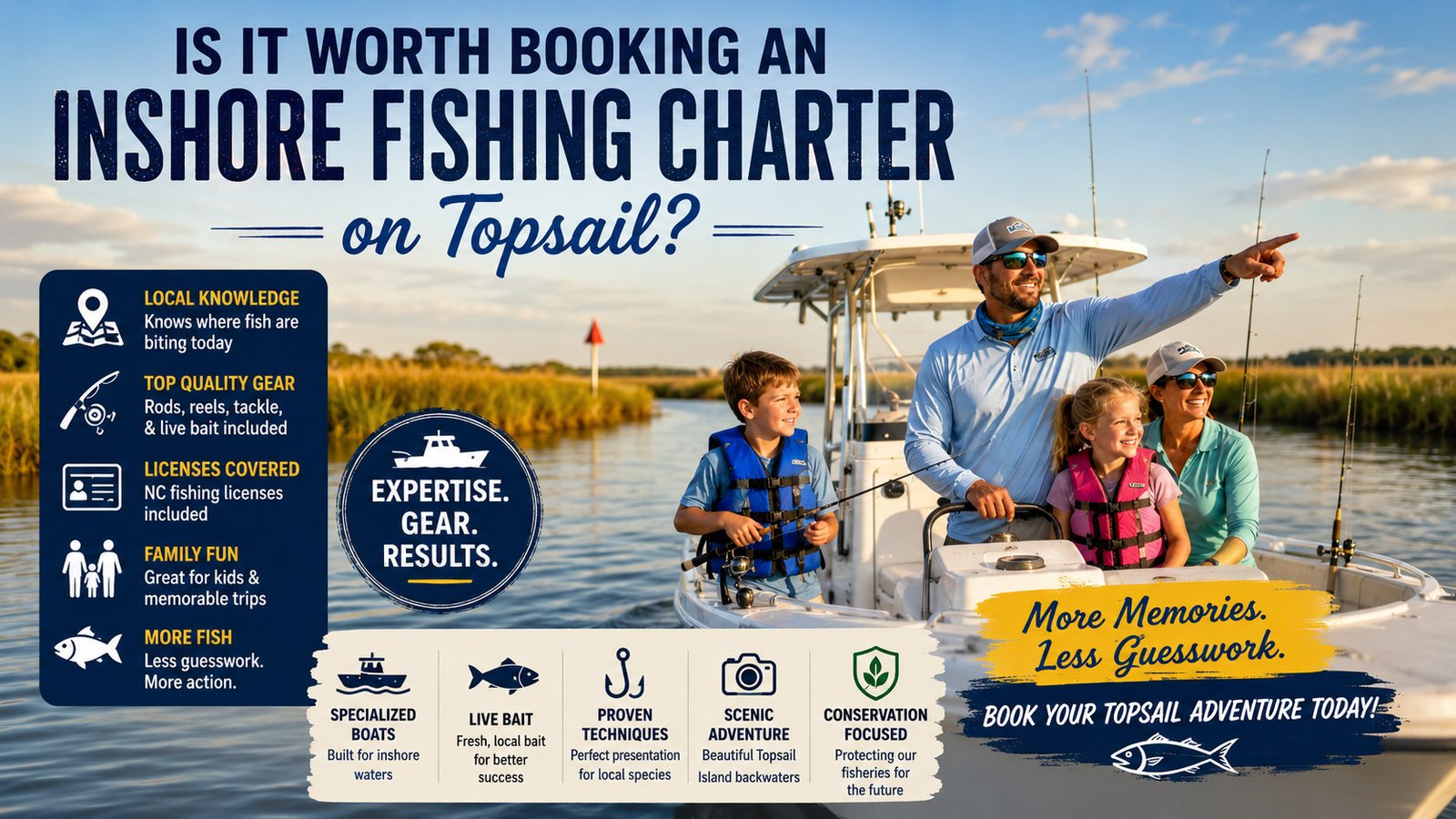
The Vacation Dilemma: DIY Fishing vs. Hiring a Professional Guide
For many families packing their bags for a week along the pristine shores of Surf City, North Topsail Beach, or the quiet southern tip of the island, saltwater fishing is high on the itinerary. However, as anglers begin surveying their options, a common question inevitably surfaces: is it worth booking an inshore fishing charter on topsail? When you factor in the cost of vacation rentals, dining out, and travel logistics, adding a professional charter booking to the budget is a line item that deserves a thorough evaluation. Is it smarter to purchase a few cheap combos from a local department store to fish blindly off a random dock, or should you invest your hard-earned capital into a dedicated session with a licensed local captain?
The reality is that North Carolina’s coastal waters are as beautiful as they are unforgivingly complex. Topsail Island is flanked by a highly intricate backwater ecosystem dominated by the Intracoastal Waterway (ICW), expansive shallow salt marshes, oyster bars, mudflats, and sweeping tidal inlets. To the untrained eye, the water all looks the same. To a seasoned local guide, that same water is a highly detailed road map of feeding zones, underwater hazards, and structural chokepoints. To truly understand if a charter is worth the financial investment, we must look past the sticker price and analyze the structural advantages, localized knowledge, specialized equipment, and pure educational value that a dedicated charter captain brings to your vacation experience.
The Complex Geometry of Topsail’s Backwater Marshes
The primary barrier that casual DIY anglers run into when trying to fish the sound side of Topsail is the dynamic nature of our tides. Unlike open ocean fishing or freshwater lake angling, inshore fishing behind a barrier island is completely dictated by fluid hydrodynamics. A fishing hole that holds four feet of water and a school of hungry red drum at 9:00 AM can easily become a completely dry, exposed mudflat covered in sharp oyster shells by noon. Navigating these narrow marsh creeks requires a specialized vessel and real-time telemetry that only a professional captain possesses.
Our network of local charter captains spends thousands of hours on these specific waters annually. They don’t just know where the fish were last year; they know exactly which direction the schooling finger mullet are migrating through New River Inlet today based on current water temperatures and wind direction. When you book an inshore charter, you are not just renting space on a boat—you are buying a direct pass past a multi-year learning curve. A local captain knows how to position a shallow-draft skiff or bay boat perfectly up-current from a hidden oyster rock, allowing your bait to drift naturally into the strike zone without snagging. This geographic precision is almost impossible for a visiting angler to replicate in a single vacation week.
The Gear Advantage: Breaking Down the Real Cost of Equipment
Let’s look at the financial math of trying to outfit a family of four for a successful DIY inshore trip versus stepping aboard a fully rigged charter vessel. Buying cheap, entry-level rod and reel combos often results in immediate mechanical failure when exposed to high-salinity environments and heavy coastal fish. To fish our backwaters properly on your own, a typical gear checklist looks something like this:
| Essential Inshore Equipment | Estimated Retail Cost (Family of 4) | Charter Inclusions Metric |
|---|---|---|
| Quality Inshore Saltwater Combos (2500-3000 class) | $400.00 – $600.00 | Included (Top-tier brands like Penn, Shimano, or Daiwa) |
| Premium Braided Line & Fluorocarbon Leader Materials | $60.00 – $100.00 | Included (Freshly spooled, tournament-grade lines) |
| Specialized Hooks, Weights, Floats, and Terminal Tackle | $50.00 – $80.00 | Included (Custom hand-tied rigs matching daily bites) |
| Live Bait (Pristine local shrimp, finger mullet, minnows) | $40.00 – $80.00 per day | Included (Freshly netted or caught before launch) |
| NC Coastal Recreational Fishing Licenses (CRFL) | $40.00 – $60.00 | Included (Covered completely by the boat’s blanket license) |
| Estimated Total Investment | $590.00 – $920.00 | All-Inclusive with Charter Booking |
As the matrix demonstrates, when you add up the raw costs of purchasing decent gear, buying highly perishable live bait daily, and securing individual state licenses, you are approaching the baseline cost of an elite half-day charter. Furthermore, when you fish with a guide, you eliminate the massive headache of cleaning, maintaining, and transporting gear down to the water, allowing you to focus entirely on enjoying your time with your family.
Maximizing the Experience for Young Anglers and Families
If you are traveling with kids, keeping them engaged and entertained is paramount. A failed DIY fishing trip where lines are constantly snagging on oyster beds, bait is stolen by blue crabs, and no fish are caught can quickly lead to frustration and ruined vacation afternoons. Inshore charter captains specialize in delivering high-action, low-stress environments specifically tailored for families.
⚓ Free Printable Companion Resource: Want a handy checklist of questions to ask a captain before booking, along with a seasonal guide of what species are available for family trips? We have compiled a comprehensive, high-resolution guide for easy planning. Download our Printable Topsail Charter Planning Guide PDF to keep your family trip completely stress-free.
Because our captains track schooling bio-metrics closely, they can instantly pivot their strategy mid-trip. If the target red drum are lock-jawed due to a passing cold front, a family guide can immediately run to a protected sound-side dock or deeper bridge piling where aggressive pinfish, black drum, croaker, and spot are biting on every single cast. This guarantees continuous action that keeps young minds excited about the sport. To see a complete list of vetted, family-oriented professional guides operating directly out of our local marinas, head over to our comprehensive Topsail Island Charter Captains Directory.
The Educational Payoff: Investing in Your Fishing Future
One of the most overlooked aspects of booking an inshore charter is the long-term educational value. Think of a charter booking as a hands-on, master-level on-water seminar. A professional captain won’t just bait your hook and hand you the rod; they will explain *why* they chose that specific location, how to analyze localized current seams, and how to read subtle ripples on the surface that indicate a hidden school of baitfish.
If you plan on doing some additional fishing on your own later in the week from a rental dock or along the beach, booking a charter on your first or second vacation day is a major tactical advantage. You can observe the exact rigging techniques your captain uses, see how they present live baits under a popping cork, and learn how local tides impact fish behavior. For a deeper breakdown on how to apply these advanced rigging methods to your personal beach setups later in the week, make sure to read our highly detailed blueprint on how to tie a dropper loop for surf fishing. To fully synchronize your fishing schedule with our local water movements, bookmark our core analysis, What Tide is Best for Fishing Around Topsail.
Conservation and Sustainability Note: Beyond catching fish, local captains serve as the frontline stewards of our coastal estuaries. When you fish on a certified charter, you are learning the proper handling techniques needed to release undersized fish safely, how to navigate around fragile seagrass beds without causing prop scars, and how to preserve our local fisheries for future generations. For high-quality, conservation-minded terminal tackle engineered to prevent gut-hooking wild fish, select s local guide directly at https://topsail.fish/captains.
The Verdict: Is It Worth It?
When you look across the entire spectrum—the elimination of expensive gear investments, full coverage under a blanket state fishing license, access to restricted backwater channels, and the unmatched peace of mind that comes with tracking down fish alongside a licensed professional—booking an inshore fishing charter on Topsail Island is worth every single penny. It transforms a guessing game into a targeted, high-probability adventure, ensuring that your precious vacation hours are spent creating unforgettable memories on the water rather than untangling lines and staring at empty bait buckets.
—
### 🙋♂️ Frequently Asked Questions
1. Do I need to buy a North Carolina fishing license before stepping onto a charter boat?
No. All legally licensed charter vessels operating on Topsail Island carry a specialized commercial blanket license issued by the state. This blanket license automatically covers every passenger on board the boat for the duration of the trip, completely eliminating the need for you to purchase an individual coastal fishing license.
2. What is the standard tip or gratuity for an inshore fishing captain?
The standard industry tipping metric for a charter captain or mate is between 15% and 20% of the total trip cost. This gratuity directly reflects the hard work the captain puts in before, during, and after your trip—including cleaning the boat, netting fresh live bait before sunrise, rigging lines, and filleting your caught fish at the docks.
3. Is motion sickness or seasickness common on an inshore fishing charter?
Seasickness is incredibly rare on inshore charters. Unlike offshore or deep-sea trips that venture out into the open ocean swells, inshore trips remain entirely within the protected sound side waters, salt marshes, and calm river channels behind the island. The water is generally as smooth as a lake, making it an ideal environment for anyone prone to motion sickness.
4. What happens if the weather is bad on the day of our scheduled charter?
Your safety is always the captain’s top priority. If severe weather, lightning, or unsafe high winds are forecasted, your captain will contact you to discuss options. Generally, trips will either be rescheduled to another open slot during your vacation week, or your deposit will be fully refunded according to the captain’s explicit weather cancellation policy.
5. Can we keep the fish we catch on an inshore charter, and will the captain clean them?
Yes! Any fish caught that meets the current size and bag limits established by North Carolina marine regulations can be kept for the dinner table. At the conclusion of your trip, your captain will happily clean, fillet, and bag your legal catch at the marina docks so it is completely ready for the kitchen or grill.
Continue Exploring Topsail.Fish
Whether you’re planning your first trip to Topsail Island or you’ve been fishing these waters for years, Topsail.Fish brings together local fishing knowledge, current conditions, trusted charter captains, seasonal guides, and practical resources to help you make the most of your time on the water.
Follow Our Progress
Each month we publish a Topsail.Fish Monthly Report that shares how the website is growing, what anglers are searching for, how visitors are using the site, how they are connecting with local captains, and how participating businesses are gaining visibility. It’s our way of documenting the steady growth of the Greater Topsail Island fishing community.
🎣 Planning a trip to the NC coast? Before you book a boat down south, check out why Topsail vs. Wilmington fishing offers a better backwater experience. 🎣

Are you a Topsail Area Captain?
Grow your charter business with an SEO-optimized listing in our directory. For just $12/month, we help you reach more anglers and secure the consistent bookings you need to thrive.