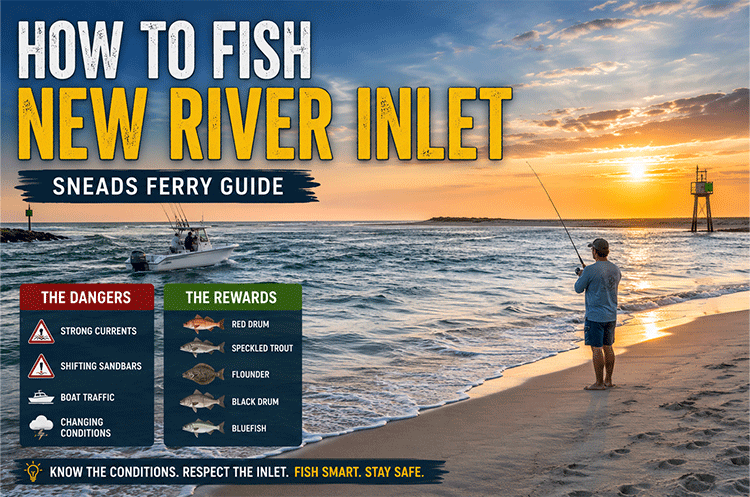
How to Fish New River Inlet: The Complete Geographical and Tactical Guide
For coastal anglers visiting the Sneads Ferry area, learning how to fish new river inlet can unlock some of the finest inshore and nearshore action in North Carolina. This dynamic, volatile body of water connects the expansive New River estuary to the open Atlantic Ocean. Because it features massive shifting sandbars and deep, fast-moving channels, it serves as a major marine highway for migrating baitfish, trophy red drum, large summer flounder, sheepshead, and coastal sharks. However, this inlet is also notoriously dangerous, meaning you must approach it with a solid game plan and total situational awareness.
Positioned on the northern border of North Topsail Beach and flanked by Marine Corps Base Camp Lejeune, New River Inlet handles an immense volume of water on every tidal cycle. The combination of heavy river discharge and ocean swells transforms this arena into an incredibly productive feeding zone for apex predators, but it can quickly trap an uneducated boater. Mastering this environment requires balancing rigorous water safety with specialized, heavy-current terminal tackle configurations.
Essential Safety for How to Fish New River Inlet
First, before you ever wet a line or drop an anchor, you must understand the local underwater terrain. The sandbars at the mouth of the inlet shift constantly after major nor’easters, summer tropical systems, and simple lunar moon phases. Consequently, digital navigation charts and satellite imagery are frequently inaccurate. If you are operating a boat, never fish this area during a strong outgoing tide paired with a heavy, incoming ocean wind. This combination creates massive, close-frequency breaking waves—locally known as standing waves—that can easily swamp or flip a center console vessel.
Therefore, always watch the horizon for incoming swells, keep your kill-switch lanyard attached, and leave your main outboard engine running when fishing near the breakers or shallow shoal edges. Avoid anchoring from the stern of your boat under any circumstances; the swift 4-to-6-knot currents can easily pull a transom underwater if the line catches a rolling wave. If you want to make sure your vessel is fully prepared before tackling these intense waters, review our foundational checklist in Boating Topsail Island: A Beginner’s Navigation & Etiquette Guide.
Decoding the Best Tides and Techniques
When studying how to fish new river inlet, timing your trip around the tides is the primary secret to success. If you are trying to determine what tide is best for fishing around Topsail, deep ocean passes offer a completely different rhythm than shallow marsh creeks. Specifically, the ideal time to fish the inlet mouth is during the last two hours of the incoming tide and the first hour of the falling tide.
As clean, clear ocean water pushes into the estuary, large predatory fish move directly up onto the shallow sand bars to hunt. Furthermore, the water velocity slows down slightly during high slack water, making it much easier to hold your bait firmly on the bottom where the fish are holding. Once the tide flips to an outgoing stage, focus your efforts on three highly productive structural zones:
- The Inside Sandbar Drops: Position your boat in the deeper channel cuts and cast your baits directly up onto the shallow edges of the sand flats. Red drum constantly patrol these ledges, looking for crabs and shrimp flushing off the shallow shelves.
- The Rocks and Structural Edges: Target the deeper ledges and underwater rock structures near the ocean-facing edges of the inlet. These hard structures hold massive sheepshead, black drum, and gray trout.
- The Deep Inflow Channels: Drift through the primary channels using heavy vertical jigs to keep your bait bouncing along the sandy bottom for big summer flounder utilizing the drop-offs as ambush points.
Best Baits and Smart Rigging Strategies
Because the current moves incredibly fast inside New River Inlet, choosing the right presentation is critical to keeping your bait from blowing out of the strike zone. For artificial lures, heavy 1.5-to-2-ounce bucktails tipped with 5-inch soft plastic grub tails work beautifully when bounced vertically in the deep pockets. However, live bait is undoubtedly king in this heavy moving water.
Try rigging a live finger mullet, a fresh mud minnow, or a whole menhaden on a heavy-duty fish-finder rig (an elongated Carolina rig). Swap out your standard light weights for a 2-ounce to 4-ounce egg sinker or pyramid weight to keep your offering pinned completely to the bottom. Pair this with a tough, 20-to-30-pound fluorocarbon leader line to withstand the abrasive sand and hidden rock structures littering the floor of the inlet.
| Target Species | Recommended Bait / Lure | Rigging Specification | Tactical Positioning |
|---|---|---|---|
| Red Drum (Bull & Slot) | Fresh Cut Mullet / Menhaden Chunks | 3oz Sinker Slide Fish-Finder Rig with 8/0 Circle Hook | Shallow sandbar breaks and outer breakers |
| Summer Flounder | Live Finger Mullet or Mud Minnows | 2oz Carolina Rig with 3/0 Wide Gap Hook | Deep channel edges and interior drop-offs |
| Sheepshead | Live Fiddler Crabs / Fresh Sea Clams | Short 1/2oz Drop-Shot Rig with #1 Live Bait Hook | Tight to ocean-facing rocks and piling structures |
If you are looking to master your presentation in these swift, moving currents, your tackle handling choice is everything. For excellent results, check out our guide on Inshore Insider: Mastering Light Tackle Techniques In Topsail’s Backwaters. This resource breaks down how to manage your line slack, feel subtle bottom changes, and maintain total control over your bait when fishing high-current environments like the local inlets.
By treating the ocean waves with absolute respect, timing your trips to leverage the peak incoming clean water, and matching your lead sinker weight to the speed of the current, you can confidently turn this intimidating body of water into your personal favorite fishing destination along Topsail Island. Stay safe, stay legal, and keep your lines tight on the bottom!
Keep Building Your Topsail Fishing Skills
Want to put this technique to work on your next trip? Use these Topsail.Fish resources to check current fishing activity, match your tactics to the season, review local conditions, and find more step-by-step fishing guides.
🎣 Planning a fishing trip to coastal North Carolina? Before choosing a charter destination, discover why many anglers prefer Topsail Island’s less crowded waters, productive back bays, and outstanding inshore and surf fishing opportunities.
🎣 Planning a trip to the NC coast? Before you book a boat down south, check out why Topsail vs. Wilmington fishing offers a better backwater experience. 🎣

Are you a Topsail Area Captain?
Grow your charter business with an SEO-optimized listing in our directory. For just $12/month, we help you reach more anglers and secure the consistent bookings you need to thrive.