Topsail Island Night Fishing: Piers, Bridges, and Lights
July along coastal North Carolina brings soaring daytime temperatures, blistering humidity, and intense motorized boat traffic across our shallow sounds. For many savvy local anglers and seasoned tournament guides, the absolute best way to find a consistent, aggressive bite—and stay completely cool—is to target fish after the sun goes down. From the neon glow of our illuminated ocean piers to the deep shadow lines of the high-rise bridges, topsail island night fishing piers bridges and lights networks offer a highly unique, productive, and comfortable mid-summer angling experience.
When the sun sets, a major biological shift occurs in our inshore and surf environments. The blistering surface water cools by several degrees, prompting skittish forage like grass shrimp, finger mullet, and blue crabs to emerge from deep structural hiding spots. This massive influx of bait draws top-tier predatory gamefish directly into the open water to hunt. However, nocturnal angling is an entirely different game than daytime fishing; it requires specialized visual stealth, extreme line management, and an understanding of artificial light hydrographics.
Targeting the Lights: The Shadow Line Mechanics
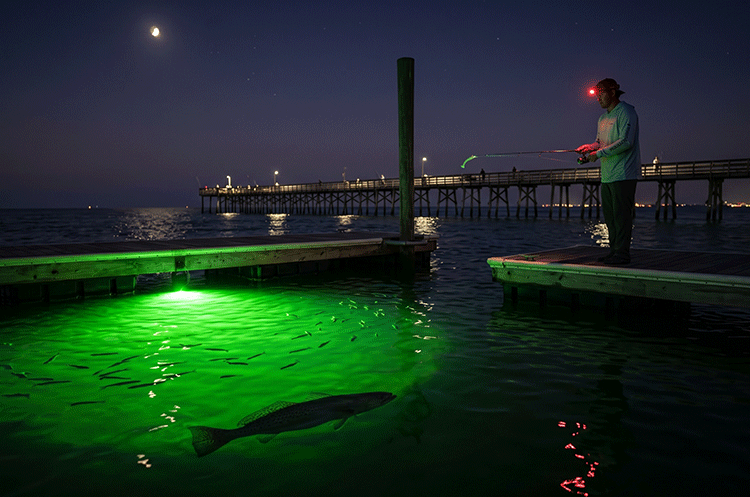
Inshore predators like Speckled Trout, Red Drum, and sleek summer Flounder utilize artificial illumination as structural ambush points. Private sound-side docks, marsh bridges, and marinas equipped with high-intensity lighting systems create localized food chains. To be consistently successful around these lighted zones, you must decode the geometry of a “shadow line.”
Predatory fish rarely sit directly under the brightest section of a light source. Doing so makes their profiles visible to bait and larger apex predators like sharks. Instead, they hover completely camouflaged inside the pitch-black water immediately flanking the illuminated ring—a zone called the shadow line. They face into the moving tidal current, waiting for the water to sweep unsuspecting shrimp or minnows across the light circle before launching a rapid-fire attack.
Tactical Operational Guidelines for Fishing Lights:
- Green Lights vs. White Lights: Many private docks along the Topsail sound side utilize specialized, submerged green hydrodynamic lights. Green wavelengths travel exceptionally well through brackish water, attracting micro-plankton and shrimp significantly faster than standard white above-water bulbs. Treat green underwater lights as prime targets.
- The Presentation Angle: Position your vessel or kayak completely down-current from the light source. Cast your artificial lure into the pitch-black water located several feet *past* the light ring, and retrieve it smoothly so it tracks right along the edge of the shadow line.
- Unmatched Stealth: Sound travels with immense efficiency through quiet night water. Keep your kayak hull silent, avoid dropping heavy items on boat decks, and keep your primary flashlights turned off unless actively rigging. If a fish sees your moving shadow break the light circle, the entire school will spook instantly.
Pier Fishing After Dark: Conquering the Front Surf Troughs
Topsail Island’s three iconic ocean piers—the **Surf City Ocean Pier**, the **Jolly Roger Pier**, and **Seaview Pier**—serve as major epicenters for high-impact night action throughout July. Because these massive wooden structures extend hundreds of feet out into the Atlantic, their heavy structural deck lights throw massive illumination footprints onto the rolling ocean breakers below.
During the summer night cycles, these pier lights concentrate migrating schools of baitfish, creating an all-hours buffet for major surf species. If you are walking the planks after midnight, you can target three highly productive species groups by matching your terminal gear to the specific zone of the pier structure:
| Pier Zone Location | Primary Target Species | Recommended Bait / Presentation | Tackle Rig Specification |
|---|---|---|---|
| The Breaker Wash (Shallow) | Sea Mullet (Whiting), Pompano | Fresh cut local shrimp or sand fleas | Double-Hook Bottom Rig (#4 Circle Hooks) |
| Mid-Pier Structural Pilings | Black Drum, Large Flounder | Live mud minnows or fresh blue crab chunks | Standard Carolina Rig (1oz Egg Sinker) |
| The T-End (Deep Water) | Spanish Mackerel, Bluefish, Sharks | Got-Cha plugs, heavy metal jigs, or cut bait | Wire leader rigs or heavy monofilament casting lines |
Essential Gear Upgrades for Nocturnal Anglers
Navigating the dark waters or high pier decks of Topsail Island creates distinct physical challenges. Visibility is your single greatest hurdle, meaning your tackle configuration and safety gear must be intentionally tailored for low-light execution:
- Preserve Your Night Vision: Invest in a premium headlamp equipped with a true red-light or green-light setting. Standard white LED beams instantly constrict your pupils, requiring your eyes up to twenty minutes to re-adjust to the ambient darkness. Use the colored beams for tying knots and unhooking fish.
- Select High-Contrast Lures: In the dark, fish rely heavily on their lateral lines to sense vibrations. Throw soft plastic paddle tails with large, thumping tail boots or hard baits equipped with loud internal steel BB rattles. Color-wise, run either solid bone-white/glow-in-the-dark profiles or pitch-black lures that create a crisp, solid silhouette against the starry surface film.
- Vessel Safety Systems: If you are fishing from a center console or skiff, double-check your USCG-mandated navigation lights before leaving the boat ramp. The sound channels can be hazardous after dark; move at idle speeds and keep your eyes locked onto your digital GPS chartplotter to avoid hit-and-run contact with shallow oyster reefs.
Inbound Linking Strategy Note: Because tidal speed determines exactly how fast bait washes through these lighted bridge pilings and pier supports, timing your night session with active water movement is absolutely non-negotiable. Review our foundational anchor post, What Tide is Best for Fishing Around Topsail, to align your midnight trips with the most productive current velocities.
Experience the Night Bite with a Pro
Navigating the complex backwater channels of the Intracoastal Waterway at night can be incredibly intimidating for visiting boaters, especially when dealing with unlit sandbars, shifting shoal networks, and fast-moving currents near our ocean inlets. If you want to cut out the safety guesswork and slip directly into the finest dock light and bridge shadow-line bites on the island, booking an experienced, licensed night-fishing guide is your best move. Check out our comprehensive Topsail Island Charter Captains Directory to connect with a USCG-licensed guide who can step you into the ultimate summer night bite safely and professionally!
Are you a Topsail Area Captain?
Grow your charter business with an SEO-optimized listing in our directory. For just $12/month, we help you reach more anglers and secure the consistent bookings you need to thrive.

Keep Building Your Topsail Fishing Skills
Want to put this technique to work on your next trip? Use these Topsail.Fish resources to check current fishing activity, match your tactics to the season, review local conditions, and find more step-by-step fishing guides.
🎣 Planning a fishing trip to coastal North Carolina? Before choosing a charter destination, discover why many anglers prefer Topsail Island’s less crowded waters, productive back bays, and outstanding inshore and surf fishing opportunities.
🎣 Planning a trip to the NC coast? Before you book a boat down south, check out why Topsail vs. Wilmington fishing offers a better backwater experience. 🎣
Own a Fishing Charter Around Topsail Island?
Get your business in front of local anglers searching for fishing charters, guides, and inshore adventures on Topsail.Fish. Our directory listings are designed to help captains improve online visibility, increase bookings, and build a stronger local presence.
Professional listings start at just $12/month.