The Ultimate Guide to Topsail Island Mahi Fishing
June marks the undisputed peak of offshore blue water action along the southeastern North Carolina coast. As the powerful Gulf Stream currents begin pushing warm, highly clear tropical water closer to our coastal shelf beaches, massive migratory schools of topsail island mahi fishing targets—locally known as dolphin or mahi-mahi—become the primary focus for offshore sportfishers. Whether you are a seasoned boat owner prepping your own twin-engine center console or a visitor booking your very first deep-sea charter out of Surf City, understanding late-spring blue water trends will unlock a world-class bluewater haul.
Unlike targeting stationary bottom dwellers, hunting for pelagic predators like mahi is a dynamic game of tracking fast-moving ocean currents, temperature breaks, and floating ecosystems. These brilliant blue, green, and gold speedsters follow baitfish migrations across immense distances. To consistently fill a fish box with massive “gaffers” and aggressive “bailers,” you must learn how to read sea-surface temperature data, deploy a clean multi-line trolling matrix, and maintain total order on deck when a school suddenly erupts behind your transom.
Where to Find Mahi Off Topsail: Locating the Offshore Blue Water Highway
Success on the open ocean starts with eliminating empty water. In June, mahi are constantly moving, driven entirely by two biological mandates: comfortable water temperatures and a steady food supply. Experienced offshore captains spend their mornings analyzing satellite sea-surface temperature (SST) imagery to pinpoint where warm, indigo-blue water bodies grind against our cooler coastal flows. Focus your search efforts across these three highly productive offshore zones:
1. The Edge of the Gulf Stream
Typically located between 50 to 60 miles offshore from Topsail Island’s inlets, the main western boundary wall of the Gulf Stream is the premier arena for encountering trophy-sized “gaffer” mahi (fish large enough to require a handheld gaff hook to lift into the boat). Here, look for distinct color changes where coastal emerald green transforms instantly into deep ocean indigo. When this boundary aligns with steep underwater ledges or drop-offs, the resulting upwelling creates an unmatched pelagic feeding zone.
2. Shifting Sargassum Weed Lines
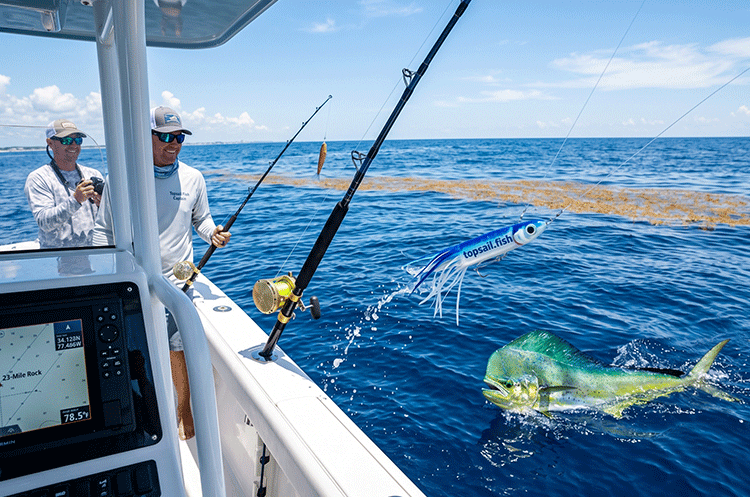
Sargassum is a specialized, floating golden-brown marine algae that aggregates into massive ribbons stretching for miles across the open ocean surface. These floating weed beds serve as full-scale pelagic nurseries, providing critical shelter and food for flying fish, juvenile crabs, and baitfish. Mahi travel along these golden highways like wolves, picking off forage along the edges. Running your trolling lures inches from these weed boundaries is an absolute guarantee for a hookup.
3. The 23-Mile Rock and Mid-Shelf Structure
You do not always have to make the grueling 60-mile trek to the Stream to find exceptional action in mid-June. As ocean temperatures push past the 75-degree mark across the continental shelf, large bodies of smaller “bailer” mahi (school-sized fish perfect for lifting directly into the boat by the line) migrate inward. Mid-shelf structures like the 23-Mile Rock, the Southwest Ledge, or prominent artificial reefs serve as excellent staging points where these schools stop to hunt passing schools of cigar minnows.
Proven Trolling Spreads: Setting the Five-Line Matrix
Mahi are highly sight-driven, aggressive visual hunters that are naturally drawn to the white water churn and bubble trails created by your boat’s outboard propellers. A standard five-line trolling spread allows you to present a diverse array of profiles at varying depths, covering an immense amount of watery territory while preventing tangled lines during high-speed turns:
To ensure your presentation swims perfectly without spinning or tangling in the prop wash, deploy your gear using this exact spatial configuration:
- The Long and Short Outriggers: These lines should carry your primary meat presentations: small to medium-sized fresh ballyhoo cleanly rigged on a 7/0 long-shank hook, hidden beneath a colorful trolling skirt. Blue-and-white or pink-and-white chugger-style heads are local favorites that create an irresistible surface pop.
- The Flat Lines: Positioned closer to the transom just beneath the surface film, run naked (skirtless) rigged ballyhoo or heavy spoons to intercept fish diving beneath your wake.
- The Shotgun Position: Placed furthest back in the center of the spread—often 100 to 150 feet behind the boat—run a classic unskirted natural cedar plug or a bird-and-squid teaser combo. This distant target mimics a lone baitfish fleeing the commotion of the boat.
Maintain a consistent trolling speed of 6 to 7 knots. This velocity keeps your artificial skirts popping cleanly through the surface while ensuring your natural ballyhoo swim with a lifelike, horizontal s-curve motion rather than twisting or dragging unnaturally.
Expert Execution Tactic: Keeping One in the Water
Mahi-mahi possess an incredibly high social drive and travel in tightly structured, cooperative school frameworks. When a single pelagic fish separates from the pack to smash a trolling lure, the rest of the school will almost always follow their hooked sibling directly up to the boat hull, lighting up in brilliant shades of neon blue and yellow as they enter a feeding frenzy.
The number one mistake rookie offshore crews make is quickly cranking in the first fish, throwing it immediately into the ice box, and then wondering why the rest of the school dissolved back into the deep ocean. To capitalize on this behavior, utilize the “keep one wet” strategy. When your primary trolling rod screams, bring that initial mahi within 15 feet of the boat, but leave it swimming actively in the water, tied securely to the cleat.
While that fish remains in the water acting as a live decoy, the school will stay locked directly behind your boat. Have your crew immediately grab light spinning rods rigged with bare hooks or lightweight jigheads. Pitch small chunks of fresh squid, cut ballyhoo, or scent-infused artificial lures directly into the school. This fast-paced casting technique can instantly transform a single random trolling strike into a chaotic, full-cooler event within a matter of minutes.
Practice Sustainable Blue Water Handling
While mahi are among the fastest-growing fish in the ocean, ethical stewardship remains critical to preserving our offshore blue water resources. North Carolina state regulations dictate a strict 20-inch minimum fork length (measured from the tip of the snout to the center fork of the tail) alongside a daily bag limit of 20 fish per person, not to exceed 60 fish per vessel. Always measure your catches accurately, harvest only what your family intends to consume, and utilize safe release tactics on juvenile “shakers” to ensure our offshore populations remain robust for generations to come.
Book an Offshore Expert
Venturing 30 to 60 miles out into the open Atlantic Ocean requires specialized multi-engine vessels, extensive offshore safety equipment like EPIRBs and life rafts, heavy-duty marine electronics, and an intimate working knowledge of volatile ocean currents and changing weather patterns. To experience the absolute pinnacle of our June Gulf Stream run without the immense stress and overhead of operating your own vessel, partnering with an experienced local guide is the ultimate path forward. Explore our comprehensive, verified Topsail Island Charter Captains Directory to lock in your next world-class bluewater adventure today!
Are you a Topsail Area Captain?
Grow your charter business with an SEO-optimized listing in our directory. For just $12/month, we help you reach more anglers and secure the consistent bookings you need to thrive.

Master the Bite: Plan Your Next Catch
Now that you’ve learned about this species, take the next step by checking what’s biting this week, learning when this fish is at its seasonal peak, reviewing recent captain reports, improving your techniques, and finding a local captain to put you on the fish.
🎣 Planning a fishing trip to coastal North Carolina? Before choosing a charter destination, discover why many anglers prefer Topsail Island’s less crowded waters, productive back bays, and outstanding inshore and surf fishing opportunities.
🎣 Planning a trip to the NC coast? Before you book a boat down south, check out why Topsail vs. Wilmington fishing offers a better backwater experience. 🎣

Are you a Topsail Area Captain?
Grow your charter business with an SEO-optimized listing in our directory. For just $12/month, we help you reach more anglers and secure the consistent bookings you need to thrive.