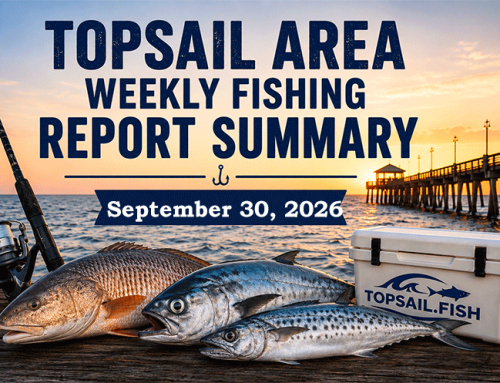
Topsail Area Weekly Fishing Summary is our roundup of pier activity, regional fishing trends, seasonal patterns, and the fishing outlook from across Topsail Island, Surf City, North Topsail Beach, Sneads Ferry, and the surrounding coastal waters.
Mid-August is delivering a true late-summer fishing pattern around Topsail Island. Inshore anglers are finding red drum, speckled trout, black drum, and quality flounder throughout the Intracoastal Waterway, creeks, bays, docks, and marsh systems. Along the oceanfront, Spanish mackerel and bluefish can provide fast action whenever conditions allow, while surf anglers continue picking away at whiting, black drum, and occasional red drum. Pier fishermen also have a chance at larger Spanish mackerel, king mackerel, and even the occasional tarpon.
There were no new captain fishing reports submitted directly to Topsail.Fish this past week, so this summary is based on current regional catches, pier reports, seasonal movement, and recent fishing activity throughout the greater Topsail area.
Species Scorecard
- Red Drum ★★★★☆
- Flounder ★★★★☆
- Spanish Mackerel ★★★★☆
- Speckled Trout ★★★★☆
- Bluefish ★★★★☆
- Black Drum ★★★☆☆
- Sheepshead ★★★☆☆
- King Mackerel ★★★☆☆
Red Drum Remain a Strong Inshore Target
Red drum continue to be one of the most dependable inshore targets around North Topsail Beach, Sneads Ferry, the Intracoastal Waterway, and the surrounding creeks and marshes. Recent reports show both slot-sized fish and larger reds being caught with live bait and artificial lures.
Early morning remains the best time to cover shallow water with topwater plugs, gold spoons, soft-plastic paddle tails, and shrimp imitations. Grass edges, oyster points, creek mouths, docks, and shallow flats holding finger mullet are all worth investigating before the sun gets high.
As the morning progresses, slowing down around shaded docks, deeper creek bends, and oyster structure can keep the bite going. Live finger mullet, shrimp, and fresh cut bait become increasingly effective once fish move away from exposed shallow banks.
Anglers should pay close attention to bait movement. Nervous finger mullet, shrimp popping near marsh grass, and small wakes traveling parallel to shore are often the first signs that red drum are feeding nearby.
Visit the Topsail Island Fishing Intel Center for more information about local species and seasonal fishing patterns.
Flounder Action Continues to Improve
Flounder are showing in good numbers throughout the inshore fishery, with some quality fish being caught around creek mouths, docks, channel edges, bulkheads, marsh drains, and deeper holes along the ICW.
Live finger mullet and mud minnows remain excellent choices when presented near the bottom. Anglers using artificial lures should work paddle tails, scented soft plastics, and jig heads slowly enough to maintain regular bottom contact.
Current edges are especially important. Flounder commonly position themselves where shallow flats drop into deeper channels or where moving water funnels bait through a narrow opening.
Rather than making one cast and moving on, work productive-looking areas thoroughly. Flounder often remain stationary while waiting for bait to pass, and a lure that approaches from the right direction may trigger a fish that ignored an earlier presentation.
Always check current North Carolina flounder regulations before retaining a fish. Even when harvest opportunities are limited, flounder remain one of the most exciting late-summer inshore targets.
Speckled Trout Still Producing Along the ICW
Speckled trout remain part of the mid-August inshore mix, particularly around the Intracoastal Waterway, creek mouths, deeper holes, current seams, and areas holding shrimp and small baitfish.
Low-light periods continue to offer the best opportunity for topwater action. Walk-the-dog style plugs can produce during the first hour or two after sunrise, especially around grass points and shallow areas adjacent to deeper water.
Once the sun climbs, live shrimp beneath a popping cork becomes one of the most reliable presentations. Soft plastics worked slowly along channel edges and deeper drop-offs can also produce fish throughout the morning.
Trout may be scattered during the hottest part of summer, so covering water until a productive depth or current pattern is identified can be more effective than spending too much time in one location.
Black Drum Adding Variety Around Structure
Black drum continue appearing around bridges, docks, oyster beds, deeper holes, and other structure throughout the inshore fishery. Fresh shrimp remains the most versatile bait and can produce black drum alongside red drum, sheepshead, and other bottom-oriented species.
Keep the bait near the bottom and allow current to carry the scent toward nearby fish. Small pieces of shrimp often work better than oversized offerings, especially when black drum are feeding on smaller crabs and shellfish.
Shaded areas beneath bridges and docks can become particularly productive once midday temperatures climb.
Spanish Mackerel and Bluefish Can Provide Fast Action
When ocean conditions cooperate, Spanish mackerel and bluefish remain among the most exciting nearshore targets available around Topsail Island. Schools continue moving along the beachfront, around inlet shoals, and wherever bait becomes concentrated.
Trolling Clarkspoons behind planers or trolling weights remains one of the most dependable techniques for locating Spanish mackerel. Once fish are found, casting metal jigs and small spoons can provide rapid action when schools begin feeding near the surface.
Bluefish are frequently mixed with the Spanish and will strike many of the same lures. Anglers should be prepared for occasional cutoffs when fishing light leaders.
Working birds, bait spraying across the surface, and concentrated schools visible on sonar are all signs worth investigating. Avoid driving directly through feeding fish; approach from the edge and cast into the activity whenever possible.
Surf Fishing Producing Whiting and Black Drum
Surf anglers are finding a late-summer mix dominated by whiting, also commonly called sea mullet, along with black drum, bluefish, croakers, spots, and occasional red drum.
Fresh shrimp and sand fleas remain the top baits for whiting and black drum. Small double-drop rigs with appropriately sized hooks often outperform oversized surf setups when the primary targets are smaller bottom species.
Red drum can also show in the surf, particularly around cuts, deeper troughs, and areas where finger mullet are moving along the beach. Fresh cut bait on a Carolina-style rig is a good option when specifically targeting drum.
Look for differences in the wave pattern rather than simply casting as far as possible. A deeper trough or cut close to shore may hold more fish than water well beyond the sandbar.
Pier Fishing Offers More Than Bottom Fish
Topsail-area pier anglers continue seeing many of the same bottom species as surf fishermen, including whiting and black drum, but the elevation and deeper water provide additional opportunities.
Speckled trout can appear around the pilings and deeper sections of the piers, while larger Spanish mackerel remain available to anglers casting Gotcha plugs, spoons, and metal jigs.
Anglers fishing live bait from the ends of the piers also have a chance at king mackerel. These fish remain less predictable than Spanish mackerel, but a strong bait presence can quickly change the day’s action.
Tarpon remain the ultimate late-summer wildcard. They are never a dependable pier target, but August is one of the periods when anglers should keep an eye out for large fish rolling or moving through beachfront bait schools.
Sheepshead Still Worth Targeting Around Pilings
Sheepshead remain available around bridges, docks, pier pilings, and other barnacle-covered structure. These fish may not be receiving as much attention as red drum or flounder, but they continue providing excellent opportunities for anglers willing to fish tight to structure.
Fiddler crabs, sand fleas, barnacles, and live shrimp are all productive baits. Position the bait directly beside the piling and maintain enough line contact to detect subtle bites.
Inspect leaders frequently because oysters and barnacles can weaken line quickly. A hooked sheepshead will often attempt to circle the structure immediately after the hookset.
Finger Mullet Continue to Shape the Late-Summer Bite
Finger mullet are becoming increasingly important throughout the Topsail fishery. Growing schools are moving through marshes, creeks, the ICW, inlets, and beachfront waters, providing food for nearly every major predator in the area.
Red drum, flounder, speckled trout, bluefish, and Spanish mackerel all benefit from increasing mullet concentrations. As these bait schools grow and begin moving more consistently, fishing activity should become more concentrated around creek mouths, inlet areas, and beachfront troughs.
Watch for bait suddenly becoming nervous, showering out of the water, or compressing tightly against shorelines. These signals often reveal feeding predators before the fish themselves become visible.
King Mackerel Remain an Offshore and Pier Possibility
King mackerel continue to be found around reefs, wrecks, bait schools, and offshore structure. Slow-trolling live menhaden, cigar minnows, or other live bait remains one of the most productive approaches.
Anglers without live bait can pull Drone spoons, strip baits, or deep-diving plugs through areas holding bait. Locating forage remains more important than targeting one particular depth.
King mackerel may also move surprisingly close to the beach when large bait concentrations develop, which keeps them in play for experienced pier fishermen using live-bait king rigs.
Mahi and Offshore Bottom Fishing Continue Producing
Regional offshore reports continue to show mahi available around productive bluewater structure, along with bonito and a good assortment of bottom fish.
Weed lines, floating debris, temperature breaks, and concentrated bait remain the best places to search for mahi. Small trolling skirts, rigged ballyhoo, and mahi chains can all produce.
Offshore bottom fishermen are finding good variety around reefs, wrecks, ledges, and hard-bottom areas. Black sea bass, snapper, grouper, triggerfish, grunts, porgies, and other structure-oriented species remain possibilities depending on depth and location.
Keep a lighter spinning outfit ready when bottom fishing because mahi, cobia, king mackerel, barracuda, and other predators may unexpectedly appear around productive structure.
What to Expect Next Week
Red drum should remain one of the most reliable inshore targets, while flounder opportunities continue improving around creek mouths, docks, marsh drains, and channel edges. Speckled trout and black drum should remain part of the ICW and creek mix.
Spanish mackerel and bluefish should continue providing fast action during favorable ocean conditions, particularly when anglers locate concentrated bait close to the beach.
Surf anglers should continue seeing whiting and black drum, with red drum becoming increasingly interesting as finger mullet schools strengthen. Pier fishermen can expect the same bottom species along with opportunities for larger Spanish mackerel, king mackerel, and the occasional tarpon.
The continuing growth of finger mullet schools should gradually push the Topsail fishery toward the stronger late-summer and early-fall feeding pattern.
Topsail.Fish Weekly Takeaway
The most important factor this week is bait. Whether fishing the marshes, ICW, surf, piers, or nearshore waters, anglers who locate concentrations of finger mullet, shrimp, or small baitfish are putting themselves in the best position to find feeding predators.
Start early for red drum, trout, and flounder, then adjust toward deeper structure as temperatures rise. On calmer ocean mornings, Spanish mackerel and bluefish provide an excellent alternative when the inshore bite becomes difficult.
Best Bets for the Coming Week
Best Inshore Bet: Red Drum
Work grass edges, oyster points, creek mouths, docks, and shallow flats during the first few hours of daylight. Topwater plugs, gold spoons, paddle tails, live finger mullet, and fresh cut bait are all strong choices.
Best Flounder Bet: Creek Mouths and Channel Edges
Slowly work live finger mullet or soft plastics along bottom transitions, marsh drains, dock structure, and locations where moving water concentrates bait.
Best Speckled Trout Bet: Live Shrimp
Fish live shrimp beneath a popping cork around deeper creek bends, current seams, and shaded ICW shorelines after the early topwater bite fades.
Best Structure Bet: Black Drum
Fish fresh shrimp near docks, bridges, oyster beds, and deeper holes where current carries scent through the structure.
Best Surf Fishing Bet: Whiting
Use fresh shrimp or sand fleas on small double-drop rigs in the first productive trough or around cuts in the sandbar.
Best Pier Bet: Spanish Mackerel
Cast Gotcha plugs and metal jigs during early morning and late afternoon when larger Spanish move within range of the pier.
Best Nearshore Bet: Spanish Mackerel and Bluefish
Look for working birds and concentrated bait, then troll Clarkspoons or cast metal jigs around the edges of feeding schools.
Best Offshore Bet: Mahi
Search weed lines, floating debris, temperature breaks, and offshore bait concentrations with rigged ballyhoo and small trolling skirts.
Weekly Wildcard Prediction
Watch the growing finger mullet schools closely. As these baitfish become more concentrated around Topsail’s inlets and beaches, don’t be surprised to see red drum and bluefish activity increase sharply, particularly during early morning and evening tide changes.
Topsail.Fish Forecast Rating
Overall Fishing Outlook: ★★★★☆ (4 out of 5)
Mid-August continues to offer an excellent variety of fishing opportunities around Topsail Island. Red drum, flounder, trout, Spanish mackerel, bluefish, black drum, and offshore species are all in play, with anglers who locate bait and fish the cooler portions of the day having the best chance of success.
Planning a Topsail Fishing Trip?
Browse the Topsail Island Fishing Season Guide to see how local fishing changes throughout the year and which species typically peak each month.
Families and first-time anglers can explore our Kid-Friendly Fishing Trips for accessible fishing ideas and tips for making a day on the water enjoyable for younger anglers.
For rigs, techniques, bait presentations, and local fishing advice, browse the Topsail.Fish How-To Articles.
Ready to fish with a local professional? Browse the Topsail-area captain directory and Book a Charter for your next inshore, nearshore, or offshore fishing trip.
Turn This Week’s Fishing Report Into Your Next Catch
Now that you’ve seen what’s happening around Topsail Island, take the next step by exploring detailed captain reports, checking seasonal fishing patterns, reviewing current conditions, and finding a local guide to help make your next trip a success.
🎣 Planning a fishing trip to coastal North Carolina? Before choosing a charter destination, discover why many anglers prefer Topsail Island’s less crowded waters, productive back bays, and outstanding inshore and surf fishing opportunities.
🎣 Planning a trip to the NC coast? Before you book a boat down south, check out why Topsail vs. Wilmington fishing offers a better backwater experience. 🎣
Own a Fishing Charter Around Topsail Island?
Get your business in front of local anglers searching for fishing charters, guides, and inshore adventures on Topsail.Fish. Our directory listings are designed to help captains improve online visibility, increase bookings, and build a stronger local presence.
Professional listings start at just $12/month.