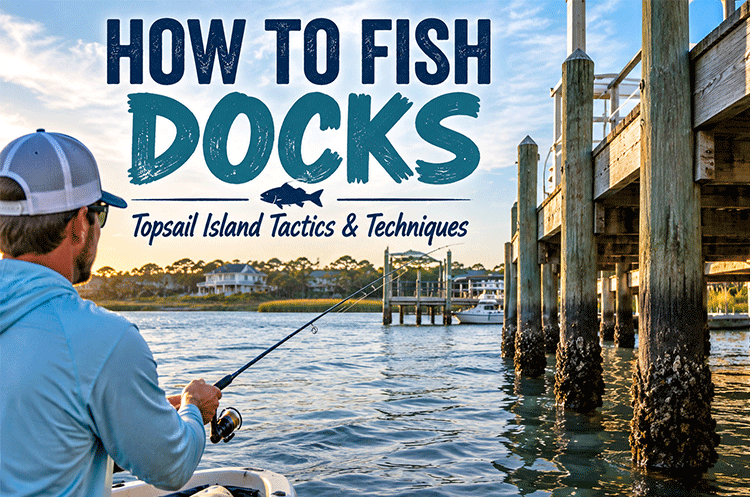
If you take a boat ride or kayak trip down the Intracoastal Waterway (ICW) behind Topsail Island, you’ll pass hundreds of docks stretching into the sound. To a novice angler, every dock looks like a potential hotspot. But to an experienced local captain, only a fraction of those structures consistently hold quality gamefish. Learning how to separate dead wood from high-percentage fish habitat is what transforms dock fishing from a guessing game into one of the most reliable inshore tactics along coastal North Carolina.
Docks act as complete, self-sustaining ecosystems. They provide shade from the harsh mid-day sun, protection from strong tidal currents, overhead cover from aerial predators, and a constant buffet of grass shrimp, mud crabs, and juvenile baitfish. Whether you are targeting red drum, speckled trout, flounder, or sheepshead around Surf City, Sneads Ferry, or Hampstead, mastering dock anatomy and lure presentation will drastically improve your catch rates.
In this comprehensive guide, we break down dock anatomy, tactical approaches, casting techniques, seasonal shifts, and the hyper-local dynamics of fishing docks across Topsail Island.
The Anatomy of a High-Percentage Dock
Not all docks are created equal. An unproductive dock might sit in shallow, stagnant water over a featureless sand bottom, while a prime “money dock” features a complex combination of depth, current flow, shade, and bottom structure.
1. Depth Transitions & Micro-Channels
The single most crucial element of a producing dock is its proximity to deep water. Docks that extend out to the edge of an ICW channel drop-off or cross over a natural creek mouth are exponentially better than docks sitting on a flat, uniform mudbank. Look for docks where the outermost pilings sit in at least 4 to 8 feet of water at low tide. This depth gives predatory fish a safe retreat when the tide drains out.
2. The “Structure Within Structure” Concept
Pilings alone provide cover, but the best docks feature additional bottom structure hidden beneath the walkway:
- Old/Broken Pilings: Sawn-off pilings hidden below the water surface are absolute gold mines for sheepshead and red drum.
- Oyster Clusters: Pilings encrusted with thick, mature live oysters provide a food source and break up current.
- Sunken Debris: Forgotten fish traps, fallen dock planks, or artificial rock rip-rap placed around pilings create micro-ambush zones.
- Boat Lifts & Floating Docks: Floating platforms create massive dark shade footprints that move with the tide, keeping fish comfortable all day long.
3. Current Interception & Tidal Eddies
Predatory fish rarely sit directly in the main sweep of a strong tidal current; doing so burns too much energy. Instead, they position themselves in the “slack water” eddies created behind heavy wood pilings. As the tide sweeps shrimp and finger mullet past the dock, predators dart out from behind the piling, snatch the prey, and retreat into the shade.
Water Temperature: The Hidden Driver of Dock Patterns
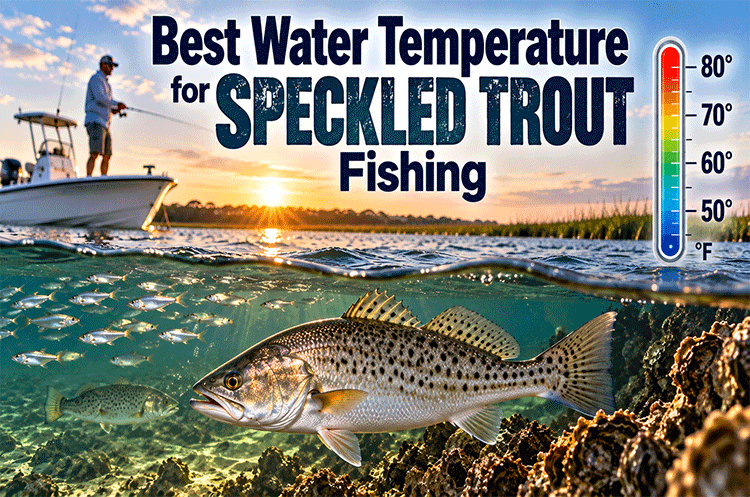
While physical structure gives fish a place to hide, micro-environmental factors dictate when and where they hold on a dock throughout the year. Water temperature plays a dominant role in fish metabolism, positioning, and feeding aggressiveness around dock pilings.
In summer, deep dock pilings offer cool, oxygenated shade when surface flats bake in the sun. In winter, metal boat lifts and shallow dark-mud bottoms under private docks absorb solar radiation, warming the immediate water column by a crucial degree or two. Understanding how fish react to these thermal subtle shifts is essential for year-round consistency.
For a deeper dive into these environmental dynamics, check out our featured video on Captain Lee Parsons: Water Temperature Fishing Tips. Captain Lee explains how subtle water temperature swings dictate fish movement, helping you select the exact docks that hold active biters in early spring, hot summer, or crisp autumn.
Casting Techniques: Pitching, Skipping, and Presenting
Fishing docks requires precision. If you drop your lure three feet away from a dock piling, you might get ignored; if you pitch it three inches from the wood—or skip it beneath the boat lift—you get slammed.
1. The Underhand Pitch
Overhand casting near wooden docks is a recipe for snags, broken line, and spooked fish. Master the underhand pitch using a 6’6” to 7’0” medium-power rod. Keep your rod tip low, sweep it upward underhanded, and control spool feathering with your thumb or finger. This drops your lure softly into the water with minimal splash right alongside the piling.
2. Skipping Lures Under Platforms
To reach red drum and speckled trout holding in the dark depths beneath floating docks or boat lifts, you must learn to skip soft plastics.
- Use a streamlined, unweighted or light-jighead soft plastic (like a weedless paddle tail or jerk bait).
- Keep your release trajectory low and parallel to the water surface, whipping the rod tip to bounce the lure across the water like a flat stone.
3. Fighting Fish Out of the Wood
Hooking a 5-pound red drum or heavy flounder under a dock piling is only 20% of the battle—the remaining 80% is getting them out without getting broken off on razor-sharp oysters.
- Set heavy drag: Lock down your reel drag tighter than usual.
- Rods up, pull hard: The second you feel a strike, drive the hook home and immediately sweep your rod tip away from the dock to turn the fish’s head toward open water.
- Braid to Fluorocarbon: Always use a 15–20 lb braided main line tied to a heavy, 20–25 lb fluorocarbon leader for maximum abrasion resistance against shell-encrusted wood.
Local Focus: Fishing the Docks of Topsail Island
The docks scattered along Topsail’s backwaters vary wildly depending on their exact location on the island. Here is how to approach local dock fishing across our primary zones.
1. Surf City Sound & Bridge Docks
The central sound behind Surf City features classic ICW docks running alongside narrow creek channels.
- The Setup: Docks close to the Surf City bridge and marsh cuts experience heavy tidal flow. Target the dock pilings during the middle two hours of an incoming or outgoing tide when current is moving strongest.
- Target Species: Red drum, speckled trout, and summer flounder. Drop 1/4 oz jig heads tipped with Berkley Gulp! Alive! artificials or live finger mullet right down the face of outer pilings.
2. Sneads Ferry & New River Docks
Heading north toward Sneads Ferry, docks become longer, reaching into deeper river channels and brackish bays.
- The Setup: These docks often feature heavier timber pilings and lower salinity depending on recent rainfall.
- Target Species: Large black drum and trophy sheepshead congregate around old commercial and residential pilings here. Drop live fiddler crabs, sea worms, or fresh dead shrimp directly alongside pilings using a simple “Carolina rig” with a short 12-inch leader and a stout circle hook.
3. Hampstead & Topsail Sound Docks
The southern end of the island, extending toward Topsail Sound and Hampstead, features broad mudflats dotted with private boat-lift docks.
- The Setup: Many of these docks dry out almost completely at dead low tide. The key here is fishing the high-tide flood. As the tide floods the flats, redfish charge under these private docks to feast on fiddler crabs hiding on the exposed posts.
- Target Species: Sight-casting for red drum under boat lifts using weedless gold spoons or live shrimp under a small floats.
Dock Fishing Etiquette & Safety
Remember that every private dock on Topsail Island represents personal property owned by local residents. Maintaining good angling etiquette ensures public access remains friendly for everyone:
- Respect Property: Never step foot onto a private dock or tied-up boat without permission. Fish strictly from your vessel, kayak, or wade position in the water.
- Watch Your Casts: Avoid hitting boat hulls, canvas covers, or personal watercraft with lead sinkers and heavy jig heads.
- Give Way: If a dock owner is actively using their swim platform or boat lift, politely yield the spot and move to the next structure down the line.
Setting Your Course
Fishing docks along Topsail Island isn’t just about making random casts at wooden posts—it’s an intentional game of reading depth, understanding current eddies, matching water temperatures, and delivering pinpoint casts into dark shade pockets. By applying these structural techniques and respecting local dock properties, you’ll unlock one of the most reliable, year-round fisheries coastal North Carolina has to offer. Pack your heavy fluorocarbon leaders, sharpen your hooks, and hit the ICW dock lines on the next moving tide.
Stay Informed and Get Involved
North Carolina’s fisheries are constantly evolving as new research, public input, and management decisions shape future regulations. Whether you support the current flounder rules or believe changes are needed, staying informed is the best way to make your voice heard. The North Carolina Division of Marine Fisheries (NCDMF) provides fisheries research, stock assessments, proclamations, and recreational fishing information. The North Carolina Marine Fisheries Commission (MFC) establishes many of the policies and regulations governing coastal fisheries and regularly accepts public comment. The North Carolina Wildlife Resources Commission (NCWRC) oversees Inland and Joint Fishing Waters and publishes regulations affecting anglers across the state. We encourage every fisherman—whether recreational or commercial—to follow these agencies, review proposed rule changes, and participate in the public process. Well-informed anglers help build better fisheries for everyone.
Keep Building Your Topsail Fishing Skills
Want to put this technique to work on your next trip? Use these Topsail.Fish resources to check current fishing activity, match your tactics to the season, review local conditions, and find more step-by-step fishing guides.
🎣 Planning a fishing trip to coastal North Carolina? Before choosing a charter destination, discover why many anglers prefer Topsail Island’s less crowded waters, productive back bays, and outstanding inshore and surf fishing opportunities.
🎣 Planning a trip to the NC coast? Before you book a boat down south, check out why Topsail vs. Wilmington fishing offers a better backwater experience. 🎣

Are you a Topsail Area Captain?
Grow your charter business with an SEO-optimized listing in our directory. For just $12/month, we help you reach more anglers and secure the consistent bookings you need to thrive.