
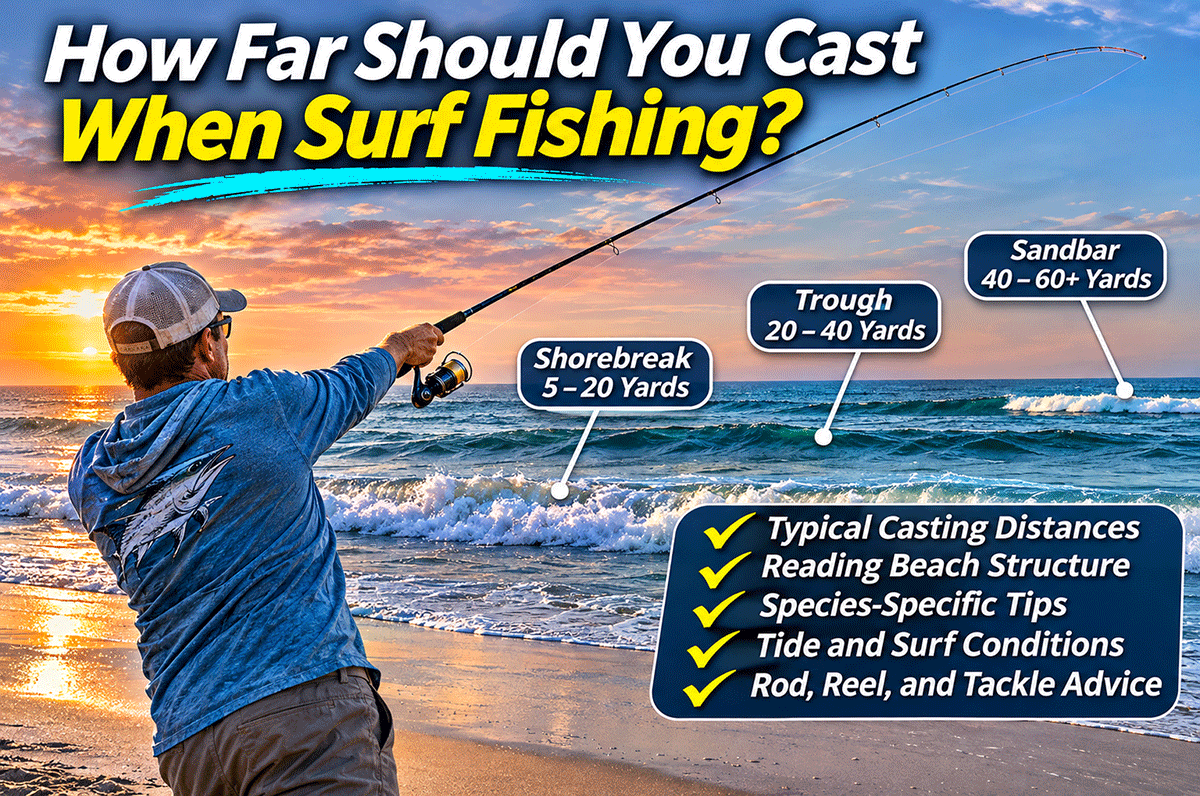
How Far Should You Cast When Surf Fishing?
Stand on any beach along Topsail Island and watch the surf anglers for a few minutes. You’ll probably notice that many are trying to cast their bait as far into the Atlantic Ocean as possible. Longer rods, heavier sinkers and powerful casting techniques are often used in pursuit of greater distance.
But is casting farther actually the secret to catching more fish?
Not necessarily. One of the most common mistakes in surf fishing is casting beyond the very fish you’re trying to catch.
Red drum, black drum, pompano, sea mullet and other popular coastal species frequently feed surprisingly close to shore. In some situations, a simple 20-yard cast can be more productive than one that travels the length of a football field.
Learning how far you should cast when surf fishing begins with understanding where fish feed, how beach structure influences their movements, and how tides and wave conditions affect their location.
Whether you’re fishing North Topsail Beach, Surf City or Topsail Beach, knowing where to place your bait is generally more important than knowing how far you can throw it.
How Far Should You Cast When Surf Fishing?
For many everyday surf fishing situations along the North Carolina coast, casting between 20 and 60 yards is an excellent starting point.
However, productive fishing water may be considerably closer or farther away depending on beach structure, tidal stage, target species and ocean conditions.
Occasionally, fish feed within 10 yards of the shoreline. At other times, reaching an outer sandbar or deeper channel may require a cast of 80 to 100 yards or more.
The following distances provide a practical starting reference rather than fixed rules:
| Distance | Target Area | Potential Species |
|---|---|---|
| 5–20 yards | Shorebreak and shallow feeding zones | Pompano, sea mullet, black drum |
| 20–40 yards | Nearshore troughs and sloughs | Red drum, black drum, pompano, croaker |
| 40–60 yards | Sandbar edges and deeper troughs | Red drum, sea mullet, bluefish, pompano |
| 60–100 yards | Distant sandbars and channels | Red drum, bluefish, Spanish mackerel |
| 100+ yards | Distant feeding zones beyond accessible bars | Larger drum and schooling predators when present |
These distances are illustrative, measured approximately from your casting position. Sandbars and troughs can occur at very different distances from shore, and none of the species listed is restricted to a particular casting range.
Think of casting distance as a tool for reaching productive water, not as a measurement of fishing ability.
Why Fish Often Feed Close to Shore
It might seem logical that larger fish prefer deeper water farther from the beach. However, fish frequently enter shallow water because that is where they find food.
Breaking waves continuously disturb the sandy ocean floor, exposing mole crabs, marine worms, small clams, shrimp and other organisms.
Small baitfish also travel along the beachfront, attracting predators that follow these concentrations of food.
As waves wash across the beach and retreat toward the ocean, they carry food particles and small organisms into nearby feeding areas.
These conditions can create productive fishing opportunities almost directly in front of an angler standing on the beach.
The Shorebreak Feeding Zone
The shorebreak is the area where waves make their final approach and break against the beach.
Although the water may appear too shallow to hold fish, it can be particularly productive for species that feed on small organisms buried in the sand.
Pompano and sea mullet may move into this zone as waves expose their preferred food. Red drum and black drum can also venture into shallow water when feeding conditions are favorable.
Before making a long cast, consider placing your bait just beyond the immediate shorebreak and allowing it to work through this often-overlooked feeding zone.
The First Trough
The first trough, sometimes called a slough, is a deeper depression that typically runs parallel to the beach between shallower sections of sand.
It can provide a convenient travel route for fish moving along the shoreline.
Depending on beach conditions, this trough may be within easy casting distance of an ordinary seven- or eight-foot fishing rod.
Casting beyond it simply because you have the equipment to reach farther may result in missing one of the most productive areas of the surf.
Read the Surf Before Deciding How Far to Cast
The ocean floor along Topsail Island is constantly changing. Storms, tides, seasonal wave patterns and coastal currents reshape the underwater landscape throughout the year.
A productive trough located 30 yards from shore during one fishing trip may be partially filled with sand the next time you visit.
Instead of memorizing casting distances, learn to recognize the features that influence fish movement.
Sandbars
Sandbars are submerged or partially exposed ridges of sand that can influence wave behavior and water movement.
When waves consistently break along a particular line offshore, they may be revealing the location of a shallow sandbar.
Rather than automatically casting over the bar, try fishing its near edge, its crest when sufficiently submerged, and the deeper water beyond it.
Different portions of the same sandbar may become productive as the tide changes.
Troughs and Sloughs
Deeper channels between shallower sections of sand provide protected travel routes and feeding opportunities.
Look for relatively darker bands of water or areas where waves temporarily lose their breaking action.
Water color alone is not always a reliable indicator of depth, so observe several sets of waves before choosing a target.
Cuts Through Sandbars
Gaps in sandbars can concentrate moving water and food, making the surrounding edges attractive to feeding fish.
Look for interruptions in an otherwise consistent line of breaking waves.
Some of these areas contain dangerous rip currents. Fish them from dry land and never attempt to wade into a cut to gain additional casting distance.
Beach Points and Pockets
Subtle changes in the shape of the shoreline can create productive fishing areas without requiring particularly long casts.
A small depression in the beach may hold deeper water than the surrounding shoreline. A projecting sand point may redirect current and concentrate food along its edges.
Learning to identify these features is an essential part of selecting your casting distance.
For a more detailed explanation of beach structure, read our How to Read the Surf guide.
Best Casting Distance for Different Surf Fishing Species
Your target species can help determine where to begin fishing. Different fish pursue different food sources and may favor particular sections of the surf.
Red Drum
Red drum can be caught at virtually any accessible distance from the beach when conditions are favorable.
Smaller and slot-sized red drum frequently move through nearshore troughs, feeding on crabs, shrimp and baitfish.
Larger red drum may travel along deeper channels, sandbar edges and areas of concentrated baitfish farther offshore, but they can also feed remarkably close to shore.
A cast of 20 to 60 yards is a reasonable starting point when fishing for red drum in a typical beach environment.
If an outer sandbar or distant channel shows signs of feeding activity, a longer cast may be worthwhile.
Match your leader and terminal tackle to the anticipated fish size and surrounding conditions. Our article, What Size Leader for Red Drum?, provides additional guidance on leader selection for both inshore and surf fishing.
Black Drum
Black drum feed heavily on crustaceans, mollusks and other bottom-dwelling organisms.
Nearshore troughs, deeper pockets and sections of beach where waves expose food can be productive locations.
Depending on the structure, casts of 15 to 50 yards may place your bait directly in their feeding zone.
Fresh shrimp and other suitable natural baits presented near the bottom are practical choices.
Pompano
Pompano are excellent examples of fish that anglers frequently cast beyond.
They often feed on sand fleas, small clams and other organisms disturbed by wave action.
Begin by fishing the nearshore wash, the first trough and nearby sandbar edges.
Short casts of 10 to 30 yards can be surprisingly productive when these areas contain food and sufficient water depth.
Longer casts may also produce pompano when fish are feeding along more distant sandbars.
Sea Mullet
Sea mullet, also commonly called whiting or kingfish, are bottom feeders frequently encountered along North Carolina beaches.
They search the sandy bottom for small crustaceans, worms and other food.
The first trough and nearby sandbar edges are excellent places to begin.
Try different casting distances between 15 and 50 yards rather than assuming the fish will be farther offshore.
Bluefish
Bluefish are mobile predators that follow concentrations of baitfish.
They may feed near the shoreline or several casting distances offshore.
When targeting bluefish with metal spoons or other artificial lures, observe surface activity and cast where the baitfish appear to be concentrated.
Longer casts can help cover more water, but moving along the beach may be more effective than repeatedly casting into an unproductive area.
Spanish Mackerel
Spanish mackerel frequently pursue small baitfish in the upper portion of the water column.
When schools are feeding near the outer breakers, casting distance can become particularly important.
Slim metal lures and balanced spinning tackle may help reach fish feeding farther from shore.
However, Spanish mackerel sometimes chase baitfish into very shallow water, placing them within reach of anglers using relatively light equipment.
Flounder
Flounder often position themselves near the bottom where they can ambush passing baitfish.
Troughs, channel edges and sandy depressions can provide suitable habitat.
Rather than focusing on maximum distance, work an appropriate lure or bait through several depths and along changes in bottom structure.
Always check current North Carolina regulations before targeting or retaining flounder or any other regulated species.
How Tides Affect Surf Fishing Casting Distance
The same beach may require several different casting distances during a single fishing trip because the tide changes both water depth and access to feeding areas.
Fishing at Low Tide
At low tide, shallow sandbars may become exposed or covered by very little water.
Fish may concentrate in remaining troughs, deeper pockets and channels that retain sufficient depth.
This can be an excellent opportunity to identify underwater structure for future fishing trips.
Do not assume that low tide always requires a longer cast. Some nearshore troughs retain enough water to hold feeding fish even when surrounding areas become shallow.
Fishing the Incoming Tide
As water levels rise, previously shallow or exposed feeding areas become accessible to fish.
Red drum, pompano and other species may move closer to shore as additional food becomes available.
During an incoming tide, progressively shorter casts may become productive as fish move into newly flooded areas.
Fishing at High Tide
At high tide, deeper water may extend almost to the beach itself.
Fish can move over submerged sandbars and enter feeding areas that were inaccessible at lower water levels.
Short casts into the nearshore zone can be particularly effective when high tide coincides with suitable feeding conditions.
Fishing the Outgoing Tide
As the tide falls, water retreats from shallow areas and moves through channels and depressions.
These changes may concentrate bait and feeding fish near troughs, cuts and sandbar edges.
Adjust your casting distance to follow the changing water depth rather than continuing to fish the same location simply because it produced earlier.
For additional guidance on reading tidal conditions, see our Topsail Island Tide Guide.
The Three-Zone Strategy for Finding Fish in the Surf
One of the simplest ways to determine the best casting distance is to divide the surf into three general fishing zones.
This approach works whether you’re fishing with one rod or several.
Zone 1: Short Cast
Begin by fishing relatively close to shore, approximately 10 to 25 yards away if the water depth and structure are suitable.
Target the nearshore wash, the inside edge of the first trough, or a deeper pocket close to the beach.
This is often a productive starting zone for pompano, sea mullet, black drum and occasionally larger predators.
Zone 2: Medium Cast
Next, explore water approximately 25 to 60 yards from shore.
Look for deeper troughs, sandbar edges and areas where current concentrates food.
This zone can offer opportunities for a wide variety of surf fishing species.
Zone 3: Long Cast
Finally, explore farther water when visible structure, baitfish activity or fishing conditions justify doing so.
This may require casts of 60 to 100 yards or more, depending on the beach.
Target the outer edge of a sandbar, a distant channel or schooling fish feeding farther offshore.
Putting the Strategy into Practice
If you’re fishing with two rods, consider placing one bait in the nearshore trough and another in a more distant feeding area.
If you’re fishing with one rod, systematically alternate casting distances.
Give each location a reasonable opportunity to produce, inspect your bait regularly, and pay attention to where strikes occur.
Once you identify a productive distance, concentrate your efforts in that zone until conditions or fish activity change.
Let the fish determine your casting distance.
What Size Surf Fishing Rod Do You Need?
Longer surf fishing rods can help generate casting distance and keep fishing line above breaking waves. However, you do not necessarily need a long, specialized surf rod to catch fish from the beach.
The appropriate rod depends on your intended casting distance, rig weight, target species and fishing conditions.
7- to 8-Foot Rods
These rods are useful for relatively short casts, lighter rigs and calm surf conditions.
They can be particularly enjoyable when targeting pompano, sea mullet and other smaller species close to shore.
They are also easier for many beginners and younger anglers to handle.
9- to 10-Foot Rods
A nine- or ten-foot surf rod offers a versatile balance between casting distance, line control and ease of handling.
For many anglers fishing Topsail Island’s beaches, this length is an excellent general-purpose choice.
Depending on its power and lure rating, it can accommodate several common surf fishing techniques.
11- to 12-Foot Rods
Longer rods can be useful when fishing heavier rigs, casting beyond distant sandbars or keeping line above larger breaking waves.
They are often favored by anglers targeting larger red drum or fishing beaches where productive water lies farther offshore.
However, rod length alone does not guarantee greater casting distance.
A properly matched shorter rod used with good technique may outperform a longer rod that is poorly suited to the rig or angler.
Does a Heavier Sinker Help You Cast Farther?
Increasing sinker weight can sometimes improve casting distance, particularly when a rig is too light to load the rod properly.
However, there is a point where additional weight becomes counterproductive.
Every fishing rod is designed to perform within a particular casting-weight range. A sinker that is too light may not load the rod effectively, while one that is too heavy can reduce casting performance and potentially damage the equipment.
Remember that the total casting weight includes the sinker, bait, hooks, rig and any additional terminal tackle.
As a general starting point:
- 1–2 ounces: Relatively calm conditions and lighter surf fishing applications.
- 2–4 ounces: Many typical surf fishing situations involving moderate waves and current.
- 4–6 ounces: Stronger currents, larger waves or demanding fishing conditions, provided the tackle is appropriately rated.
These are illustrative ranges rather than universal recommendations.
Choose a sinker that holds your bait in the desired feeding area without unnecessarily increasing rig weight.
Sometimes changing sinker shape provides better bottom-holding performance than simply adding another ounce of lead.
Reaching the intended fishing location is only half the challenge. Keeping your bait there is equally important.
How Fishing Line and Rig Design Affect Casting Distance
Rod length and sinker weight receive much of the attention when discussing surf casting, but fishing line and terminal tackle also influence performance.
Fishing Line Diameter
Thinner fishing line generally encounters less resistance when leaving the reel and passing through the rod guides.
Braided line often offers a smaller diameter than nylon monofilament of comparable rated breaking strength, which can help improve casting performance.
However, line selection must also account for abrasion resistance, expected fish size, casting loads and handling characteristics.
Never sacrifice necessary line strength simply to gain additional casting distance.
Shock Leaders
A shock leader is a stronger section of line designed to withstand the forces created when casting heavy sinkers and bait.
It is particularly important when using lighter main line with heavier surf fishing rigs.
The shock leader must be correctly matched to the casting load, equipment and casting technique.
A short hook leader is not a substitute for a properly configured shock leader.
Bait Size and Aerodynamics
Large pieces of bait create more air resistance than compact bait presentations.
A bulky rig with several hooks, floats and large pieces of bait may not cast as far as a streamlined single-hook rig of similar weight.
When additional distance is genuinely necessary, consider whether a more compact bait presentation can accomplish the same fishing objective.
Reel and Spool Condition
A properly filled spinning reel spool allows fishing line to leave the reel efficiently during a cast.
An underfilled spool can increase friction, while an overfilled spool may contribute to tangles and wind knots.
Inspect your line, rod guides and spool condition regularly to maintain reliable casting performance.
How to Improve Your Surf Casting Distance
There are times when reaching more distant water is beneficial. Developing a smooth, efficient casting technique can help without relying on excessive force.
Load the Rod Properly
During a cast, the rod bends under the resistance of the rig before releasing that stored energy.
A smooth, progressive casting motion allows the rod to load effectively.
Attempting to generate all your casting power through a sudden, aggressive movement can reduce accuracy and increase stress on the equipment.
Use a Controlled Two-Handed Cast
Many surf rods are designed for two-handed casting.
The upper hand guides the rod while the lower hand helps control its movement and transfer power through the cast.
Focus on coordination and consistency before attempting maximum-distance casts.
Adjust Your Release Angle
Releasing the line too early can send the rig excessively high, while releasing too late may drive it toward the water.
The ideal release angle varies with wind, equipment, rig design and casting technique.
Practice controlled casts and observe the flight of the rig.
Work With the Wind
A strong onshore wind can significantly reduce casting distance, particularly when using bulky rigs.
During windy conditions, a more compact presentation and controlled casting trajectory may help.
An offshore wind may assist casting distance, but increased range is useful only when the farther water actually contains fish.
Prioritize Accuracy
Being able to consistently place your bait in a productive trough or beside a sandbar edge is generally more valuable than making an occasional exceptionally long cast.
Practice reaching specific targets at short, medium and long distances.
The objective is to develop control over where your rig lands.
How to Tell When You Are Casting Too Far
Because fishing activity takes place beneath the surface, it is not always obvious when you are casting beyond productive water.
However, several observations should encourage you to experiment with shorter casts:
- Nearby anglers are catching fish with relatively short casts.
- Small baitfish are visible in the nearshore wash.
- Birds are feeding close to the beach.
- A well-defined trough runs parallel to the shoreline inside your current casting distance.
- Waves are disturbing sand fleas and other food near the beach.
- Water levels are rising and flooding previously shallow feeding areas.
- Repeated long casts produce no activity despite fresh bait and suitable tackle.
None of these observations guarantees fish will be close to shore, but each provides a reason to investigate nearer water.
The ability to recognize and respond to changing conditions is one of the most valuable skills a surf angler can develop.
Applying Casting Distance Strategies Around Topsail Island
Although Topsail Island’s beaches share many characteristics, productive casting distances can vary considerably from one beach access to the next.
North Topsail Beach
Areas near New River Inlet can experience significant changes in current, water depth and sandbar configuration.
Pay particular attention to changes in wave patterns, deeper depressions and current boundaries.
Some locations may require longer casts, while nearby troughs and pockets can hold fish within easy reach of the beach.
Exercise particular caution around inlet currents and unstable shoreline conditions.
Surf City
The central portion of Topsail Island offers opportunities to fish a variety of beachfront structures.
Observe the surf from designated dune crossover boardwalks before walking onto the beach.
An elevated perspective can make it easier to identify nearshore troughs, sandbar edges and possible feeding zones.
Begin with a cast directed toward visible structure instead of automatically trying to reach the outermost breakers.
Topsail Beach
Beach conditions toward the southern end of the island can vary with tidal movement, wave action and proximity to New Topsail Inlet.
Look for deeper pockets, changes in beach slope and breaks in offshore wave patterns.
As the tide changes, productive fishing water may shift considerably closer to or farther from your position.
Remaining flexible with casting distance can be particularly useful when fishing these changing environments.
Common Surf Fishing Casting Mistakes
1. Assuming Bigger Fish Are Always Farther Offshore
Large red drum and other predators can feed in remarkably shallow water. Fish size alone does not determine how far from shore a fish will be located.
2. Casting Beyond the First Trough
Overlooking nearby deeper water is a common mistake, especially among anglers equipped with long surf rods.
3. Using Excessively Heavy Sinkers
Additional weight does not automatically improve casting distance. Select a sinker that matches both the rod’s casting rating and the fishing conditions.
4. Fishing the Same Distance Throughout the Tide
Fish may change locations as water depth, current and available food change. Adjust your casting distance accordingly.
5. Ignoring Casting Direction
Sometimes the productive water is slightly to the left or right rather than directly offshore. An angled cast along a trough or sandbar edge may keep your bait within the feeding zone longer.
6. Confusing Casting Distance with Fishing Distance
Your bait may not remain where it initially lands. Waves, current and line tension can move the rig away from its original position.
Monitor your line angle and rig movement to determine whether your bait remains in the intended fishing zone.
7. Wading Unnecessarily
Walking into the surf to gain casting distance may disturb nearby fish and expose you to dangerous currents, breaking waves and sudden changes in bottom depth.
Many productive fishing areas can be reached safely by casting from dry land.
Surf Fishing Casting Safety
A surf fishing rig containing a heavy sinker and exposed hooks can cause serious injury if a casting accident occurs.
Always make sure the area behind and around you is clear before casting.
Pay particular attention to swimmers, children, beach walkers, pets and neighboring anglers.
Inspect your line, leader knots and terminal tackle before casting heavy rigs. Never exceed the rod’s recommended casting-weight rating.
A suitable casting finger guard can help protect your finger when casting heavier rigs with braided line.
Avoid fishing across swimming areas, and follow applicable beach access rules and local fishing restrictions.
Remember that no additional casting distance is worth placing yourself or another beach visitor at risk.
Frequently Asked Questions About Surf Fishing Casting Distance
Is a 30-yard cast far enough for surf fishing?
Yes. A 30-yard cast can be extremely productive when it reaches a nearshore trough, sandbar edge or other active feeding area. Many popular surf fishing species regularly feed within this distance.
Do I need to cast 100 yards to catch red drum?
No. Red drum frequently feed within much shorter casting distances. A 100-yard cast is useful when productive structure or feeding fish are located that far offshore, but it is not a universal requirement.
Can I surf fish with a seven-foot rod?
Yes. A seven-foot rod can be effective for fishing nearby troughs and shallow feeding areas with suitable lightweight rigs. Match the rod to the total casting weight and anticipated fish size.
Should I cast before or beyond the breaking waves?
Both areas can produce fish. Breaking waves may expose food along sandbars, while adjacent deeper water can provide feeding and travel routes. Experiment with the inside and outside edges of the breakers.
Do fish move closer to shore at high tide?
They can. Rising water allows fish to enter areas that were previously too shallow. However, their movements also depend on food availability, wave conditions, water temperature and other environmental factors.
Should beginners concentrate on casting distance?
Beginners should concentrate on safe casting, accuracy, reading the surf and presenting bait naturally. Greater casting distance can be developed later as experience and equipment allow.
Final Thoughts: Cast Where the Fish Are
So, how far should you cast when surf fishing?
For many situations along Topsail Island, a cast of 20 to 60 yards provides an excellent starting point. However, fish may be feeding within just a few yards of the beach or beyond a distant sandbar.
The correct casting distance is determined by the location of productive water, not by the maximum capabilities of your rod and reel.
Before attempting to cast as far as possible, take a few minutes to study the beach. Look for troughs, sandbars, cuts, pockets and signs of feeding activity.
Start close, explore intermediate distances and cast farther when the conditions justify it.
As the tide changes, reassess where your bait is positioned and adjust accordingly.
Developing these habits will help you become a more adaptable and effective surf angler, whether you’re targeting pompano on a calm summer morning, sea mullet during a spring fishing trip or red drum along the beachfront in the fall.
The most successful surf angler isn’t necessarily the one who casts the farthest. It’s the one who consistently puts the bait where the fish are feeding.
Tight lines from Topsail.Fish!
Stay Informed and Get Involved
North Carolina’s fisheries are constantly evolving as new research, public input, and management decisions shape future regulations. Whether you support the current flounder rules or believe changes are needed, staying informed is the best way to make your voice heard. The North Carolina Division of Marine Fisheries (NCDMF) provides fisheries research, stock assessments, proclamations, and recreational fishing information. The North Carolina Marine Fisheries Commission (MFC) establishes many of the policies and regulations governing coastal fisheries and regularly accepts public comment. The North Carolina Wildlife Resources Commission (NCWRC) oversees Inland and Joint Fishing Waters and publishes regulations affecting anglers across the state. We encourage every fisherman—whether recreational or commercial—to follow these agencies, review proposed rule changes, and participate in the public process. Well-informed anglers help build better fisheries for everyone.
Keep Building Your Topsail Fishing Skills
Want to put this technique to work on your next trip? Use these Topsail.Fish resources to check current fishing activity, match your tactics to the season, review local conditions, and find more step-by-step fishing guides.
🎣 Planning a fishing trip to coastal North Carolina? Before choosing a charter destination, discover why many anglers prefer Topsail Island’s less crowded waters, productive back bays, and outstanding inshore and surf fishing opportunities.
🎣 Planning a trip to the NC coast? Before you book a boat down south, check out why Topsail vs. Wilmington fishing offers a better backwater experience. 🎣

Are you a Topsail Area Captain?
Grow your charter business with an SEO-optimized listing in our directory. For just $12/month, we help you reach more anglers and secure the consistent bookings you need to thrive.