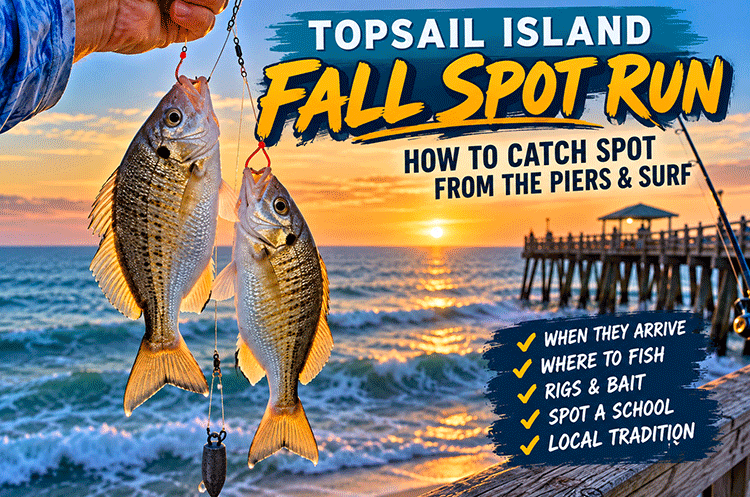
Fall brings some of the best fishing of the year to Topsail Island, and not every memorable day on the water requires chasing trophy red drum, speckled trout or king mackerel. Sometimes the excitement comes from a much smaller fish arriving in very large numbers.
Spot are a longtime favorite of North Carolina coastal anglers, and as the water begins cooling in the fall, these small members of the drum family gather in schools and move through nearshore waters. When a good school reaches the Topsail Island surf or one of the local fishing piers, the action can change quickly from a few scattered bites to anglers catching fish all along the rail.
For many longtime coastal fishermen, that is simply known as the fall spot run.
What Is a Spot?
Spot are easy to recognize once you know what you’re looking for. Their silvery bodies often show golden reflections along the upper sides, with several darker diagonal lines extending down the body. Their most recognizable feature is the prominent round black spot located just behind the gill cover.
Most of the spot caught along the North Carolina coast are relatively small fish, commonly measuring around 7 to 10 inches, although they can grow larger. They feed primarily along the bottom on worms, small crustaceans, organic material and other small food items.
That feeding behavior is one reason simple bottom-fishing techniques are so effective.
Spot spend warmer months in coastal and estuarine waters. As autumn approaches and spawning season draws closer, larger fish begin moving toward higher-salinity nearshore ocean waters before eventually moving farther offshore during winter.
That seasonal movement creates the opportunity Topsail Island anglers wait for each fall.
When Does the Fall Spot Run Happen?
There isn’t a date on the calendar when someone flips a switch and the spot suddenly arrive. Water temperature, weather, currents and other coastal conditions influence their movement.
Generally, however, the fall migration becomes increasingly noticeable as September gives way to October and coastal waters begin cooling. October has traditionally been an important month for spot fishing along the North Carolina coast, with opportunities continuing into the later fall depending on conditions.
Some spot are already beginning to appear in reports from Topsail-area piers this fall, making October a good time to have a light bottom-fishing setup ready.
The important thing to remember is that spot travel in schools. You may fish for a while with only an occasional bite and then suddenly find yourself in the middle of fast action.
Where to Catch Spot Around Topsail Island
One of the great things about spot fishing is accessibility. You don’t need a boat, specialized electronics or expensive offshore tackle.
Along Topsail Island, anglers can target spot from the surf and from the island’s three ocean fishing piers: Seaview Fishing Pier in North Topsail Beach, Surf City Ocean Pier and Jolly Roger Pier in Topsail Beach.
Piers have an obvious advantage during a spot run because anglers can reach different depths without making extremely long casts. Just as importantly, a pier provides a very visible indication of where the fish are located.
From the beach, anglers should pay attention to the troughs, sloughs, cuts and other changes in bottom structure that concentrate food and give traveling fish natural routes along the shoreline.
If you’re unfamiliar with identifying those features, our How to Read the Surf guide explains how breaking waves, darker water, sandbars, sloughs and cuts can reveal what is happening beneath the surface.
How Do You Know When a School of Spot Is Moving Through?
This can be one of the most entertaining parts of fall spot fishing.
On a pier, you may not need anyone to tell you the spot have arrived. The fishermen around you will do that.
One angler hooks a fish. Then another rod bends 20 yards down the pier. Someone pulls up a double. Another fisherman drops his rig back down and immediately gets another bite. Within a few minutes, anglers who were casually watching their rods are suddenly rebaiting and casting as quickly as possible.
That’s a pretty good indication that a school is moving through.
When it happens, pay attention to where the fish are being caught. Spot may be concentrated at a particular depth or along one section of the pier. You don’t necessarily need to cast farther just because someone else is catching fish. Watch the successful anglers and notice where their lines enter the water.
The same principle applies from the beach. If you’re catching spot consistently from one trough or section of water, get your bait back into that productive area quickly. A school may continue moving along the shoreline rather than remaining in one place all day.
When the bite suddenly stops, don’t automatically assume you’ve done something wrong. The school may simply have moved.
Keep the Spot Rig Simple
Spot fishing doesn’t require complicated terminal tackle.
A traditional two-hook bottom rig is one of the most effective choices for both pier and surf fishing. It allows two small pieces of bait to be presented near the bottom while a sinker holds the rig in the feeding zone.
Use enough weight to keep the rig on the bottom without unnecessarily overpowering your tackle. The amount needed will change with current, waves, wind and whether you’re fishing from the beach or a pier.
For anglers who want to build their own setup, our How to Tie a Double-Hook Bottom Rig guide provides a more detailed look at the rig used for this style of surf and pier fishing.
Small Hooks for a Small-Mouthed Fish
One of the easiest mistakes when targeting spot is using more hook than you need.
Spot have relatively small mouths, so smaller hooks and smaller pieces of bait generally provide a better presentation than the tackle you might use for red drum or other larger coastal species.
Hook sizes can also be confusing because the numbering system works in opposite directions depending on whether you’re dealing with standard numbered hooks or larger “aught” sizes.
Our Circle Hook Sizes: A Complete Guide for Topsail Island Fishing explains the sizing system in detail and includes recommendations for common Topsail-area species, including spot.
Whatever style you choose, the important idea is simple: match the hook and bait to the size of the fish you’re trying to catch.
What Is the Best Bait for Spot?
Spot aren’t known for being especially complicated eaters.
Bloodworms, small pieces of shrimp and squid are traditional choices, and artificial bloodworm-style baits are also commonly used by coastal anglers. The key is usually presentation rather than putting a large amount of bait on the hook.
A small piece of bait that leaves the hook point exposed can be more effective than burying a small hook inside a large chunk of shrimp.
Fresh shrimp is especially convenient because it can attract several other species that share the same water. A day targeting spot can easily produce sea mullet, croaker, pinfish and other bottom feeders, with the occasional surprise mixed in.
If you’re fishing the Topsail surf and want a deeper look at bait choices, see our Live Bait vs. Cut Shrimp for Topsail Surf Fishing guide.
Do Tides Matter for Spot Fishing?
Tides matter in almost every type of coastal fishing, but there isn’t one magic tide that guarantees a cooler full of spot.
Moving water can help concentrate food and encourage fish to feed, while the changing water level also affects which troughs, bars and other areas are accessible to traveling fish.
Instead of waiting for one supposedly perfect tide, watch what is happening around you. If fish begin biting as the water starts moving, take advantage of it. If a particular section of the pier becomes productive, notice the depth and current there.
For a broader explanation of how tides affect fishing around the island, visit our What Tide Is Best for Fishing? Understanding Tides Around Topsail Island.
Why Spot Fishing Is Great for Families
The fall spot run can also provide an excellent opportunity to introduce children and new anglers to saltwater fishing.
The tackle can be simple, the fish aren’t difficult to handle, and when a school moves through, the action can be fast enough to keep younger anglers interested.
There’s also something exciting about catching two fish at once on a double-hook rig. For an experienced fisherman it might just be another day on the pier. For a child holding a fishing rod and suddenly feeling both hooks come alive, it can become the story they tell for the rest of the weekend.
Spot fishing is a good reminder that a memorable fishing trip isn’t always measured by the size of the fish.
A Fish With Deep Roots in the Topsail Area
Spot have been part of the coastal culture around Topsail Island and Hampstead for generations. Their local importance is reflected in one of Pender County’s longest-running traditions: the NC Spot Festival.
The first Spot Festival was held in Hampstead in 1963. What began as a community event grew into a longstanding annual tradition benefiting local organizations, including the fire department and area schools.
The festival takes its name from the same little black-spotted fish anglers pursue from our beaches and piers every fall. More than six decades later, the connection between spot, fall fishing and the Hampstead community remains strong.
The 2026 NC Spot Festival will be held November 7–8, providing another reminder of just how deeply this fish is connected to the history and traditions of our part of coastal North Carolina.
Enjoy the Topsail Island Fall Spot Run
Fall fishing around Topsail Island offers plenty of headline species. Red drum patrol the surf and inlets, speckled trout become increasingly active as the water cools, and migrating bait can bring everything from bluefish to false albacore within reach of shore.
But don’t overlook the humble spot.
Grab a light rod, tie on a two-hook bottom rig, add a couple of small pieces of bait and find a productive stretch of beach or a spot along one of Topsail Island’s fishing piers.
Then watch the fishermen around you.
If rods suddenly begin bending up and down the pier, get your bait in the water. The fall spot run may have just arrived.
Stay Informed and Get Involved
North Carolina’s fisheries are constantly evolving as new research, public input, and management decisions shape future regulations. Whether you support the current flounder rules or believe changes are needed, staying informed is the best way to make your voice heard. The North Carolina Division of Marine Fisheries (NCDMF) provides fisheries research, stock assessments, proclamations, and recreational fishing information. The North Carolina Marine Fisheries Commission (MFC) establishes many of the policies and regulations governing coastal fisheries and regularly accepts public comment. The North Carolina Wildlife Resources Commission (NCWRC) oversees Inland and Joint Fishing Waters and publishes regulations affecting anglers across the state. We encourage every fisherman—whether recreational or commercial—to follow these agencies, review proposed rule changes, and participate in the public process. Well-informed anglers help build better fisheries for everyone.
Keep Building Your Topsail Fishing Skills
Want to put this technique to work on your next trip? Use these Topsail.Fish resources to check current fishing activity, match your tactics to the season, review local conditions, and find more step-by-step fishing guides.
🎣 Planning a fishing trip to coastal North Carolina? Before choosing a charter destination, discover why many anglers prefer Topsail Island’s less crowded waters, productive back bays, and outstanding inshore and surf fishing opportunities.
🎣 Planning a trip to the NC coast? Before you book a boat down south, check out why Topsail vs. Wilmington fishing offers a better backwater experience. 🎣
Own a Fishing Charter Around Topsail Island?
Get your business in front of local anglers searching for fishing charters, guides, and inshore adventures on Topsail.Fish. Our directory listings are designed to help captains improve online visibility, increase bookings, and build a stronger local presence.
Professional listings start at just $12/month.