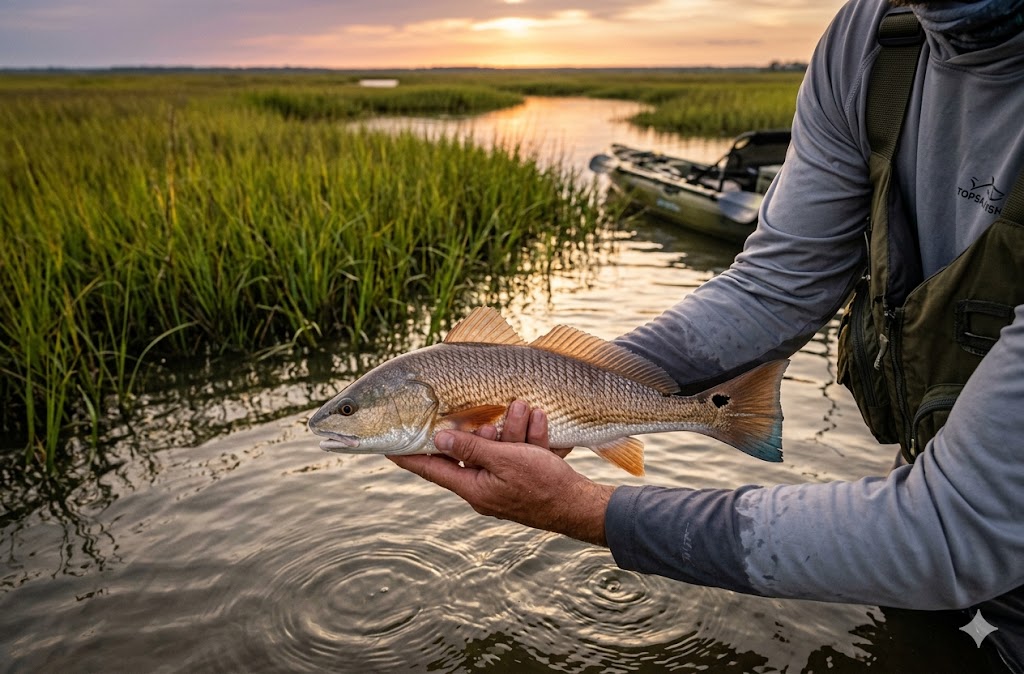
How to Catch Puppy Drum in Topsail Marshes: The Ultimate Shallow-Water Guide
Navigating the shallow backwaters of southeastern North Carolina offers incredible angling opportunities, especially when learning how to catch puppy drum in topsail marshes. Juvenile red drum, locally known as puppy drum, thrive throughout these rich estuarine systems year-round. Because our expansive salt marshes provide abundant food and protection, finding these hard-fighting fish requires understanding specific shallow-water patterns. By mastering local tidal movements and choosing correct presentations, anglers can consistently hook up in the skinniest backwater zones.
Whether you are launching a skiff out of the sound-side ramps in Surf City, polling a kayak through the Spartina flats behind North Topsail Beach, or wading the hidden creeks near the southern marshes, targeting redfish is a game of stealth and precision. These fish are highly sensitive to boat hulls hitting the mud and engine vibrations. To consistently catch them, you must understand how they use the dynamic coastal topography to ambush their prey.
Decoding the Marsh Structure and Tidal Movements
Topsail Island marshes feature complex networks of winding tidal creeks, shallow mud flats, and jagged oyster bars. To find feeding puppy drum, you must explicitly track the moving water. Our local tides swing by several feet daily, changing the landscape completely every six hours. If you aren’t paying attention to the water direction, you can easily find your boat high and dry on a mudflat.
The High-Water Phase: Flooded Cordgrass Patches
The rising tide allows these copper-colored predators to roam deep into the flooded cordgrass. When the water is high, focus your efforts directly along the flooded grass edges. Look for subtle clues like “nervous water,” flicking shrimp, or distinct V-shaped wakes moving through the grass lines. Because marsh mud drops off quickly into deeper channel cuts, always cast your lures parallel to the structural edges. This technique keeps your presentation in the strike zone longer rather than pulling it away from the fish into open water.
The Low-Water Phase: Stacking the Creek Mouths
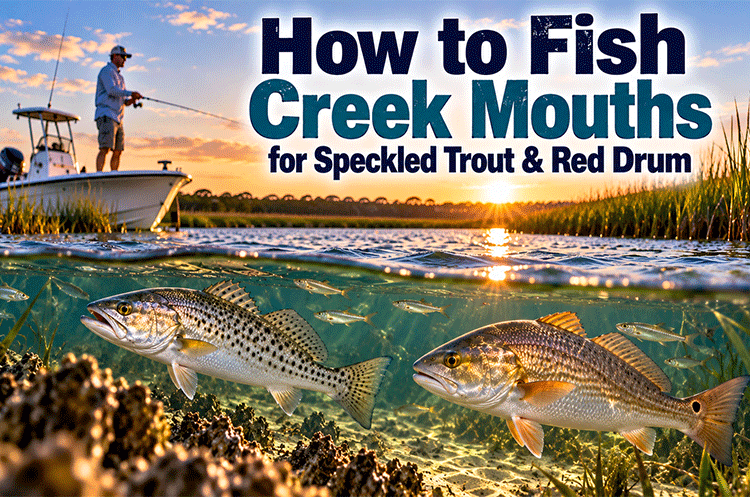
Conversely, during a falling tide, water flushes off the shallow flats and drains out of small marsh cuts. Puppy drum cannot stay in the grass without getting trapped, so they retreat into the slightly deeper pathways. Consequently, puppy drum stack up heavily at creek mouths and deep marsh drains. They sit in these ambush points to intercept fleeing baitfish and shrimp. Position your vessel down-current from these natural funnels and cast directly up into the mouth of the drain, allowing your bait to wash out naturally with the current.
Local Navigation Warning: The mudflats behind Topsail Island can be incredibly unforgiving. When fishing the low-tide phases, keep a close eye on your depth finder and your exit routes. A spot that holds fish at mid-tide can empty out completely at dead low tide, leaving you stranded until the next flood tide returns. For a deep dive into navigating these volatile backwaters safely, check out our guide on Boating Topsail Island: A Beginner’s Navigation & Etiquette Guide.
The Best Baits and Lures for Backwater Puppy Drum
Selecting your gear determines your overall success when figuring out how to catch puppy drum in topsail marshes. Puppy drum are opportunistic feeders, but they can become hyper-focused on specific seasonal forage. Matching the size and profile of the natural bait running through the creeks is paramount.
1. Live Bait Presentations
For natural presentations, nothing beats a live finger mullet or a hearty mud minnow rigged on a standard Carolina rig. When assembling your Carolina rig for the marsh, scale down your components. Drop down to a 1/4-ounce or 1/8-ounce egg sinker to prevent snagging the dense oyster rocks. Pair this with a short 12-to-15-inch leader line. Alternatively, suspending a live shrimp under a high-visibility popping cork along grass lines triggers aggressive reaction strikes. The splashing sound of the cork mimics feeding activity, drawing fish from a distance across the shallow flats.
2. Artificial Lure Strategies
If you prefer throwing artificial lures, a 3-inch soft plastic paddle tail on a 1/8-ounce or 1/4-ounce jighead is an absolute workhorse. Choose dark profiles like red, root beer, or opening night on overcast days, and switch to bright, clear colors on sunny afternoons. Use a slow “twitch-twitch-pause” cadence, as most strikes occur as the lure drops toward the mud. Classic gold spoons also work incredibly well in slightly stained marsh waters. The wobble and flash perfectly mimic a wounded baitfish while cutting cleanly through grass without fouling.
| Lure / Bait Type | Ideal Conditions | Target Structural Zone |
|---|---|---|
| Live Finger Mullet | Falling Tide / Clear Water | Creek Mouths & Deep Holes |
| Live Shrimp under Cork | Rising Tide / Murky Water | Flooded Grass Lines & Oyster Tips |
| Soft Plastic Paddle Tail | All Tides / Active Scouting | Parallel Mud Banks & Dock Pilings |
| Quarter-Ounce Gold Spoon | Mid-Tide / Windy Days | Open Shallow Flats & Weed Edges |
Terminal Tackle Tweaks for Oyster-Rich Environments
The marshes around Topsail Island are armored with razor-sharp eastern oyster rocks. Puppy drum know this structure holds crabs and shrimp, and they will purposefully run your line across these shells the moment they feel the hook set. To prevent heartbreaking line breaks, always utilize a 15-to-20-pound fluorocarbon leader. Fluorocarbon provides superior abrasion resistance compared to standard monofilament and remains virtually invisible to skittish fish in shallow water.
If you are consistently getting hung up on the bottom, consider rigging your soft plastics weedless on an extra-wide gap (EWG) weighted hook. Burying the hook point slightly into the plastic body allows you to drag the lure directly through the middle of oyster beds where the biggest puppy drum love to hide, completely snag-free.
By syncing your fishing schedule with the local tide tables, maintaining a stealthy approach on the flats, and matching your bait selection to the available marsh forage, you will master the art of catching redfish in no time. Respect the environment, target the moving water, and enjoy the world-class inshore fishing that Topsail Island has to offer!
Keep Building Your Topsail Fishing Skills
Want to put this technique to work on your next trip? Use these Topsail.Fish resources to check current fishing activity, match your tactics to the season, review local conditions, and find more step-by-step fishing guides.
🎣 Planning a fishing trip to coastal North Carolina? Before choosing a charter destination, discover why many anglers prefer Topsail Island’s less crowded waters, productive back bays, and outstanding inshore and surf fishing opportunities.
🎣 Planning a trip to the NC coast? Before you book a boat down south, check out why Topsail vs. Wilmington fishing offers a better backwater experience. 🎣

Are you a Topsail Area Captain?
Grow your charter business with an SEO-optimized listing in our directory. For just $12/month, we help you reach more anglers and secure the consistent bookings you need to thrive.