Topsail Island Flounder Fishing: August Season Guide
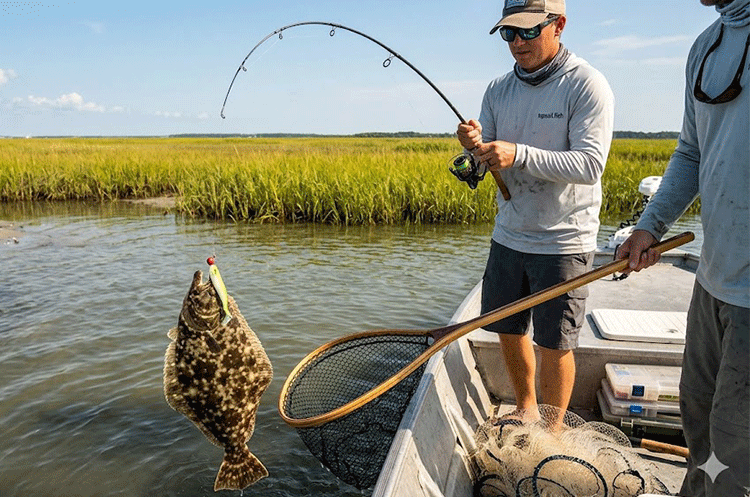
August in Topsail Island is synonymous with one thing: Flounder. As the North Carolina coastal waters hit their peak summer temperatures, these camouflaged “flatfish” become highly active and abundant across our inlets, marshes, and nearshore artificial reefs. Mastering the intense summer flounder bite requires localized patience, the correct terminal tackle configuration, and a deep, structural understanding of our moving coastal tides. Whether you are walking the sound-side banks or piloting a skiff through the channels, August offers some of the most consistent inshore action of the year.
Because flounder are highly visual ambush predators, their behavior is entirely dependent on water clarity and current velocity. In the high-heat periods of late summer, baitfish crowd the estuaries, forcing flounder to stack up tightly against hard structures where they can surprise passing meals. To consistently land these hard-fighting bottom dwellers, you must learn to read the underwater transitions where sand, mud, and structural cover intersect.
Top Flounder Spots in Topsail
Flounder are dedicated ambush predators that rely on flawless camouflage to capture prey. Instead of actively cruising open water, they lay flat on the bottom, burying themselves slightly in the sand or silt. To locate these feeding zones, look for areas with active water movement, sharp depth changes, and heavy physical cover:
When selecting your fishing grounds, keep in mind that the current moves much faster through the northern passes than the interior sound channels. Pay close attention to these three highly productive local target environments:
- New River Inlet: The deep channels, steep drop-offs, and rocky ledges lining the mouth of New River Inlet represent prime territory for landing massive “doormat” flounder. As ocean water rushes through this pass, flounder hold tightly on the down-current sides of underwater sand shelves to grab passing baitfish.
- Intracoastal Waterway (ICW) Docks: Focus your efforts on older wooden docks that feature plenty of mature barnacle growth and deep scour holes surrounding the heavy structural pilings. Flounder sit directly in the shadows of these pilings to intercept crabs and minnows.
- Marsh Creeks and Grass Edges: During the upper stages of a rising tide, flounder move directly into the shallow grass flats and small creek mouths behind the island to hunt for migrating finger mullet. Look for areas where a shallow mudflat drops off cleanly into a deeper channel bed.
Local Hydrographic Note: Because tidal water movement dictates exactly when and where these fish settle into their ambush positions, timing your trip is paramount. To master how moving water shifts these predatory feeding patterns across our marshes and inlets, review our comprehensive anchor analysis, What Tide is Best for Fishing Around Topsail.
Proven Rigs and Bait: Matching the Pro Forage Profile
A flounder’s unique mouth structure is biologically designed for a aggressive, sideways strike. Because they rise up from the sand to engulf their prey from underneath, your terminal tackle presentation must remain pinned directly to the bottom without floating up into the middle water column.
1. The Inshore Carolina Rig
The standard Carolina rig remains the absolute gold standard for local anglers tracking flatfish across the sand. When assembling this rig for summer fishing, thread a 1/2-ounce to 3/4-ounce egg sinker onto your braided main line, followed by a soft plastic bead to protect your knot, terminating at a premium barrel swivel. From the swivel, tie a short 12-to-18-inch leader composed of 20-pound fluorocarbon line, capped off with a wide-gap 2/0 hook. The short leader length is essential; it ensures your bait remains tracking inches from the mud rather than swimming too high above the flounder’s field of vision.
2. Live Bait Selection
Nothing beats fresh, lively natural forage when targeting large summer doormats. In August, schools of juvenile finger mullet and small menhaden (locally called pogies) pack our coastal marsh lines. Hook your live baitfish cleanly through the nostrils or upward through the tough lower jaw. This rigging method allows the bait to swim naturally against the current while keeping the hook point clear for an immediate connection upon strike.
3. Artificial Lure Strategies
If you prefer covering water actively with artificial lures rather than sitting on live bait, a 4-inch scented soft plastic—such as a Gulp! Shrimp, Swimming Mullet, or Grub profile—pinned to a 1/4-ounce or 3/8-ounce short-shank jighead is highly effective. Hop the jig slowly across the floor with a rhythmic “lift-and-drop” cadence, ensuring the lure maintains physical contact with the sand on every single pause.
Mastering the “Five Second” Rule
One of the most common mistakes intermediate anglers make when learning the ropes of flatfish angling is swinging the rod and setting the hook the exact millisecond they feel a strike. Because a flounder often grabs a baitfish sideways to stun it before slowly manipulating the prey around to swallow it head-first, swinging too early will simply pull the hook cleanly out of the fish’s mouth.
When you are slowly retrieving your rig and feel that distinct, heavy “thump” on your rod tip, lower your rod immediately toward the water line and count slowly to five. This brief pause allows the flounder sufficient time to fully reposition the bait inside its jaw. Once the line begins to slowly tighten up, apply heavy, steady upward pressure to properly drive the hook point home through the tough, bony structure of the fish’s mouth.
Book a Flounder Specialist
Successfully targeting big summer flounder often requires navigating highly complex shallow-water marsh mazes, avoiding hidden oyster flats, or managing heavy vessels inside dangerous, high-current inlet breakers. Booking an experienced, licensed local guide ensures you are fishing the absolute best locations during peak tidal cycles with the finest bait available. Check out our verified Topsail Island Charter Captains Directory to partner with a professional guide and secure your spot on the water today!
Are you a Topsail Area Captain?
Grow your charter business with an SEO-optimized listing in our directory. For just $12/month, we help you reach more anglers and secure the consistent bookings you need to thrive.

Master the Bite: Plan Your Next Catch
Now that you’ve learned about this species, take the next step by checking what’s biting this week, learning when this fish is at its seasonal peak, reviewing recent captain reports, improving your techniques, and finding a local captain to put you on the fish.
🎣 Planning a fishing trip to coastal North Carolina? Before choosing a charter destination, discover why many anglers prefer Topsail Island’s less crowded waters, productive back bays, and outstanding inshore and surf fishing opportunities.
🎣 Planning a trip to the NC coast? Before you book a boat down south, check out why Topsail vs. Wilmington fishing offers a better backwater experience. 🎣

Are you a Topsail Area Captain?
Grow your charter business with an SEO-optimized listing in our directory. For just $12/month, we help you reach more anglers and secure the consistent bookings you need to thrive.