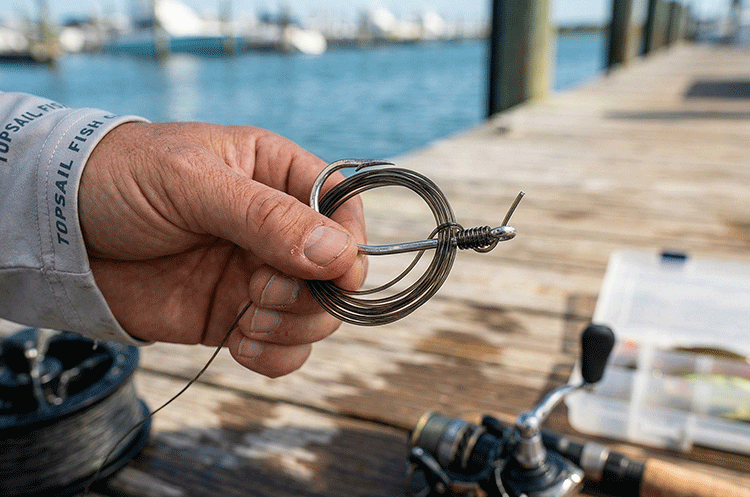
Tying the Improved Clinch Knot (Beginner’s Favorite)
If you are just starting your angling journey at Topsail, there is one skill that stands above the rest: knot tying. While there are hundreds of specialized knots, the Improved Clinch Knot remains the undisputed “Beginner’s Favorite.” It is easy to learn, quick to tie, and remarkably strong for most freshwater and inshore saltwater applications.
The Improved Clinch Knot is primarily used to fasten your fishing line to a hook, swivel, or lure. Its popularity stems from its reliability with monofilament and fluorocarbon lines, which are the standard for most recreational fishers.
Why Choose the Improved Clinch Knot?
In the world of fishing, your gear is only as strong as your weakest link—which is usually the knot. The “Improved” version of the classic clinch knot adds an extra tuck of the line, which provides better security and prevents the line from slipping under heavy tension. Whether you’re targeting Reddrum in the sound or pulling in Spot from the pier, this knot provides the peace of mind you need.
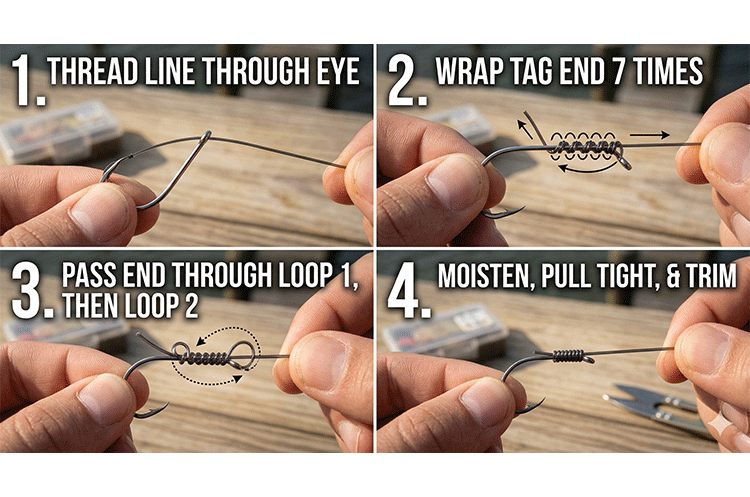
Step-by-Step Instructions
- Thread the Needle: Pass the end of the fishing line (the tag end) through the eye of the hook or lure.
- The Twist: Pull about 6 inches of line through the eye. Hold the standing line and the tag end, then wrap the tag end around the standing line 5 to 7 times.
- The First Tuck: Take the tag end and thread it through the small loop that formed right next to the eye of the hook.
- The Final Tuck (The Improvement): After passing the line through the small loop, thread the tag end back through the large loop you just created. This “improvement” is what locks the knot in place.
- Lubricate and Seat: Before pulling tight, moisten the line with water or saliva. This reduces friction heat, which can weaken the line. Pull the tag end and the standing line simultaneously to cinch the knot down against the eye.
- Trim the Excess: Use a pair of line nippers to trim the tag end close to the knot, leaving about 1/8th of an inch.
Pro Tips for Success
When tying the Improved Clinch Knot, the number of wraps matters. If you are using a heavier line (20lb test or higher), 5 wraps are usually sufficient. For very thin lines, you may want to go up to 7 wraps to ensure the knot doesn’t slip. Always give your lure a firm tug before casting to ensure the knot is seated perfectly. Happy fishing!
If you want to grow your brand in 2026, we invite you to join our directory. For just $12/month, you receive an SEO-optimized listing. This helps you build a more sustainable charter business while reaching new anglers.
Secure Your Spot in the Topsail.Fish Directory

Topsail Fish | Topsail Island Fishing Guides | Topsail Island Fishing Captains | Topsail Island Fishing Charters | NC Wildlife Resources Commission
Keep Building Your Topsail Fishing Skills
Want to put this technique to work on your next trip? Use these Topsail.Fish resources to check current fishing activity, match your tactics to the season, review local conditions, and find more step-by-step fishing guides.
🎣 Planning a fishing trip to coastal North Carolina? Before choosing a charter destination, discover why many anglers prefer Topsail Island’s less crowded waters, productive back bays, and outstanding inshore and surf fishing opportunities.
🎣 Planning a trip to the NC coast? Before you book a boat down south, check out why Topsail vs. Wilmington fishing offers a better backwater experience. 🎣

Are you a Topsail Area Captain?
Grow your charter business with an SEO-optimized listing in our directory. For just $12/month, we help you reach more anglers and secure the consistent bookings you need to thrive.