Topsail Island Winter Fishing: Inshore Cold Water Tactics
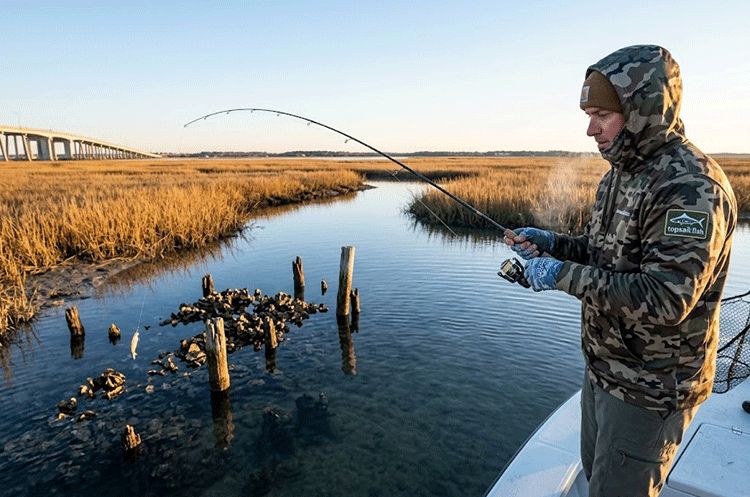
December brings biting northern winds, crisp sunny days, and rapidly dropping water temperatures to the estuarine networks of southeastern North Carolina. While the massive summer crowds and migrating pelagic fleets have long since departed the beaches, dedicated inshore anglers know that winter represents an incredibly peaceful, visually stunning, and highly productive window. The resident Speckled Trout (Spotted Seatrout) and hardy Red Drum (Redfish) that remain behind in our sounds, hidden creeks, and interior channels become heavily dependent on micro-climates and stable water temperatures. To find consistent success during the coldest months of the year, you must entirely abandon the fast-paced, aggressive presentations of summer and adopt a surgical, ultra-methodical tactical approach.
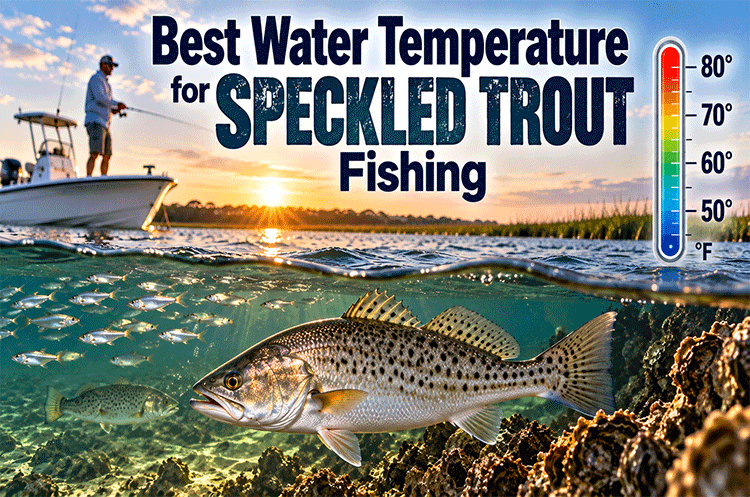
When water temperatures drop below the 55-degree threshold, the biology of our inshore estuaries changes completely. The water loses its summer algae blooms, transforming into crystal-clear pools where fish can spot line tracking from yards away. Simultaneously, cold water slows down a gamefish's metabolic rate, locking them into a state of semi-lethargy where they conserve energy by refusing to chase fast-moving targets. Landing winter redfish and trout is a game of millimeters; you must locate their precise thermal sanctuaries, scale down your gear, and place your presentation directly against their noses.
Where to Find Winter Inshore Fish: Locating Thermal Sanctuaries
The coldest days of December mean that gamefish will school up tightly and congregate in highly specific zones that provide even a fraction of a degree of temperature advantage or structural shelter from freezing winds. To build a successful winter route, abandon wide-open waters and focus your casting efforts directly onto these three essential cold-weather havens:
- Deep Creek Holes and Scour Basins: Search for sharp, sweeping bends inside our primary tidal marsh creeks where the historical water flow has carved out isolated, deep holes ($8 \text 12 \text$ or deeper). Because cold water is denser, the very bottom layers of these deep mud pockets remain insulated and slightly warmer than the wind-swept surface. Trout and redfish will stack vertically by the hundreds at the absolute bottom of these holes, often resting directly in the soft mud layer.
- Sun-Warmed Mud Flats: On clear, cloudless winter days, our expansive dark mud flats act like giant solar panels, absorbing radiant heat from the midday sun. As the initial incoming tide crawls over these sun-baked flats, the water temperature can jump by 3 to 5 degrees in a matter of hours. Predatory red drum will eagerly push up into water less than two feet deep on these flats to soak up the warmth and forage for lethargic fiddler crabs, offering spectacular sight-fishing opportunities.
- Structure Adjacent to Deep Channels: Mature wooden residential dock pilings, structural oyster bar ledges, and the massive concrete foundations supporting the Surf City High Rise Bridge serve as vital winter sanctuaries. Concrete and dark wooden pilings retain atmospheric heat, radiating ambient warmth into the immediate surrounding water column while offering an essential break from fast-moving currents.
Local Hydrographic Rule: Because winter fish are highly sensitive to sudden current shifts that drop local temperatures, timing your trips around peak thermal windows is non-negotiable. To master how water movement shifts these delicate feeding windows across our sounds and flats, review our comprehensive anchor post, What Tide is Best for Fishing Around Topsail.
The Winter Approach: Ultralight and Ultraslow Presentations
In December, a fish's operational motto is strict energy conservation. They will absolutely not expand critical calories to chase a fast-moving bait or move more than a few inches out of their comfort zone to strike. To trigger a response from a cold-stunned trout or drum, your mantra must be: **downsize your profile and fish at a snail's pace.** If you think you are already retrieving your lure slowly, cut that speed in half.
1. Downsize Your Terminal Configuration
Because winter water features unparalleled clarity, fish become highly line-shy. Strip away heavy leaders and spool down to a stealthy $8\text12\text$ premium fluorocarbon leader line. Fluorocarbon's light refractive index matches water perfectly, making it virtually invisible to wary gator trout. Additionally, drop your bait profiles down from large summer sizes to small, bite-sized $2.5\text3\text$ selections to match the diminished size of winter estuary forage.
2. Slow-Release Scented Artificial Lures
Soft plastic lures infused with heavy scent profiles—such as a 3-inch Gulp! Shrimp, Swimming Mullet, or an ultra-pliable Z-Man Jerkshad—are unmatched winter workhorses. Pin these soft baits to exceptionally light $1/16\text$ or $1/8\text$ jigheads. A heavy jighead crashes to the bottom unnaturally, whereas a lightweight head allows the bait to glide horizontally through the water column with a slow, organic flutter. Cast the rig into a deep creek hole, let it settle completely into the mud, and let it sit motionless for 5 to 10 seconds between incredibly subtle rod tip twitches. Most winter strikes do not feel like a violent thump; you will simply notice your line feeling slightly heavy or moving sideways on the pause.
3. Suspending Hard Twitchbaits
When trout are suspended midway up a deep bridge piling or residential dock face, nothing matches the drawing power of a neutrally buoyant suspending hard plug like the legendary MirrOlure 17MR. These lures are mechanically weighted to sit perfectly flat and level in the water column when paused. Twitch the lure softly down to depth to activate its reflective sides, and then let it hang completely motionless for up to 10 or 15 seconds. Cold-water seatrout will shadow the plug silently, staring at the profile until the agonizingly long pause forces an instinctual reaction strike.
| Winter Presentation | Target Inshore Structure | Retrieval Cadence | Strategic Advantage |
|---|---|---|---|
| Scented Shrimp (Gulp!) on $1/16\text$ Jig | Deep creek bends & muddy channels | Micro-twitch with 10-second bottom rests | Scent trail triggers lethargic, blind feeders |
| Suspending Twitchbaits (17MR) | Bridge pilings & deep dock faces | Soft twitch-twitch with extended 15-second pause | Hovers neutrally directly in winter strike zone |
| Free-Lined Live Shrimp | Oyster drop-offs & deep holes | Natural current drift with zero added lead | Zero-resistance presentation for timid redfish |
Timing and Stealth: Executing the Low-Impact Approach
Winter water clarity demands an advanced level of hunter-like stealth on the sand and water. Because the fish can see boat hulls, moving paddle blades, and rod silhouettes cutting against the bright sky, you must optimize your casting distances. Long, precise casts are mandatory to prevent spooking a tightly packed school. Keep your outboard engine turned off well before arriving at a winter hole, avoid slamming hatches, and use your trolling motor on its lowest possible speed setting.
Additionally, adjust your fishing clock away from early morning sessions. The absolute finest winter fishing windows almost always occur during the warmest part of the day—typically between 11:00 AM and 3:00 PM. This midday window allows the sun to maximumly warm up our shallow flats and shallow structures, shifting fish out of their catatonic morning states into active feeding patterns. To learn how to gather the finest winter forage options across our island before heading out, review Bait School: Choosing And Using The Best Live Baits For Topsail Success.
Book a Winter Inshore Specialist
Successfully navigating winding, volatile tidal marsh creeks in low-water winter conditions, avoiding hidden oyster mounds, and tracking down hyper-localized cold-water schools carries an incredibly steep learning curve. Hiring a seasoned, licensed local charter captain ensures you skip the grueling scouting phases entirely, stepping directly onto custom-rigged vessels equipped with specialized light tackle configurations and fresh bait sources. Explore our verified, comprehensive Topsail Island Charter Captains Directory to partner with a premier inshore cold-water specialist and book your December excursion today!
Plan Your Next Season on the Water
Every month offers something different around Topsail Island. Continue exploring seasonal fishing patterns, current fishing activity, weather and tide conditions, species guides, and experienced local captains to help you make the most of your next trip.
🎣 Planning a trip to the NC coast? Before you book a boat down south, check out why Topsail vs. Wilmington fishing offers a better backwater experience. 🎣
Own a Fishing Charter Around Topsail Island?
Get your business in front of local anglers searching for fishing charters, guides, and inshore adventures on Topsail.Fish. Our directory listings are designed to help captains improve online visibility, increase bookings, and build a stronger local presence.
Professional listings start at just $12/month.