One of the most common questions among anglers learning to fish soft plastics is surprisingly simple: What size jig head should I use for inshore fishing?
Walk into almost any coastal tackle shop and you’ll find jig heads ranging from tiny 1/16-ounce models to heavy versions weighing an ounce or more. They may look similar, but choosing the wrong weight can make an otherwise effective lure almost impossible to fish properly.
A jig head that’s too heavy may plow into the bottom, snag oyster shells or move unnaturally through the water. One that’s too light may never reach the depth where speckled trout, red drum or flounder are feeding.
For anglers fishing the marsh creeks, oyster bars, docks and Intracoastal Waterway around Topsail Island, learning to match jig-head weight to water depth, tidal current and lure presentation is one of the most useful skills you can develop.
The good news? You don’t need a tackle box filled with every weight available. A few carefully selected jig heads will handle most everyday inshore fishing situations.
What Size Jig Head Is Best for Inshore Fishing?
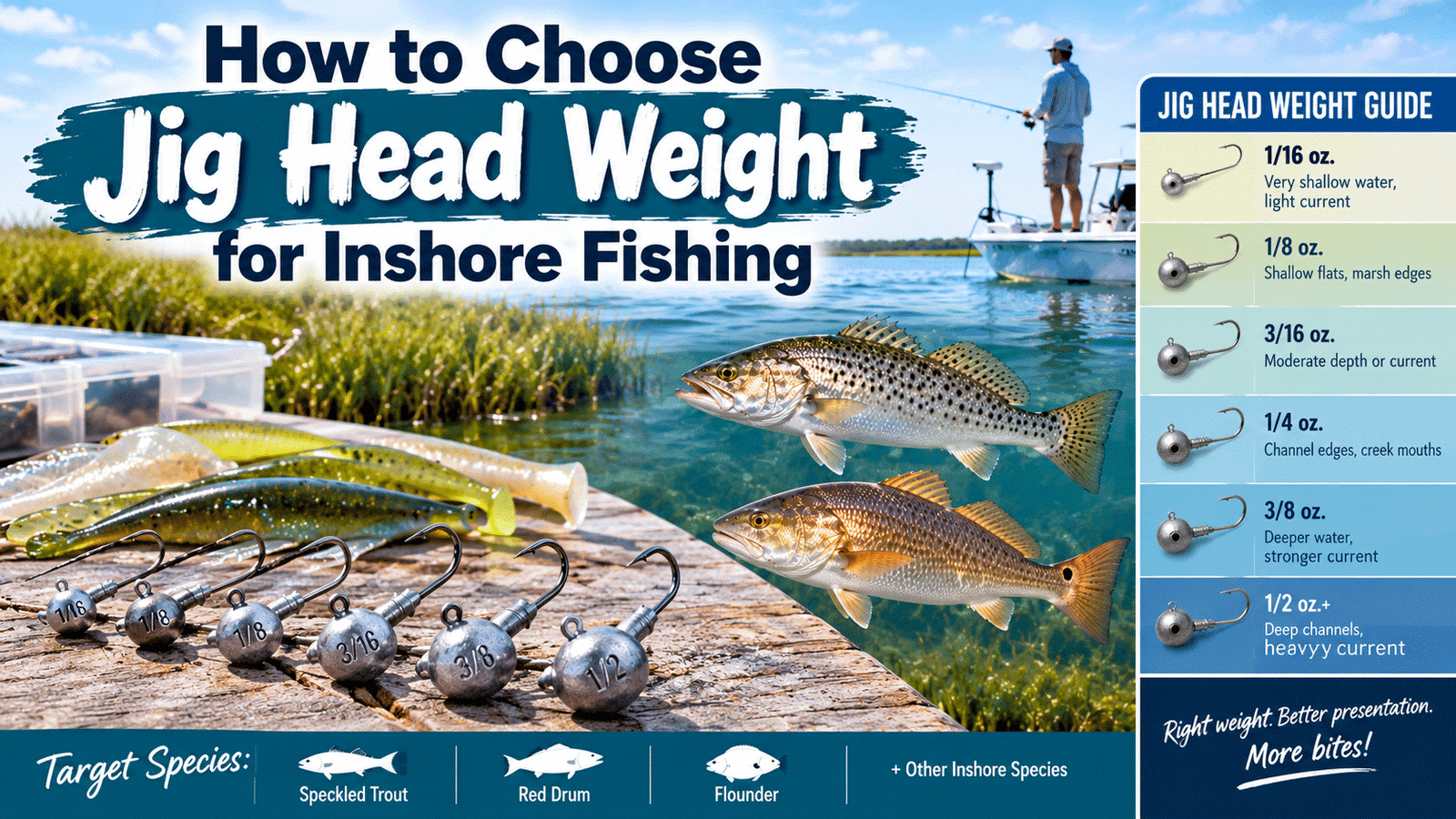
For most shallow-water inshore fishing around Topsail Island, 1/8-ounce and 1/4-ounce jig heads are excellent starting points. A 1/16-ounce head is useful for particularly shallow or slow presentations, while a 3/8-ounce head can help when fishing deeper water or stronger current.
Here’s a practical starting guide:
| Jig Head Weight | Typical Fishing Situation | Presentation |
|---|---|---|
| 1/16 oz. | Very shallow water, minimal current | Slow fall, subtle presentation |
| 1/8 oz. | Shallow flats, marsh edges, light current | Natural swimming action, controlled fall |
| 3/16 oz. | Moderate depth or current | Intermediate option between 1/8 and 1/4 oz. |
| 1/4 oz. | Channel edges, creek mouths, moderate current | Deeper swimming or bottom-oriented retrieve |
| 3/8 oz. | Deeper water or stronger tidal current | Faster sink, improved depth control |
| 1/2 oz. and heavier | Deep channels, particularly strong current | Specialized deeper-water presentations |
These are starting points rather than rigid rules. Water depth, current, lure size, line diameter and retrieve speed all influence how a particular jig head behaves.
The most important rule is to use the lightest jig head that lets you maintain the intended depth and control of your lure.
Why Jig Head Weight Matters
A jig head does more than hold a soft-plastic lure. Its weight affects how quickly the lure sinks, how it moves through current, how naturally it swims and how easily an angler can detect contact with the bottom.
Consider two anglers fishing identical paddle tails along a creek mouth.
The first uses a 1/8-ounce jig head. The lure drifts naturally with the current but never reaches the deeper edge where trout are holding.
The second uses a 3/8-ounce jig head. The lure reaches the bottom quickly but repeatedly drags through oyster shells and snags.
Neither presentation is necessarily ideal.
A 1/4-ounce jig head might allow the same lure to swim just above the bottom, moving naturally through the feeding zone without constantly hanging up.
That’s why selecting jig-head weight should be based on what the lure is actually doing underwater—not simply what weight another angler recommends.
Water Depth: Your First Consideration
Water depth is usually the first factor to consider when choosing a jig head.
Very Shallow Water: Approximately 1–3 Feet
Shallow marsh edges, flooded grass and protected flats often call for lighter jig heads.
A 1/16-ounce or 1/8-ounce head can allow a paddle tail to swim slowly without immediately digging into the bottom.
This can be especially useful when red drum are feeding in shallow water during a rising tide.
However, a light jig head may become difficult to control when wind or current increases.
Moderate Depth: Approximately 3–6 Feet
Many Topsail-area creek mouths, dock edges and oyster-bar drop-offs fall within this general range.
A 1/8-ounce or 1/4-ounce jig head is often a good starting choice, depending on current and the desired retrieve.
If fish are suspended above the bottom, the lighter head may keep the lure swimming at the proper depth longer.
If you’re trying to reach the bottom and work the lure slowly along a channel edge, the heavier option may be more effective.
Deeper Water: Approximately 6–12 Feet
Deeper creek channels, ICW edges and holes near tidal intersections may require additional weight.
A 1/4-ounce or 3/8-ounce jig head can help reach the feeding zone while maintaining control.
But depth alone doesn’t determine the answer. A slow-moving channel may be fishable with less weight than a shallower creek with powerful tidal flow.
Deep Channels and Strong Current
When fishing deeper water with substantial current, 1/2-ounce or heavier heads may sometimes be necessary.
These are more specialized situations and shouldn’t be treated as the default for shallow-water inshore fishing.
Tidal Current Can Matter More Than Depth
One of the biggest mistakes anglers make is selecting jig-head weight based entirely on how deep the water is.
A creek mouth that’s only four feet deep may require a heavier jig head during a strong outgoing tide than an eight-foot channel during slack water.
Moving water creates resistance against your fishing line and lure. That resistance can lift a lightweight jig away from the intended depth or sweep it out of the feeding zone.
When current increases, try moving up one weight increment rather than immediately switching to the heaviest head available.
For example, if a 1/8-ounce jig head isn’t reaching the channel edge, try a 3/16-ounce or 1/4-ounce head.
If the heavier jig begins dragging or snagging, adjust your casting angle or retrieve before adding more weight.
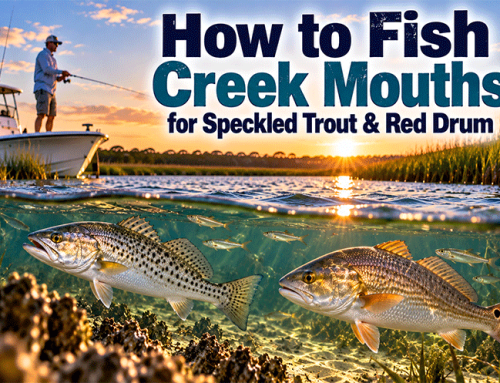
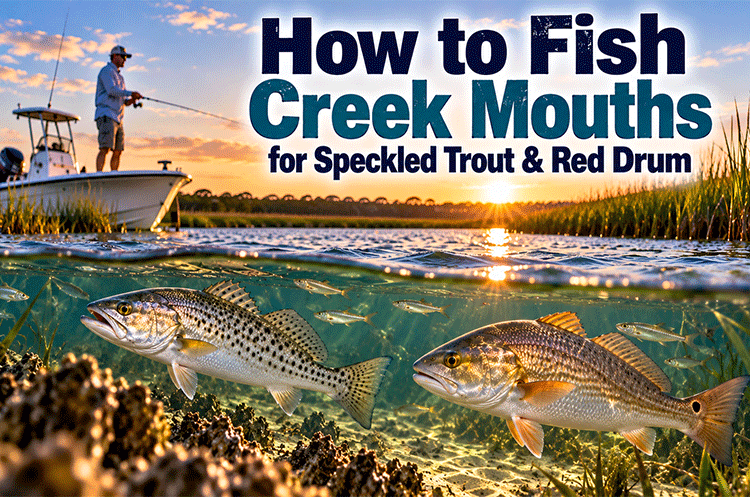
Our How to Fish Creek Mouths for Speckled Trout & Red Drum guide explains how current seams, tidal movement and channel edges influence where feeding fish position themselves.
Match Jig Head Weight to Your Retrieve
Two anglers fishing the same depth and current may need different jig-head weights because they’re using different presentations.
Steady Swimming Retrieve
When swimming a paddle tail through the water column, the objective is often to keep the lure moving naturally just above structure or within the depth where fish are feeding.
A lighter jig head may help maintain that swimming action without constantly contacting bottom.
Start with 1/8 ounce in relatively shallow water and move heavier when additional depth control is necessary.
Slow Bottom-Hopping Retrieve
For flounder, red drum or trout holding near the bottom, a jig that occasionally contacts the bottom can be effective.
Cast, allow the lure to sink, lift the rod tip gently and let the lure fall again.
The ideal weight allows you to recognize when the lure reaches bottom without making every movement a hard impact.
A 1/4-ounce jig head is often a useful starting point for this technique in moderate depth and current.
Current-Drift Presentation
When fishing a creek mouth or oyster point, you may want the current to carry your lure naturally along a feeding lane.
Use enough weight to maintain the desired depth, but not so much that the lure immediately settles into oysters or debris.
Sometimes the best adjustment isn’t changing weight at all. Casting farther up-current or changing the angle of the drift may produce a better presentation.
Slow Cold-Water Presentation
During late fall and winter, speckled trout may respond better to slower-moving lures.
A lighter jig head can help slow the lure’s fall and keep it in the strike zone longer, provided the current allows adequate control.
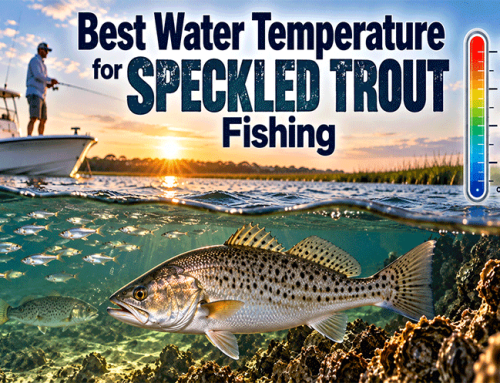
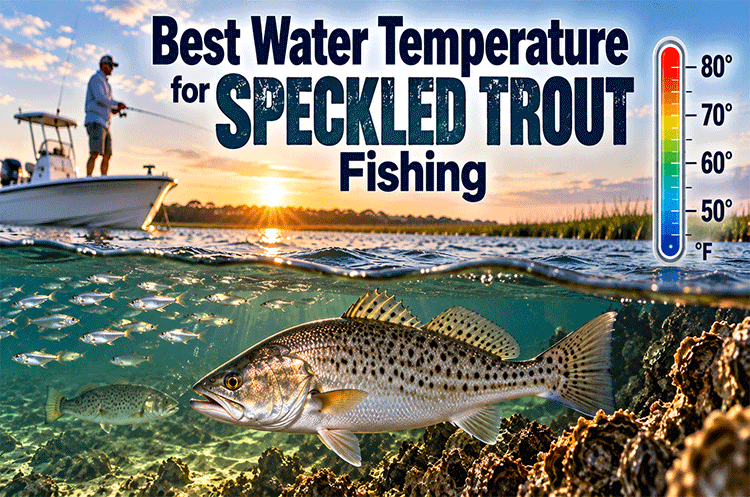
For more on how cooling water changes trout behavior, read our Best Water Temperature for Speckled Trout Fishing guide.
Choosing Jig Head Weight for Speckled Trout
Speckled trout frequently feed along current seams, oyster edges, creek mouths and deeper channel transitions.
For shallow to moderate inshore water, 1/8-ounce and 1/4-ounce jig heads are useful starting choices.
When trout are actively chasing bait near the surface or suspended in the water column, a lighter head may help keep the lure above the fish instead of dropping beneath them.
When trout are holding deeper, especially along channel edges during strong tidal flow, a heavier jig may be necessary.
Pay attention to the lure’s fall. Trout often strike a soft plastic as it sinks or changes direction.
If your lure drops too quickly through the feeding zone, try a lighter head. If you can’t reach the fish, increase weight gradually.
Choosing Jig Head Weight for Red Drum
Red drum frequently feed along shallow marsh edges, oyster points, docks and creek drains.
In relatively shallow water, a 1/8-ounce jig head can be an excellent choice for a 3- to 4-inch paddle tail.
It allows the lure to swim close to the bottom without necessarily digging into every shell or patch of grass.
When fishing deeper edges or stronger current, a 1/4-ounce head may offer better control.
Red drum often feed close to structure, so accuracy and presentation can matter more than casting distance.
Our How to Fish Oyster Bars for Red Drum & Speckled Trout article explains why fishing the edges of oyster structure can be more productive than dragging a lure directly across the shells.
Choosing Jig Head Weight for Flounder
Flounder often hold close to the bottom around channel edges, sandy drop-offs, creek mouths and other ambush locations.
Because bottom contact is frequently part of the presentation, anglers may favor a somewhat heavier jig head than they would use for a paddle tail swimming above shallow oyster structure.
A 1/4-ounce head is a reasonable starting point in moderate conditions, with 3/8 ounce or more useful when deeper water or stronger current makes bottom contact difficult to detect.
However, heavier isn’t automatically better. A jig that repeatedly wedges into shell or debris may be too heavy for the location.
Always check current North Carolina flounder regulations before retaining any fish, since harvest opportunities and restrictions can change.
Does Soft-Plastic Size Affect Jig Head Weight?
Absolutely.
A small 2-inch soft plastic and a bulky 5-inch paddle tail won’t behave the same way on an identical jig head.
Larger soft plastics create more water resistance. Wide paddle tails may also generate additional lift during the retrieve, making the lure swim higher than expected.
For the common 3- to 4-inch paddle tails used for speckled trout and red drum, 1/8-ounce and 1/4-ounce heads provide a useful range for many conditions.
But weight isn’t the only consideration. The hook must also fit the lure.
A hook that’s too short may reduce effective hook placement. One that’s excessively long may restrict the tail’s movement or distort the lure.
Match the hook length and gap to the soft plastic while choosing the weight separately for depth and current.
Remember: Jig-head weight and hook size are related tackle specifications, but they aren’t the same thing.
How Fishing Line Affects Jig Head Performance
Fishing line can influence how much weight you need.
Thicker line creates more resistance in moving water, which can make a light jig harder to keep near the bottom.
Thinner braided line generally cuts through current more efficiently and provides good sensitivity for detecting subtle strikes or bottom contact.
However, line diameter is only one factor. Rod position, casting angle, lure profile and retrieve speed also affect how a jig behaves.
Rather than automatically increasing weight, first observe whether excessive line bow is preventing you from controlling the lure.
How to Tell if Your Jig Head Is Too Heavy
A jig head may be heavier than necessary if:
- The lure immediately crashes into the bottom after each lift.
- You repeatedly snag oysters, grass or submerged debris.
- The lure moves unnaturally fast through shallow water.
- You must retrieve excessively quickly to prevent bottom contact.
- The lure spends very little time at the depth where fish are feeding.
If these problems occur, try a lighter head or change your retrieve angle.
Remember that occasional bottom contact may be intentional. The problem is uncontrolled contact that prevents the presentation you want.
How to Tell if Your Jig Head Is Too Light
A jig head may be too light if:
- You can’t reach the intended fishing depth.
- Strong current sweeps the lure past the target before it sinks.
- You can’t detect bottom contact when bottom contact is the goal.
- The lure consistently rides above fish holding near the bottom.
- Excessive line bow prevents you from controlling the presentation.
Move up one weight increment and try again.
Small adjustments are often more effective than making a dramatic change.
Five Common Jig Head Mistakes
1. Using the Same Weight Everywhere
A 1/4-ounce jig head may work beautifully in one creek and poorly in the next. Depth and current change constantly around Topsail Island.
2. Assuming Heavier Means Better Casting
A heavier jig may cast farther, but additional distance is useless if the lure no longer swims at the correct depth.
3. Ignoring the Direction of the Current
A lure cast directly against strong current behaves differently from one drifting naturally across it.
4. Confusing Hook Size with Jig Weight
Two jig heads can have identical weights but very different hooks. Choose a hook that fits your lure and a weight that fits the conditions.
5. Changing Lures Before Adjusting Weight
Sometimes the soft plastic isn’t the problem. The lure may simply be traveling above or below the fish.
Before abandoning a productive-looking location, try the same lure on a different jig-head weight.
A Simple Jig Head Selection Process
When you arrive at a new fishing location, use this five-step process:
- Estimate the water depth. Determine whether you’re fishing shallow flats, a moderate creek channel or deeper water.
- Observe the current. Look for tidal flow, drifting grass, foam lines and the direction bait is moving.
- Choose your presentation. Decide whether you want to swim the lure above structure, drift it through a seam or work it close to bottom.
- Start with a reasonable weight. In many everyday inshore situations, begin with 1/8 or 1/4 ounce.
- Watch what the lure does. If it sinks too quickly, reduce weight. If it won’t reach the strike zone, increase weight.
This approach is more reliable than choosing a jig head simply because it’s the one already tied to your line.
Three Jig Head Weights Every Topsail Angler Should Carry
If you’re building a small, practical inshore tackle selection, consider starting with three weights:
- 1/8 ounce: Shallow marsh edges, light current and natural swimming presentations.
- 1/4 ounce: A versatile option for creek mouths, channel edges and moderate tidal flow.
- 3/8 ounce: Deeper water, stronger current and situations requiring faster sinking or improved bottom contact.
Those three weights cover a broad range of everyday inshore conditions.
You can add 1/16-ounce heads for very shallow or finesse fishing and 3/16-ounce heads when you want an intermediate option.
Keep several hook sizes and styles appropriate for your preferred soft plastics, but avoid carrying unnecessary variations until your fishing conditions justify them.
Final Thoughts: Let the Conditions Choose the Weight
Choosing the right jig-head weight for inshore fishing isn’t about finding one perfect number.
It’s about understanding what your lure needs to do.
A lightweight jig may be ideal for swimming a paddle tail along a shallow marsh edge where red drum are feeding. A heavier head may be necessary to reach speckled trout holding beside a deeper channel in strong current.
For many Topsail Island anglers, 1/8-ounce and 1/4-ounce jig heads will handle a large percentage of everyday situations, with 3/8 ounce providing an important option for deeper water and stronger flow.
But don’t let the number stamped on the jig head become more important than the presentation.
The right weight is the lightest one that lets you keep your lure in the feeding zone, maintain control and present it naturally.
Learn to recognize when your lure is swimming too high, sinking too quickly or dragging unnecessarily across the bottom. Make small adjustments and observe the difference.
That simple skill can improve your fishing around creek mouths, oyster bars, docks and channel edges throughout Topsail Island—and it will remain useful long after the fall fishing season ends.
Stay Informed and Get Involved
North Carolina’s fisheries are constantly evolving as new research, public input, and management decisions shape future regulations. Whether you support the current flounder rules or believe changes are needed, staying informed is the best way to make your voice heard. The North Carolina Division of Marine Fisheries (NCDMF) provides fisheries research, stock assessments, proclamations, and recreational fishing information. The North Carolina Marine Fisheries Commission (MFC) establishes many of the policies and regulations governing coastal fisheries and regularly accepts public comment. The North Carolina Wildlife Resources Commission (NCWRC) oversees Inland and Joint Fishing Waters and publishes regulations affecting anglers across the state. We encourage every fisherman—whether recreational or commercial—to follow these agencies, review proposed rule changes, and participate in the public process. Well-informed anglers help build better fisheries for everyone.
Keep Building Your Topsail Fishing Skills
Want to put this technique to work on your next trip? Use these Topsail.Fish resources to check current fishing activity, match your tactics to the season, review local conditions, and find more step-by-step fishing guides.
🎣 Planning a fishing trip to coastal North Carolina? Before choosing a charter destination, discover why many anglers prefer Topsail Island’s less crowded waters, productive back bays, and outstanding inshore and surf fishing opportunities.
🎣 Planning a trip to the NC coast? Before you book a boat down south, check out why Topsail vs. Wilmington fishing offers a better backwater experience. 🎣

Are you a Topsail Area Captain?
Grow your charter business with an SEO-optimized listing in our directory. For just $12/month, we help you reach more anglers and secure the consistent bookings you need to thrive.