
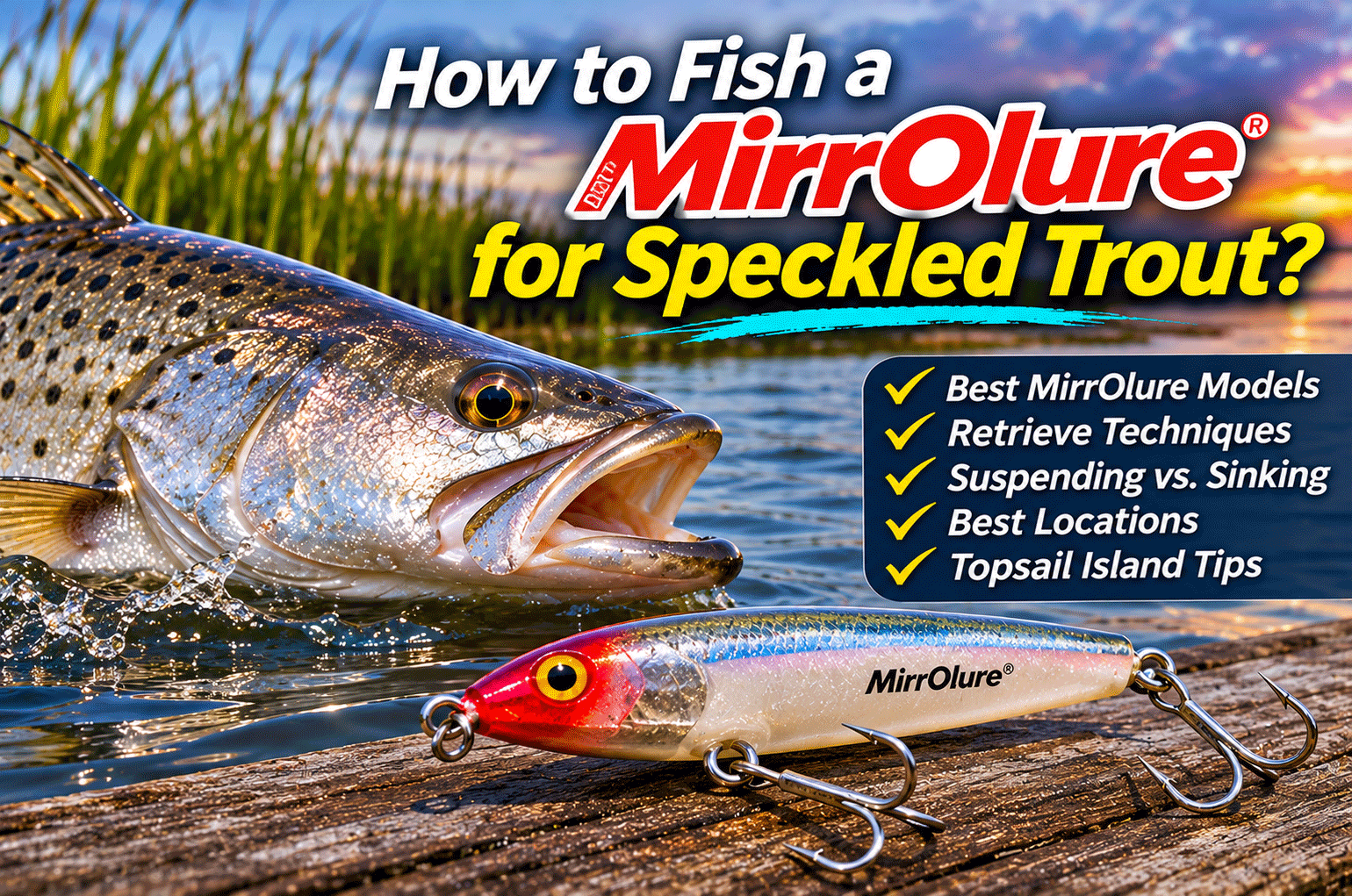
How to Fish a MirrOlure for Speckled Trout: A Topsail Island Fishing Guide
When speckled trout become selective, particularly during the cooler months around Topsail Island, few artificial lures have the reputation of a MirrOlure. These hard-bodied plugs have earned a place in countless coastal tackle boxes because they imitate the baitfish that trout regularly pursue.
But owning a MirrOlure and knowing how to fish one effectively are two different things.
Many anglers make the mistake of retrieving these lures too quickly or fishing them at the wrong depth. Others choose a lure that doesn’t match the conditions or overlook the importance of pauses between movements.
Learning how to fish a MirrOlure for speckled trout begins with understanding how the lure behaves underwater, how trout respond to changes in water temperature, and how to control the retrieve.
Whether you’re fishing the Intracoastal Waterway, the New River, Topsail Sound, or the tidal creeks around Surf City and Sneads Ferry, the right MirrOlure presentation can be an effective way to target speckled trout throughout the fall and winter.
Why MirrOlures Work for Speckled Trout
Speckled trout are predators that feed heavily on small fish, including mullet, menhaden, and other baitfish found throughout North Carolina’s coastal waters.
MirrOlures are designed to imitate these prey species through their shape, finish, movement, and underwater action.
Depending on the model, a MirrOlure may suspend, sink slowly, or sink more rapidly. This allows anglers to target trout holding at different depths.
One of their greatest advantages is the ability to imitate a struggling or injured baitfish.
Instead of simply swimming steadily through the water, a MirrOlure can dart, pause, sink, and change direction in ways that attract the attention of nearby trout.
Those pauses are especially important when water temperatures decline and fish become less willing to chase fast-moving prey.
Choosing the Best MirrOlure for Speckled Trout
MirrOlure produces several hard-bait designs that anglers commonly use for speckled trout. Understanding the differences helps you select the right lure for the depth and conditions.
MirrOlure 17MR MirrOdine
The 17MR MirrOdine is a popular suspending twitchbait for targeting speckled trout in relatively shallow water.
Its compact profile imitates small baitfish, while its suspending action allows anglers to pause the retrieve without the lure immediately falling to the bottom.
It is especially useful around shallow grass edges, creek mouths, and relatively protected shoreline structure.
Try fishing it with two short twitches followed by a pause. Allow the lure to remain in the strike zone before beginning the next sequence.
MirrOlure 27MR MirrOdine XL
The larger 27MR MirrOdine XL offers a bigger baitfish profile and can be useful when trout are feeding on larger forage.
It is another suspending-style lure suited to twitch-and-pause presentations.
Its larger profile can be particularly appealing when trout are actively targeting mullet or similar baitfish.
Use deliberate rod movements rather than repeatedly jerking the lure aggressively.
MirrOlure 52M Series
The classic 52M sinking twitchbait is a longstanding choice for speckled trout fishing.
Unlike suspending MirrOdine models, the 52M sinks when allowed to rest.
This makes it useful for reaching trout holding deeper in the water column.
Its effectiveness depends on controlling both the sinking time and the retrieve.
Allow the lure to reach the desired depth, then work it with short twitches and pauses. Remember that it continues sinking during those pauses.
MirrOlure 18MR Heavy Dine
The 18MR Heavy Dine is a heavier, sinking twitchbait that can help anglers reach fish holding deeper or work in conditions where a lighter lure is difficult to control.
It can be useful along deeper creek channels, drop-offs, and other areas where trout may gather during colder weather.
Because this lure sinks, monitor its depth carefully around oyster bars and other snag-prone structure.
Suspending vs. Sinking MirrOlures: Which Should You Use?
One of the most important decisions is whether to fish a suspending or sinking model.
Suspending MirrOlures are useful when trout are feeding at a relatively consistent depth and you want the lure to remain near that depth during pauses.
They are especially effective when fish are reluctant to chase moving bait.
Sinking MirrOlures are useful when trout are holding deeper or when you need to search different levels of the water column.
They allow you to count the lure down before beginning the retrieve.
However, sinking lures require more attention to depth because they may continue falling into oyster shells, grass, or other structure.
As a general starting point, use a suspending model for relatively shallow water and a sinking model when fish are holding deeper.
Water temperature, salinity, current, and tackle can influence how a particular lure behaves, so observe its action before assuming it will remain perfectly suspended.
How to Retrieve a MirrOlure for Speckled Trout
The retrieve is often more important than the lure’s color or size.
Speckled trout may respond differently depending on water temperature, current, baitfish activity, and feeding conditions.
These five retrieves provide a useful starting point.
1. Twitch-Twitch-Pause Retrieve
This is one of the most recognizable techniques for fishing a MirrOlure.
- Cast beyond the area where you expect trout to be holding.
- Allow the lure to settle to its intended working depth.
- Make two short downward or sideways twitches with the rod tip.
- Pause briefly while maintaining enough line control to detect a strike.
- Repeat the sequence as the lure moves through the strike zone.
The twitches make the lure dart like a baitfish attempting to escape.
The pause imitates a vulnerable baitfish and gives trout an opportunity to strike.
Start with pauses of approximately two to four seconds and adjust based on the fish’s response.
2. Slow Twitch-and-Pause Retrieve
When water temperatures fall, speckled trout may become less aggressive.
A slower retrieve can keep the lure near fish that are unwilling to pursue fast-moving prey.
Use a single gentle twitch followed by a longer pause.
Depending on the conditions, pauses of five seconds or longer may be productive.
For sinking models, remember that longer pauses also mean greater sinking depth.
Watch your line carefully because some trout strike during the pause without producing an obvious jolt.
3. Steady Retrieve with Occasional Twitches
When trout are actively feeding, a slow, steady retrieve interrupted by occasional twitches can be effective.
This approach helps cover water while still introducing irregular movement.
It can work well along shoreline edges, current seams, and open-water baitfish concentrations.
Avoid retrieving so quickly that the lure loses its intended action or rises out of the target depth.
4. Count-Down Retrieve for Deeper Trout
Sinking MirrOlures can be particularly useful when trout hold in deeper creek channels or holes.
After casting, count the seconds before beginning your retrieve.
For example, allow the lure to sink for three seconds on one cast and five seconds on the next.
Use these counts to explore different depths until you locate fish.
There is no universal sink rate because current, line diameter, lure model, and other conditions affect how quickly the lure descends.
Once you identify a productive depth, repeat the same count and retrieve sequence.
5. Current-Swing Retrieve
Speckled trout frequently position themselves where tidal current carries baitfish past structure.
Cast slightly upstream or across the current and allow the lure to move naturally through the feeding area.
Use occasional twitches while controlling slack line.
The current can provide much of the lure’s movement, particularly when fishing near creek mouths and channel edges.
Avoid allowing the lure to drift uncontrolled into oysters or other obstructions.
How Water Temperature Changes Your MirrOlure Presentation
Water temperature influences speckled trout behavior, feeding activity, and preferred locations.
During the warmer months, trout may respond well to more active presentations, especially during periods of strong feeding activity.
As temperatures cool during fall, MirrOlures can become especially useful because their darting action resembles the baitfish trout pursue.
During colder winter conditions, trout often concentrate in more stable water and may require slower presentations.
That doesn’t mean every cold-water retrieve should be extremely slow. Fish activity also depends on sunlight, tides, weather changes, and the availability of bait.
Begin with a moderate twitch-and-pause retrieve. If fish follow without striking or appear inactive, lengthen the pauses and reduce the intensity of your rod movements.
On sunny winter afternoons, shallow areas may warm enough to encourage feeding activity, particularly where nearby deeper water provides access to more stable conditions.
Pay attention to daily conditions rather than relying on a single temperature threshold.
For additional seasonal guidance, read our Best Water Temperature for Speckled Trout Fishing article.
Where to Fish MirrOlures Around Topsail Island
The Topsail Island area offers a variety of productive speckled trout habitats. MirrOlures can be effective in several of these environments when matched to the appropriate depth and current.
Creek Mouths
Creek mouths create natural feeding opportunities as tidal water moves shrimp, minnows, and other forage between shallow creeks and larger channels.
Speckled trout often position themselves near current seams or depth changes where they can intercept passing bait.
Cast across the current and work your MirrOlure through the transition between moving and slower water.
A suspending MirrOdine can be useful in shallow areas, while a sinking model may be more appropriate near deeper channel edges.
For additional creek-mouth tactics, see How to Fish Creek Mouths for Speckled Trout & Red Drum.
Oyster Bars
Oyster bars attract baitfish and provide current breaks that speckled trout may use while feeding.
Work your lure along the edges of the structure rather than directly across exposed shells.
A suspending MirrOlure can help keep the lure above snag-prone bottom structure.
Pay attention to the direction of the tidal flow and concentrate casts along the edges where bait naturally travels.
Learn more about fishing this structure in How to Fish Oyster Bars for Red Drum & Speckled Trout.
Dock Pilings and Shoreline Structure
Docks and other shoreline structures create shade, current breaks, and feeding opportunities.
Speckled trout may hold along the edges of these areas, particularly when baitfish are present.
Cast beyond the structure and retrieve your MirrOlure through the likely strike zone.
Be cautious when using treble-hooked lures near pilings, ropes, and submerged obstructions.
For more techniques, visit How to Fish Docks: Topsail Island Tactics & Techniques.
Deeper Creek Channels and Holes
During colder weather, trout may concentrate in deeper areas that offer relatively stable conditions.
Sinking MirrOlures can help reach these fish without requiring a separate jig head.
Work the lure slowly through the deeper portion of the channel and pay attention to the depth where strikes occur.
Avoid assuming the deepest water always holds the most fish. Nearby current seams, baitfish concentrations, and access to shallower feeding areas can be equally important.
Intracoastal Waterway Edges
Channel edges along the Intracoastal Waterway provide depth changes and current that may attract trout.
Look for areas where moving water meets shoreline points, creek entrances, and adjacent flats.
Work a MirrOlure parallel to the drop-off when possible, keeping it within the depth range where fish are likely to be holding.
What MirrOlure Colors Work Best for Speckled Trout?
MirrOlures are available in numerous color patterns, and choosing among them can be confusing.
Rather than trying to carry every available color, begin with a few patterns suited to different water and light conditions.
Natural Baitfish Colors
Silver, pearl, and other natural baitfish patterns are useful starting choices in relatively clear water.
These colors imitate common forage and can be effective when trout are feeding on small mullet or other baitfish.
Chartreuse and High-Visibility Patterns
Chartreuse accents and other contrasting colors can be useful in stained water or low-light conditions.
They may help fish locate the lure when underwater visibility is limited.
Darker Patterns
Darker lure colors can create a distinct silhouette in certain lighting conditions.
They may be worth trying during overcast weather or when other patterns are not producing strikes.
Remember: The correct depth and retrieve often matter more than subtle differences between similar colors.
If trout are not responding, adjust your presentation before repeatedly changing lure colors.
Best Rod, Reel, and Line for Fishing MirrOlures
A balanced spinning outfit makes it easier to control a MirrOlure and detect subtle strikes.
For many inshore applications, consider the following starting setup:
- Rod: Approximately 6 feet 6 inches to 7 feet, medium-light or medium power, with an action suited to the lure weight.
- Reel: A 2500- or 3000-size spinning reel with a smooth drag.
- Main line: 10- to 15-pound braided line.
- Leader: Approximately 15- to 20-pound fluorocarbon or monofilament, adjusted for structure and conditions.
- Leader length: Approximately 18 to 30 inches as a starting point.
A rod with some flexibility can help absorb the head shakes and sudden movements of a hooked trout.
This is particularly important when using lures equipped with treble hooks.
Avoid setting the hook with excessive force. Instead, maintain steady pressure and allow the rod and drag to help control the fish.
If you’re fishing near oyster bars or docks, you may need a somewhat heavier leader for additional abrasion protection.
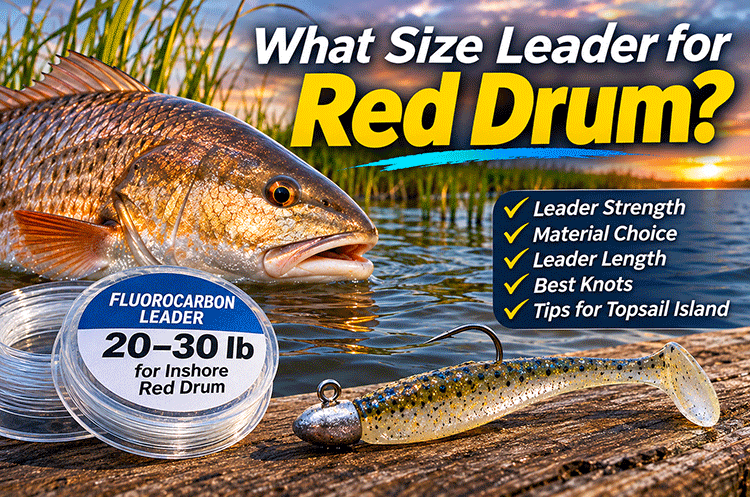
For a closer look at leader selection, read What Size Leader for Red Drum?, which also explains how structure and fishing conditions influence leader choice.
How to Detect Speckled Trout Strikes on a MirrOlure
Not every speckled trout strike feels like an aggressive hit.
During cooler weather, a trout may inhale a lure while it is nearly motionless.
Sometimes the only indication is a slight movement in the line or an unexpected feeling of weight when you begin the next twitch.
Maintain enough contact with the lure to recognize these changes without pulling it unnaturally through the water.
When you feel a strike, use a controlled sweep of the rod and begin reeling.
Because many MirrOlures use treble hooks, excessive hook-setting force can pull the lure away from the fish or tear hooks free during the fight.
Keep steady pressure and avoid allowing slack line when the trout shakes its head near the surface.
Common Mistakes When Fishing MirrOlures for Speckled Trout
1. Retrieving Too Quickly
Many anglers work their MirrOlures too aggressively, especially when the water is cold.
Slow down and give the lure time to remain in the strike zone.
2. Fishing at the Wrong Depth
A suspending lure may not reach trout holding near the bottom of a deep channel.
Likewise, a sinking lure may quickly fall below fish feeding near the surface.
Choose the lure model and retrieve that match the fish’s location.
3. Using the Same Retrieve All Day
Trout feeding behavior changes with tides, light, temperature, and baitfish movement.
Experiment with twitch intensity, pause length, and retrieve speed until you find a productive pattern.
4. Ignoring Tidal Current
Current influences where trout hold and how baitfish move.
Present your lure so it travels naturally through likely feeding areas instead of always retrieving directly against strong current.
5. Using Excessively Heavy Tackle
Overly stiff rods and heavy line can make subtle lure control more difficult.
Use equipment appropriate for the lure’s weight and the structure you’re fishing.
6. Failing to Inspect Treble Hooks
Saltwater exposure, oyster shells, and repeated use can damage or dull hooks.
Inspect them regularly and replace damaged hooks with suitable replacements that preserve the lure’s balance and action.
7. Overlooking Fish Handling
Treble hooks require extra care when handling fish.
Use appropriate pliers, keep fish supported, and minimize handling time.
When practicing catch and release, avoid unnecessary contact with the gills and return fish to the water promptly.
Fishing MirrOlures During Fall and Winter Around Topsail Island
Fall and winter can provide excellent opportunities to target speckled trout around Topsail Island, but changing conditions require adjustments.
During fall, trout often feed actively around creek mouths, shoreline points, and other areas where baitfish concentrate.
MirrOlures can imitate these baitfish effectively, particularly when worked through moving water with short twitches and pauses.
As winter approaches, colder nights and changing water temperatures may encourage trout to spend more time near deeper channels and protected areas.
On colder mornings, begin by searching deeper water and using slower presentations.
When sunshine warms shallow areas during the afternoon, trout may move toward nearby feeding locations.
Watch for baitfish activity and pay attention to changes in current.
Rather than fishing one location throughout the day, consider how trout may move between deeper holding areas and shallower feeding zones.
Remember that a cold front doesn’t automatically end the bite. It may simply change where the fish are holding and how they respond to your lure.
MirrOlure Fishing Tips for Beginners
If you’re new to fishing MirrOlures, start with a simple approach rather than trying to master every model and retrieve at once.
- Choose a suspending MirrOdine for relatively shallow water.
- Find a creek mouth, shoreline point, or channel edge with moving water.
- Cast beyond the area where trout are likely to be feeding.
- Retrieve with two short twitches followed by a three-second pause.
- Repeat the retrieve while watching your line for subtle strikes.
- If you receive no bites, experiment with longer pauses or a different working depth.
- When fishing deeper water, switch to an appropriate sinking model and use a controlled count-down retrieve.
Practice observing how the lure moves in clear, shallow water before making longer casts.
Understanding its action will help you recognize how different rod movements affect the presentation.
Once you begin catching fish, pay attention to the retrieve speed, pause duration, water depth, and tidal conditions that produced the strike.
Those details can help you repeat a successful pattern.
Final Thoughts: Let the MirrOlure Do Its Job
Learning how to fish a MirrOlure for speckled trout is less about making dramatic rod movements and more about controlling depth, timing, and presentation.
Choose a lure that matches the water you’re fishing. Use a suspending model when you want to keep the bait near a particular depth, or a sinking model when trout are holding deeper.
Start with a twitch-twitch-pause retrieve, then adjust the speed and pause length based on water temperature and fish activity.
Most importantly, pay attention to where trout are holding. Creek mouths, oyster edges, channel drop-offs, and protected winter holding areas can all provide productive opportunities around Topsail Island.
Sometimes the most important part of fishing a MirrOlure isn’t the twitch. It’s the pause that follows.
With practice, patience, and a willingness to adjust your presentation, a MirrOlure can become one of the most versatile speckled trout lures in your tackle box.
Whether you’re exploring the creeks near Sneads Ferry, fishing Topsail Sound, or working the Intracoastal Waterway around Surf City, these techniques can help you fish more confidently throughout the season.
Tight lines from Topsail.Fish!
Stay Informed and Get Involved
North Carolina’s fisheries are constantly evolving as new research, public input, and management decisions shape future regulations. Whether you support the current flounder rules or believe changes are needed, staying informed is the best way to make your voice heard. The North Carolina Division of Marine Fisheries (NCDMF) provides fisheries research, stock assessments, proclamations, and recreational fishing information. The North Carolina Marine Fisheries Commission (MFC) establishes many of the policies and regulations governing coastal fisheries and regularly accepts public comment. The North Carolina Wildlife Resources Commission (NCWRC) oversees Inland and Joint Fishing Waters and publishes regulations affecting anglers across the state. We encourage every fisherman—whether recreational or commercial—to follow these agencies, review proposed rule changes, and participate in the public process. Well-informed anglers help build better fisheries for everyone.
Keep Building Your Topsail Fishing Skills
Want to put this technique to work on your next trip? Use these Topsail.Fish resources to check current fishing activity, match your tactics to the season, review local conditions, and find more step-by-step fishing guides.
🎣 Planning a fishing trip to coastal North Carolina? Before choosing a charter destination, discover why many anglers prefer Topsail Island’s less crowded waters, productive back bays, and outstanding inshore and surf fishing opportunities.
🎣 Planning a trip to the NC coast? Before you book a boat down south, check out why Topsail vs. Wilmington fishing offers a better backwater experience. 🎣
Own a Fishing Charter Around Topsail Island?
Get your business in front of local anglers searching for fishing charters, guides, and inshore adventures on Topsail.Fish. Our directory listings are designed to help captains improve online visibility, increase bookings, and build a stronger local presence.
Professional listings start at just $12/month.