
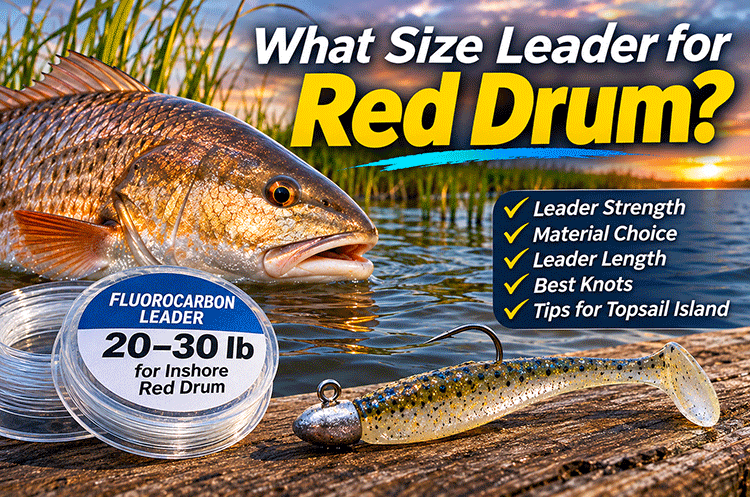
What Size Leader for Red Drum? A Practical Guide for Topsail Island Anglers
Choosing the right fishing leader can make the difference between landing a red drum and watching one disappear around an oyster bar or dock piling. But what size leader should you actually use for red drum?
Ask several experienced anglers and you may hear different answers. Some prefer 20-pound fluorocarbon for shallow-water redfish, while others rely on 30- or 40-pound leaders when fishing heavy structure or targeting larger fish.
They’re not necessarily disagreeing. They’re fishing different conditions.
Around Topsail Island, red drum inhabit shallow marsh creeks, oyster bars, docks, tidal channels and ocean surf. Each environment presents different challenges for fishing line.
The goal isn’t simply to use the strongest leader available. It’s to select a leader that provides enough abrasion resistance and strength without unnecessarily compromising lure movement or presentation.
Let’s examine how to choose the right leader for red drum, when to increase or decrease its strength, and how to build a dependable setup for the waters around Topsail Island.
What Pound Leader Should You Use for Red Drum?
For many everyday inshore red drum fishing situations, 20- to 30-pound-test fluorocarbon or monofilament leader is an excellent starting range.
In relatively open, shallow water, 15- to 20-pound leader may be sufficient for smaller red drum when paired with appropriate tackle and drag settings.
When fishing around oyster bars, docks or other abrasive structure, moving up to 30- or 40-pound leader can provide additional protection.
For larger red drum in the surf or near heavy structure, anglers may choose 40- to 60-pound leader or heavier, depending on the rig, conditions and fishing method.
Here’s a practical guide:
- 15–20 lb: Open flats, clear water and lighter artificial-lure presentations.
- 20–30 lb: General-purpose inshore red drum fishing around marsh edges, creeks and moderate structure.
- 30–40 lb: Oyster bars, dock pilings and areas where abrasion is a concern.
- 40–60 lb: Larger red drum, surf fishing and situations requiring greater abrasion resistance.
- 60 lb and heavier: Specialized heavy surf rigs or particularly demanding conditions, rather than typical shallow-water redfish fishing.
These ranges are starting points, not guarantees. Leader material, diameter, knots, drag pressure and the surrounding structure all affect the strength and performance of your setup.
For most Topsail-area anglers targeting slot-sized red drum with artificial lures, starting with a 20- or 25-pound leader is a practical choice.
Why Use a Leader for Red Drum Fishing?
A fishing leader is a separate section of line connecting your main fishing line to your lure, hook or terminal tackle.
When fishing with braided main line, a monofilament or fluorocarbon leader provides several important advantages.
Abrasion Resistance
Red drum frequently feed around oyster shells, dock pilings, rocks and other rough surfaces.
When a hooked fish turns toward structure, the leader may rub against abrasive surfaces.
Monofilament and fluorocarbon leaders can provide useful abrasion resistance compared with thin braided main line, although performance varies by material, diameter and manufacturer.
Shock Absorption
Monofilament stretches under load, which can help absorb sudden surges from a powerful red drum.
Fluorocarbon generally stretches differently from conventional nylon monofilament, but the complete rod, line and drag system determines how well sudden pressure is managed.
Presentation
A properly selected leader can allow soft plastics, spoons, topwater plugs and natural baits to move naturally.
Excessively thick or stiff leader may affect the action of smaller lures.
Protection Near the Fish
Red drum have powerful mouths and can fight aggressively near structure. A suitable leader helps protect the section of line closest to the fish and its surroundings.
Fluorocarbon vs. Monofilament Leaders for Red Drum
Both fluorocarbon and monofilament can work well for red drum fishing. The better choice depends on the fishing method and conditions.
Fluorocarbon Leaders
Fluorocarbon is popular among inshore anglers because of its underwater optical properties, sinking characteristics and abrasion performance.
It can be particularly useful when fishing paddle tails, jig heads and other subsurface artificial lures.
However, fluorocarbon is generally more expensive than standard monofilament and may be stiffer at comparable diameters.
Its abrasion resistance also varies among products. Fluorocarbon should not be considered immune to damage from oyster shells.
Monofilament Leaders
Nylon monofilament is affordable, widely available and effective for both artificial lures and natural bait.
Its flexibility and stretch can be useful when fighting strong fish.
Monofilament is also a practical choice for many surf-fishing rigs.
For topwater lures, anglers often prefer monofilament because its buoyancy and handling characteristics may help keep the lure working near the surface.
Which Is Better?
For subsurface paddle-tail fishing around Topsail Island, 20- to 30-pound fluorocarbon is a useful starting point.
For topwater fishing or general-purpose bait rigs, monofilament is also an excellent option.
Neither material guarantees more strikes or fewer break-offs. Proper leader selection, knot quality and fishing technique matter more than choosing a material based on its reputation alone.
What Size Leader for Red Drum Around Oyster Bars?
Oyster bars are among the most productive and demanding places to target red drum.
These structures attract crabs, shrimp and small baitfish, making them natural feeding locations.
Unfortunately, oyster shells can also cut or severely weaken fishing line.
When fishing close to oyster structure, 30- to 40-pound leader is a reasonable starting range if abrasion is a significant concern.
In relatively open water near an oyster edge, 20- or 25-pound leader may be sufficient.
But if you’re repeatedly rubbing against shell, increasing leader strength alone may not solve the problem.
Adjust your casting angle, keep your lure above the sharpest structure and position yourself to guide hooked fish away from the oysters.
Inspect your leader after every fish and whenever your lure contacts shell.
Even a heavy leader should be replaced if it develops noticeable roughness, cuts or weak spots.
For additional tactics on fishing these productive but abrasive areas, read our How to Fish Oyster Bars for Red Drum & Speckled Trout guide.
What Size Leader for Red Drum Around Docks?
Dock pilings create shade, current breaks and feeding opportunities for red drum throughout the Intracoastal Waterway and nearby tidal creeks.
They also create a serious challenge when a hooked fish wraps the line around a piling.
A 30- to 40-pound leader can provide additional abrasion protection when fishing close to docks.
However, leader strength is only part of the equation.
Use tackle appropriate for the structure, position your boat or kayak carefully and apply controlled pressure to guide fish away from obstructions.
Remember that a stronger leader cannot prevent every break-off if the fish reaches barnacle-covered pilings or other sharp surfaces.
When possible, make casts that give you a clear path to fight the fish away from the structure.
Learn more about fishing dock structure in our How to Fish Docks: Topsail Island Tactics & Techniques article.
What Size Leader for Red Drum in Marsh Creeks?
Marsh creeks around Sneads Ferry, North Topsail Beach, Surf City and Topsail Sound offer excellent opportunities to target red drum in shallow water.
In relatively open creek channels and along grass edges, 20- to 25-pound leader is often a practical choice.
If the creek contains heavy oyster structure, submerged debris or sharp channel edges, consider increasing to 30-pound leader.
During rising tides, red drum may move into flooded grass to feed on shrimp and crabs.
During falling tides, fish often reposition near drains, creek mouths and deeper channels.
These changing conditions affect how much abrasion protection you may need.
When fishing paddle tails along relatively clean marsh edges, a lighter leader can provide a natural presentation.
When casting tight to oyster-lined drains, additional leader strength may be worthwhile.
For more information on targeting these tidal feeding areas, see How to Fish Creek Mouths for Speckled Trout & Red Drum.
What Size Leader for Red Drum in the Surf?
Surf fishing presents different challenges from shallow-water inshore fishing.
Red drum may be encountered in sloughs, along sandbars, near inlets and in areas with strong wave action.
For smaller red drum in relatively clean surf, 20- to 30-pound leader may be adequate with appropriate tackle.
When targeting larger fish with natural bait, 40- to 60-pound leader is a common practical range, although specific rigs may use different strengths.
Some surf setups require a separate shock leader to withstand the forces of casting heavy sinkers and bait.
A shock leader and a bite leader serve different purposes.
The shock leader protects against the high forces generated during casting, while the bite leader connects the terminal rig to the hook and provides abrasion resistance near the fish.
Never assume a 40- or 60-pound bite leader automatically makes a heavy surf-casting setup safe.
Match the complete rig, including any shock leader, to the casting weight, rod, reel and conditions.
How Long Should a Red Drum Leader Be?
Leader length depends on the fishing technique.
For artificial lures with braided main line, a leader approximately 18 to 36 inches long is a practical starting point.
Some anglers prefer longer leaders, particularly when fishing clear water or expecting repeated abrasion near structure.
Others prefer shorter leaders that keep the connection knot outside the rod guides during casting.
Artificial Lures
For paddle tails, spoons and other artificial lures, start with roughly 24 inches of leader and adjust based on conditions.
Make sure the leader provides enough protection without unnecessarily interfering with casting or lure action.
Topwater Lures
A shorter monofilament leader can work well for topwater fishing, particularly when using walking-style plugs.
Check that the leader and connection hardware don’t interfere with the lure’s movement.
Natural Bait Rigs
For Carolina rigs, fish-finder rigs and other bait presentations, leader length should match the rig design and fishing conditions.
A leader of 12 to 36 inches may be appropriate for many applications, but strong current and surf conditions can require adjustments.
Longer isn’t always better. An excessively long leader can increase tangles or make a bait rig more difficult to control.
Best Knots for Connecting a Leader to Braided Line
A reliable leader connection is just as important as choosing the correct pound test.
Several knots are commonly used to connect braided main line to fluorocarbon or monofilament leader.
Double Uni Knot
The double uni is a practical knot for anglers who want a straightforward connection without specialized tools.
It can work well with many braid-to-leader combinations when tied correctly.
FG Knot
The FG knot creates a slim connection that can pass efficiently through rod guides.
It is popular among anglers using longer leaders, but requires careful tying and proper finishing.
Alberto Knot
The Alberto knot is another compact braid-to-leader connection that many inshore anglers find useful.
Regardless of the knot you choose, practice tying it correctly and test the connection before fishing.
Wet knots when appropriate, tighten them carefully and inspect the finished connection for crossed wraps or slipping.
A poorly tied knot can fail well below the advertised strength of the leader material.
Should You Use a Swivel Between Braid and Leader?
For many artificial-lure presentations, a direct braid-to-leader knot is preferable because it creates a streamlined connection.
Swivels can be useful in some bait rigs, particularly where line twist is a concern.
However, swivels should generally remain outside the rod guides unless the equipment is specifically designed for that arrangement.
For paddle tails and similar soft plastics, a properly tied direct connection is usually simple and effective.
Does Leader Size Affect Red Drum Bites?
Leader diameter, stiffness and presentation can influence how a lure or bait behaves underwater.
In clear, shallow water with relatively little structure, a lighter leader may allow smaller artificial lures to move more naturally.
However, it’s difficult to separate the effects of leader visibility from other factors such as lure action, fishing pressure, current and bait activity.
Red drum often feed in stained water and around structure where a slightly heavier leader may provide important protection.
Rather than automatically choosing the lightest leader possible, select the lightest practical strength that gives you confidence around the structure you’re fishing.
When bites are difficult to obtain, consider adjusting lure depth, retrieve speed and casting angle before assuming leader visibility is the problem.
What Leader Should You Use with Paddle Tails?
Paddle-tail soft plastics are among the most versatile artificial lures for red drum fishing.
For a 3- to 4-inch paddle tail on a jig head, 20- to 25-pound fluorocarbon is a useful starting point in open or moderately structured water.
Increase to 30-pound leader when fishing close to oysters, docks or other abrasive cover.
Pay attention to the effect of leader stiffness on smaller lures, particularly when using lightweight jig heads.
A thick leader may restrict the movement of a small lure or affect its natural presentation.
For most situations, a properly rigged paddle tail, suitable jig-head weight and controlled retrieve will matter more than minor differences between comparable leader brands.
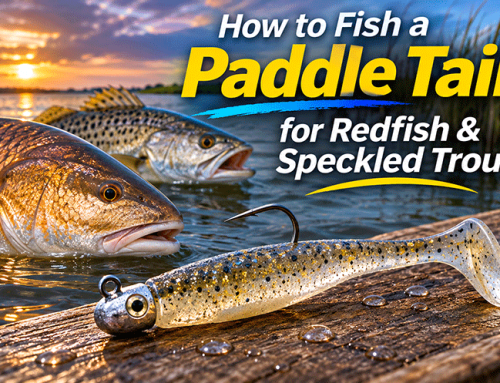
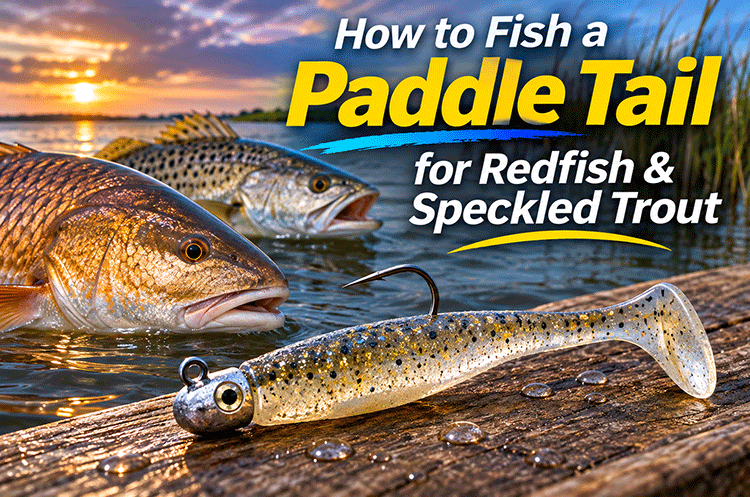
For detailed rigging and presentation techniques, read How to Fish a Paddle Tail for Redfish & Speckled Trout.
When Should You Replace Your Red Drum Leader?
Even high-quality leader material wears out.
After landing a fish, run your fingers carefully along the leader to check for rough spots, flattened sections or visible damage.
Pay particular attention to the section nearest the hook or lure.
Replace the leader if you notice:
- Roughness or abrasion from oyster shells.
- Nicks or cuts caused by dock pilings or other structure.
- Visible stretching, deformation or weakening.
- Damage near the knot or terminal connection.
- Repeated contact with sharp objects.
If you’re uncertain whether a leader has been damaged, replacing it is usually a better choice than risking a lost fish.
Leader material is relatively inexpensive compared with the time and effort involved in finding and hooking a quality red drum.
Common Red Drum Leader Mistakes
1. Using Heavy Leader Everywhere
A 50-pound leader may be useful in demanding conditions, but it can be unnecessarily thick and stiff for small artificial lures in shallow, open water.
2. Using Light Leader Around Sharp Structure
Thin leader may provide excellent lure movement but can be vulnerable when a red drum runs across oyster shells or dock pilings.
3. Ignoring Leader Damage
Even minor abrasion can weaken fishing line. Inspect it frequently.
4. Tying Poor Connection Knots
A strong leader is only as dependable as its weakest knot.
5. Confusing Leader Strength with Main-Line Strength
Braided main line and leader material serve different purposes. They don’t necessarily need identical pound-test ratings.
6. Forgetting About Drag Settings
Heavy leader doesn’t compensate for an excessively tight drag or poor fish-fighting technique.
7. Using the Same Leader for Every Fishing Method
A shallow-water paddle-tail setup and a heavy surf-fishing rig have very different requirements.
A Simple Leader Setup for Topsail Island Red Drum
If you’re putting together a versatile inshore spinning outfit for red drum, consider this starting arrangement:
- Rod: Medium-power spinning rod suitable for the lure or bait weight.
- Reel: Spinning reel with a smooth, properly adjusted drag.
- Main line: 10- to 20-pound braided line for many inshore applications.
- Leader: 20- to 30-pound fluorocarbon or monofilament.
- Leader length: Approximately 24 inches for many artificial-lure presentations.
- Connection: Properly tied FG, Alberto or double uni knot.
- Lure: Paddle tail, spoon, topwater plug or another presentation suited to the conditions.
This isn’t the only effective setup, but it provides a practical starting point for fishing marsh edges, creek mouths and moderate structure.
Adjust leader strength when targeting larger fish or fishing more abrasive environments.
Red Drum Leader Selection by Fishing Location
Different areas around Topsail Island call for different leader considerations.
Sneads Ferry and New River
Marsh creeks, oyster bars and channel edges create a variety of fishing situations. A 20- to 30-pound leader is a practical starting point, with heavier material useful around sharp structure.
North Topsail Beach and Topsail Sound
Shallow flats and marsh edges may favor lighter artificial-lure presentations. Increase leader strength when fishing oyster-lined channels or other abrasive cover.
Surf City and the Intracoastal Waterway
Dock pilings, channel edges and tidal creek mouths offer productive red drum habitat. Consider additional abrasion resistance when fishing tight to structure.
Topsail Beach and Nearby Surf
Shallow sound-side fishing and ocean surf fishing require different approaches. Match leader strength to the rig, fish size, casting conditions and structure rather than using one setup everywhere.
Final Thoughts: Match Your Leader to the Conditions
So, what size leader should you use for red drum?
For most everyday inshore fishing around Topsail Island, 20- to 30-pound leader is a dependable starting range.
Use lighter material when fishing relatively open water with small artificial lures. Increase leader strength when oyster bars, docks or other abrasive structure create a greater risk of break-offs.
For larger red drum in the surf, heavier leaders may be appropriate depending on your rig and fishing conditions.
Remember that leader material, length, knot quality and drag settings all influence the performance of your setup.
Most importantly, inspect your leader frequently and replace damaged sections before they cost you a fish.
The best red drum leader isn’t necessarily the strongest one in your tackle box. It’s the one that provides the right balance of protection, presentation and control for the water you’re fishing.
Learn to make those adjustments, and you’ll be better prepared for the red drum fishing opportunities found throughout Topsail Island’s marshes, creeks, waterways and beaches.
Stay Informed and Get Involved
North Carolina’s fisheries are constantly evolving as new research, public input, and management decisions shape future regulations. Whether you support the current flounder rules or believe changes are needed, staying informed is the best way to make your voice heard. The North Carolina Division of Marine Fisheries (NCDMF) provides fisheries research, stock assessments, proclamations, and recreational fishing information. The North Carolina Marine Fisheries Commission (MFC) establishes many of the policies and regulations governing coastal fisheries and regularly accepts public comment. The North Carolina Wildlife Resources Commission (NCWRC) oversees Inland and Joint Fishing Waters and publishes regulations affecting anglers across the state. We encourage every fisherman—whether recreational or commercial—to follow these agencies, review proposed rule changes, and participate in the public process. Well-informed anglers help build better fisheries for everyone.
Keep Building Your Topsail Fishing Skills
Want to put this technique to work on your next trip? Use these Topsail.Fish resources to check current fishing activity, match your tactics to the season, review local conditions, and find more step-by-step fishing guides.
🎣 Planning a fishing trip to coastal North Carolina? Before choosing a charter destination, discover why many anglers prefer Topsail Island’s less crowded waters, productive back bays, and outstanding inshore and surf fishing opportunities.
🎣 Planning a trip to the NC coast? Before you book a boat down south, check out why Topsail vs. Wilmington fishing offers a better backwater experience. 🎣

Are you a Topsail Area Captain?
Grow your charter business with an SEO-optimized listing in our directory. For just $12/month, we help you reach more anglers and secure the consistent bookings you need to thrive.