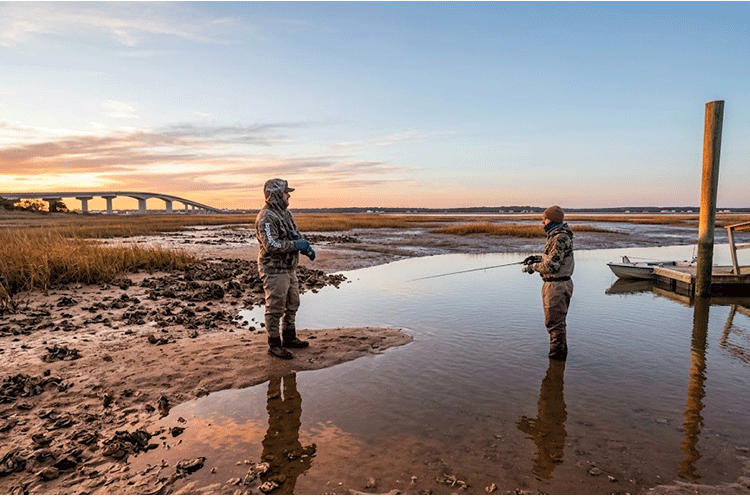
Topsail Island Winter Fishing: Mastering the Speckled Trout Bite
Executing a successful strategy for topsail island winter speckled trout fishing requires an intentional, highly specialized tactical approach as water temperatures hit their absolute yearly lows. For dedicated inshore anglers navigating the bays and creeks in January, the internal focus shifts entirely from covering vast amounts of water to extreme precision and fish survival mechanics. While the massive bait migrations of autumn are long gone, the resident speckled trout (spotted seatrout) that remain behind in our local sounds and rivers are heavily dependent on locating highly stable thermal conditions. Success this month means completely abandoning aggressive summer tactics for an ultralight, ultraslow, and deeply methodical presentation method.
When the winter freeze locks down southeastern North Carolina, the marine ecosystem undergoes a profound transformation. The water loses its summer plankton bloom, clearing up so drastically that it resembles a swimming pool. This pristine clarity means that while trout can spot an artificial lure from feet away, they can also easily spot heavy braided lines, boat shadows, and noisy hull slaps. Coupled with a cold-stunned metabolism that prevents them from aggressively chasing down fast baits, your terminal presentations must hover directly inside their tight lethargic strike zones to trigger an instinctual reaction bite.
Where to Find Topsail Island Winter Speckled Trout Fishing Spots
Cold water means slower metabolisms and highly compressed schooling habits. Trout will absolutely not actively cruise open, shallow flats where winter winds drop water temperatures into the low-40s. To locate the highest-yielding topsail island winter speckled trout fishing locations, you must search out deep-water refuge areas that provide structural insulation, stable salinity levels, and reliable tide breaks:
- Deep Bridge Pilings: The massive, deep concrete support columns of the Surf City High Rise Bridge provide an incredible vertical buffer flanked by deep water ($10 \text 15 \text$ or deeper). Speckled trout school tightly by the hundreds in the slow-moving eddy pockets on the down-current side of these pillars, waiting for the water to drift a stray shrimp directly to them.
- Intracoastal Waterway (ICW) Channel Drop-Offs: Focus your fish-finder scouting along the sharp, vertical shelves where our shallow sound flats drop off cleanly into the deeper dredged highway of the ICW. Trout line up along these deep muddy drop-offs, using the deeper trench as a thermal safety valve against sudden freezing weather fronts.
- "Trouty" Residential Docks: Look for mature wooden or concrete docks that feature heavy, multi-season barnacle growth and sit in at least 8+ feet of water at low tide. Docks positioned directly on the outer bends of winding tidal creeks are true winter hotspots, as the natural current carves out deep structural holes right beneath the decking.
- Deep Mud-Bottom Tidal Creeks: Navigate far back into the interior marsh creeks to locate isolated, deep holes ($6 \text 10 \text$). Prioritize creeks that feature soft, black mud bottoms; on bright cloudless January days, these dark mud flats act like solar panels, absorbing solar energy and warming the surrounding water column by several crucial degrees by mid-afternoon.
Local Hydrographic Rule: Because winter seatrout stack up tightly inside these deep basins to escape freezing currents, timing your trips to leverage peak current acceleration windows is absolutely non-negotiable. To learn exactly how water movement shifts these delicate winter ambush patterns, review our cornerstone anchor analysis, What Tide is Best for Fishing Around Topsail.
The Winter Approach: Ultralight and Ultraslow Presentations
The single most important operational rule to commit to memory this month is simple: **slow down your retrieve.** If you think you are already retrieving your lure slowly, cut that cadence in half and pause longer. Because a trout's digestive system operates at a crawl in cold water, they will not expend unnecessary calories to chase a meal. Your bait must be presented so slowly that it becomes an effortless target for an inspecting fish.
1. Slow-Sinking and Suspending Twitchbaits
Hard-bodied twitchbaits engineered to hover neutrally or sink with an agonizingly slow, horizontal flutter are legendary tools for January angling. Lures like the iconic MirrOlure 17MR or 27MR are purpose-built for this exact low-temperature fishery. Cast the lure across a deep ledge or bridge fender, crank it down two or three times to achieve depth, and execute a soft twitch followed by an extended pause. Your pauses should last anywhere from 5 to 10 full seconds. January trout will shadow the lure silently and engulf it while it is hanging completely motionless in the water column.
2. Soft Plastics on Lightweight Jigheads
When trout are hunkered down tightly in the soft mud at the bottom of deep ICW holes, a lead-headed jig is your premier scouting tool. Slide a small 3-inch paddle tail swimbait or a lifelike shrimp imitation—such as a Z-Man ElaZtech minnow or a scented Gulp! Shrimp—onto a lightweight $1/16\text$ or $1/8\text$ jighead. Running a heavy jighead causes the bait to crash to the bottom too aggressively, instantly spooking clear-water fish. Allow the light rig to drift down to the mud naturally, and retrieve it using incredibly subtle, slow upward rod tip hops, keeping your line completely tight on the drop to register the faint "tick" of a winter bite.
3. Live Shrimp Free-Line Strategies
While live shrimp remain an absolute high-potency bait option throughout the winter, your presentation method must adapt to the slow environmental pace. Clear away all heavy lead weights and free-line a live shrimp directly into deep structural eddies, allowing it to swim naturally with the current without any forced resistance. If you prefer utilizing a popping cork along deep dock faces, scale your movements back; allow the cork to sit completely stationary for up to 30 seconds between single, incredibly soft surface pops.
| Winter Lure Choice | Target Structural Zone | Retrieval Cadence Specification | Tactical Advantage |
|---|---|---|---|
| Suspending Twitchbaits (17MR) | Deep dock faces & bridge fenders | Soft twitch-twitch with a 5-10 second pause | Hovers neutrally directly in cold strike zones |
| Light Jigheads ($1/16\text$) + Plastics | Deep mud holes & ICW channel edges | Subtle bottom hops with line-tight rests | Maintains physical contact with bottom-dwelling schools |
| Free-Lined Live Shrimp | Bridge pilings & deep channel ledges | Natural current drift with zero added line weight | Zero-resistance presentation for hyper-wary gators |
Timing and Stealth: Maximizing Your Low-Impact Vector
The unparalleled clarity of January water requires an advanced, hunter-like level of stealth on the water. Because fish can easily spot boat hulls, moving paddle blades, and clothing silhouettes silhouetted against the bright sky, long and precise casting is mandatory to prevent spooking a tightly packed winter school. Keep your outboard engine turned off well before arriving at a winter pocket, avoid slamming boat hatches, and swap out heavy fishing lines for a stealthy $8\text12\text$ premium fluorocarbon leader line to completely eliminate underwater visibility profile lines.
Additionally, adjust your fishing clock away from early morning sessions. The absolute finest winter fishing windows almost always occur during the warmest parts of the day—typically between 11:00 AM and 3:00 PM. This midday window allows the sun to maximumly warm up our shallow flats and shallow structures, shifting fish out of their catatonic morning states into active feeding patterns. To learn how to gather the finest winter forage options across our island before heading out, review Bait School: Choosing And Using The Best Live Baits For Topsail Success.
Book a Winter Specialist
Successfully navigating winding, volatile tidal marsh creeks in low-water winter conditions, avoiding hidden oyster mounds, and tracking down hyper-localized cold-water schools carries an incredibly steep learning curve. Hiring a seasoned, licensed local charter captain ensures you skip the grueling scouting phases entirely, stepping directly onto custom-rigged vessels equipped with specialized light tackle configurations and fresh bait sources. Explore our verified, comprehensive Topsail Island Charter Captains Directory to partner with a premier inshore cold-water specialist and book your January excursion today!
Plan Your Next Season on the Water
Every month offers something different around Topsail Island. Continue exploring seasonal fishing patterns, current fishing activity, weather and tide conditions, species guides, and experienced local captains to help you make the most of your next trip.
🎣 Planning a trip to the NC coast? Before you book a boat down south, check out why Topsail vs. Wilmington fishing offers a better backwater experience. 🎣
Own a Fishing Charter Around Topsail Island?
Get your business in front of local anglers searching for fishing charters, guides, and inshore adventures on Topsail.Fish. Our directory listings are designed to help captains improve online visibility, increase bookings, and build a stronger local presence.
Professional listings start at just $12/month.