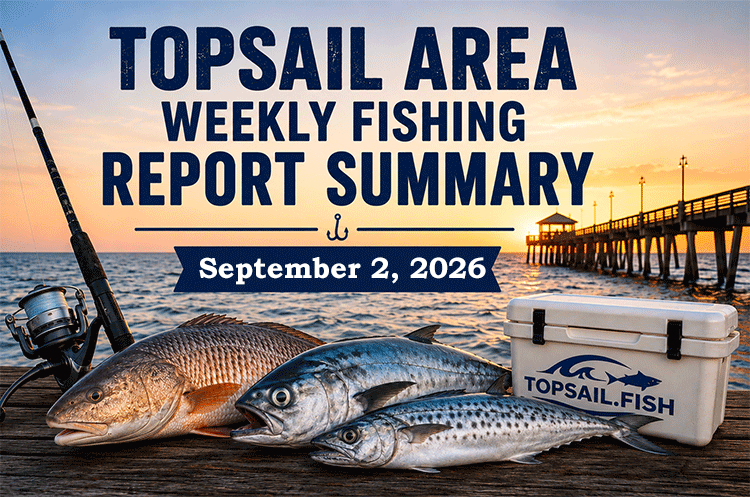
Topsail Area Weekly Fishing Report Summary | September 2, 2026
Topsail Area Weekly Fishing Summary is our weekly roundup of regional fishing activity, pier and surf action, seasonal trends, and the fishing outlook from across Topsail Island, Surf City, North Topsail Beach, Sneads Ferry, and the surrounding coastal waters.
September has arrived, and the Topsail-area fishery is beginning one of the most anticipated transitions of the year. Growing schools of finger mullet are moving through the creeks, marshes, inlets, and beachfront, while slightly cooler conditions are beginning to improve feeding activity. Red drum remain the strongest inshore target, Spanish mackerel and bluefish are producing along the beaches, and speckled trout are beginning to show more consistently. Flounder are also receiving plenty of attention now that North Carolina’s short recreational harvest season has opened.
There were no new captain fishing reports submitted directly to Topsail.Fish this past week, so this summary is based on current regional catches, pier and surf activity, seasonal bait movement, and recent fishing conditions throughout the greater Topsail area.
Species Scorecard
- Red Drum ★★★★★
- Spanish Mackerel ★★★★★
- Bluefish ★★★★☆
- Flounder ★★★★☆
- Speckled Trout ★★★★☆
- Black Drum ★★★☆☆
- Sheepshead ★★★☆☆
- King Mackerel ★★★☆☆
Red Drum Continue to Lead the Inshore Bite
Red drum remain the most dependable inshore target throughout the Intracoastal Waterway, marsh creeks, oyster areas, docks, grass banks, and shallow bays. Both live bait and artificial lures are producing, with the strongest shallow-water bite generally occurring early in the morning or later in the day when temperatures moderate.
Topwater plugs, gold spoons, paddle tails, and shrimp imitations are good choices around first light. Focus on creek mouths, marsh drains, oyster points, and grass edges where finger mullet and shrimp are moving with the current.
As the sun gets higher, live finger mullet, live shrimp, fresh cut mullet, and menhaden become increasingly effective. Shaded docks, deeper creek bends, channel edges, and oyster structure can all hold fish after the shallow-water bite slows.
The growing fall bait movement is especially important. Red drum are beginning to position themselves where mullet leaving the backwaters are forced through narrow creek mouths, inlet channels, and cuts. Finding concentrated bait can be more important than fishing a favorite location.
The Fall Red Drum Transition Is Beginning
Early September marks the beginning of the seasonal change that eventually produces some of the best red drum fishing of the year around Topsail Island. Cooler nights, changing water temperatures, and increasing bait movement encourage drum to feed more aggressively as summer gives way to fall.
Slot-sized fish remain common throughout the marshes and ICW, while anglers should begin watching the inlets and oceanfront more closely for larger fish as the season progresses.
Finger mullet are one of the primary drivers of this transition. When schools begin moving rapidly along a shoreline, piling into creek mouths, or pouring through an inlet on a falling tide, red drum are rarely far away.
North Carolina Flounder Season Is Now Open
North Carolina’s recreational flounder harvest season opened September 1 and runs through September 14, giving anglers a brief opportunity to keep legal flounder during one of the year’s most productive periods.
The recreational limit is one flounder per person per day with a minimum total length of 15 inches. Anglers should verify the current rules for the water they are fishing and comply with applicable harvest-reporting requirements before retaining a fish.
Flounder are being encountered throughout the ICW, creeks, marsh drains, docks, bulkheads, channel edges, and inlet areas. Live finger mullet and mud minnows remain excellent choices, while paddle tails, bucktails, scented soft plastics, and jig heads can all produce when worked slowly near the bottom.
The best locations typically combine structure with moving water. Creek mouths and marsh drains are particularly productive because current delivers shrimp and small baitfish directly across areas where flounder can lie in ambush.
Speckled Trout Beginning to Respond to the Seasonal Change
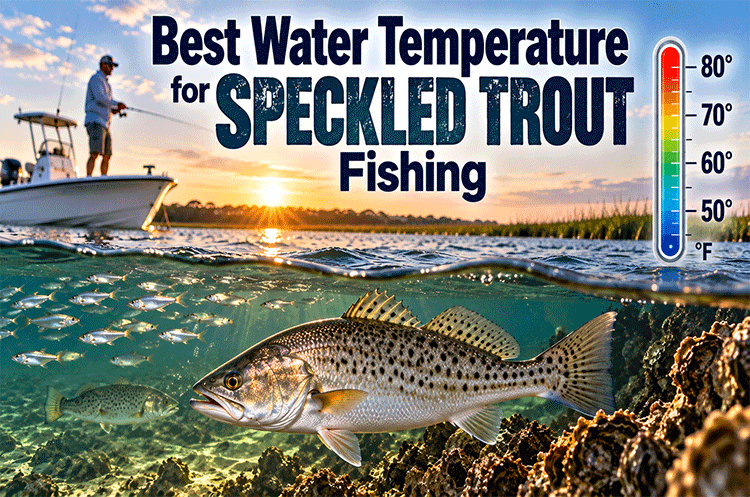
Speckled trout are showing more frequently throughout the ICW, larger creeks, grass banks, current seams, and deeper holes. The strongest portion of the fall trout season is still ahead, but early September often provides the first noticeable improvement after the heat of summer.
Early morning topwater fishing remains an excellent option around creek mouths, oyster edges, grass points, and shallow areas adjacent to deeper channels.
After sunrise, live shrimp beneath a popping cork becomes increasingly dependable. Soft plastics worked slowly along current seams and channel edges can also locate scattered fish.
Anglers should pay close attention to shrimp activity. Areas with visible shrimp popping near the surface frequently attract trout, red drum, and flounder to the same general feeding zone.
Black Drum Remain a Reliable Structure Fish
Black drum continue to show around docks, bridges, oyster beds, deeper holes, and areas holding crabs and shrimp.
Fresh shrimp fished close to the bottom remains the most dependable presentation. Small pieces of shrimp often produce better than oversized baits, particularly around docks and bridge structure.
Black drum can continue feeding through the middle of the day, making them a useful option when bright conditions slow the shallow red drum and trout bite.
Sheepshead Still Holding Around Hard Structure
Sheepshead remain available around bridges, dock pilings, pier supports, bulkheads, and other barnacle-covered structure throughout the Topsail area.
Fiddler crabs, sand fleas, barnacles, and live shrimp remain effective. Present the bait directly beside the piling and maintain enough contact to detect subtle changes in line tension.
As always, check leaders frequently. Barnacles and oysters can damage line quickly, and hooked sheepshead frequently attempt to circle directly back into the structure.
Spanish Mackerel Are Providing Excellent Nearshore Action
Spanish mackerel continue to be one of the strongest fisheries along the Topsail beachfront and around inlet shoals. Schools are feeding on small bait close enough to shore for boats, pier anglers, and occasionally surf fishermen to take advantage.
Trolling Clarkspoons behind planers or trolling weights remains a highly effective method for locating fish. Once a school is found, casting metal jigs and small spoons can provide fast action.
Early morning has been especially productive. Calm conditions make it easier to locate working birds, surface-feeding fish, and bait concentrations before wind and boat traffic increase later in the day.
September also tends to bring opportunities for a better class of Spanish mackerel, making it worthwhile to keep casting tackle ready even when the primary plan is trolling.
Bluefish Following the Fall Bait Movement
Bluefish are mixed heavily with Spanish mackerel along the beach and around inlet areas. As finger mullet movement intensifies, bluefish should become increasingly noticeable in both the surf and nearshore waters.
Gotcha plugs, metal jigs, spoons, topwater lures, and cut bait can all produce. Schools may appear suddenly when bait becomes concentrated by current or pushed against the beach.
Outgoing tides around the inlets are worth watching closely because they carry mullet and other forage from protected waters toward the ocean, creating natural feeding opportunities for bluefish, Spanish mackerel, and red drum.
Surf Fishing Is Entering a More Productive Period
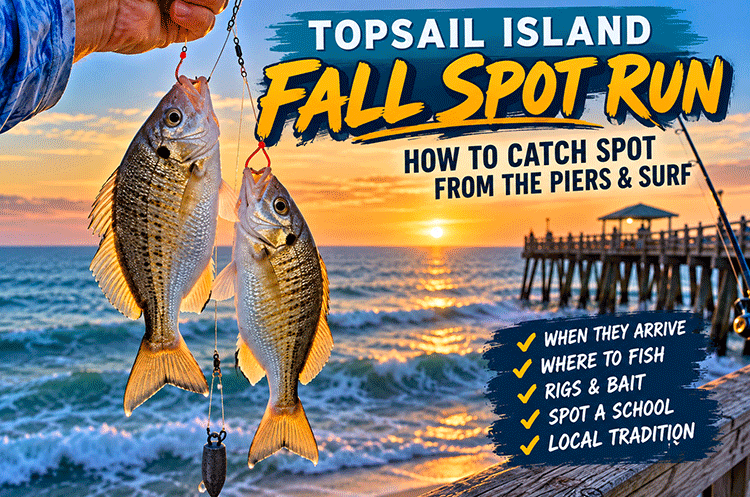
Surf anglers are seeing whiting, black drum, bluefish, croakers, spots, small sharks, and occasional red drum. Increasing finger mullet movement should continue improving the surf bite as September progresses.
Fresh shrimp and sand fleas remain strong choices for whiting and black drum, while cut mullet or menhaden can produce red drum and larger bluefish.
Reading the beach remains critical. Look for deeper troughs, sloughs, cuts through sandbars, points, and areas where the wave pattern changes. These features create travel lanes and feeding zones that concentrate both bait and predators.
Many productive areas are much closer to shore than anglers expect. A well-placed bait in the first trough can outperform a long cast beyond the sandbar.
Pier Fishing Producing Spanish, Blues, and Bottom Fish
Topsail-area piers continue to offer a broad mix of late-summer and early-fall opportunities. Spanish mackerel and bluefish are being caught on casting jigs and plugs, with the morning bite generally producing the most consistent action.
Bottom fishermen can expect whiting, spots, croakers, black drum, and occasional red drum or flounder.
Live-bait fishermen working from the ends of the piers remain in the game for larger predators. Tarpon and cobia are still possible around beachfront bait schools, while anglers are beginning to anticipate the stronger fall king mackerel bite.
Tarpon and Cobia Remain Late-Summer Possibilities
Although never dependable targets from the piers, both tarpon and cobia remain possible while warm water and abundant bait remain close to the beach.
Anglers fishing live baits from the ends of the piers should keep an eye on the water around concentrated menhaden or mullet schools. A large fish rolling, cruising near the surface, or pushing bait can quickly turn an otherwise ordinary morning into a memorable one.
Nearshore Spanish and Bluefish Remain the Best Bet
Nearshore anglers are finding excellent numbers of Spanish mackerel and bluefish along the beaches. Trolling Clarkspoons remains an easy way to locate schools, but surface activity often provides opportunities for sight-casting.
When birds begin diving or bait starts spraying from the water, approach from the outside of the feeding activity rather than running directly through the school.
A number of sharks are also present along the beachfront, another indication that plenty of forage remains in the nearshore zone.
A Few Mahi Are Still Showing Nearshore
Scattered mahi remain a possibility farther off the beach, including occasional fish that have pushed considerably closer to shore than traditional Gulf Stream waters.
These fish are not concentrated enough to build an entire trip around, but anglers encountering floating debris, weed lines, temperature changes, or offshore bait should keep a spinning rod or light trolling outfit ready.
A small bucktail, jig, live bait, or piece of cut bait can quickly turn an unexpected mahi sighting into a bonus fish.
King Mackerel Bite Should Improve as Fall Develops
King mackerel remain scattered around reefs, wrecks, and bait concentrations, but the more consistent fall bite is still developing.
Slow-trolling live menhaden, bluefish, or cigar minnows remains one of the most effective techniques. Drone spoons, strip baits, and deep-diving plugs are useful alternatives when live bait is unavailable.
As larger concentrations of bait develop closer to the beach, anglers should expect king mackerel opportunities to improve around nearshore reefs and from the ends of the Topsail-area piers.
Offshore Bottom Fishing Continues to Offer Variety
Offshore bottom fishing remains productive around hard-bottom areas, reefs, wrecks, and ledges. Grouper, black sea bass, vermilion snapper, triggerfish, grunts, porgies, amberjack, and other structure-oriented species remain available.
Cut bait, squid, cigar minnows, and vertical jigs can all produce. Anglers may need to move among several pieces of structure until they locate active fish.
Keep a lighter spinning or trolling outfit ready because mahi, cobia, king mackerel, barracuda, and other predators can unexpectedly appear around productive offshore structure.
What to Expect Next Week
The fall transition should become increasingly noticeable as September progresses. Red drum should remain the dominant inshore species, while speckled trout activity gradually improves and flounder remain a major focus during the brief recreational harvest season.
Finger mullet movement should continue concentrating bluefish, Spanish mackerel, red drum, and other predators around inlet mouths and along the beachfront.
Surf anglers should begin seeing more opportunities for drum and bluefish as bait schools increase, while pier anglers can expect continued Spanish mackerel action and improving chances for king mackerel as the fall pattern develops.
The key throughout the coming week will continue to be locating bait and fishing periods of moving water rather than becoming committed to one particular location.
Topsail.Fish Weekly Takeaway
September is beginning exactly the way Topsail anglers hope to see it begin: plenty of bait, good red drum action, Spanish mackerel and bluefish along the beaches, flounder throughout the inshore fishery, and early signs that speckled trout are beginning their seasonal improvement.
Follow the finger mullet, fish early or late when targeting shallow water, and pay particular attention to creek mouths, inlet channels, marsh drains, and beachfront structure. The next several weeks should bring some of the most diverse fishing opportunities of the year.
Best Bets for the Coming Week
Best Inshore Bet: Red Drum
Target grass banks, oyster points, marsh drains, creek mouths, and docks around first light. Start with topwater plugs or paddle tails, then switch to live finger mullet, shrimp, or fresh cut bait as the sun gets higher.
Best Flounder Bet: Creek Mouths and Channel Edges
Work live finger mullet, mud minnows, or soft plastics slowly along bottom transitions where current funnels bait from marshes and shallow creeks into deeper water.
Best Speckled Trout Bet: Early Topwater
Fish topwater plugs around grass points, creek mouths, oyster edges, and current seams at first light, then move to live shrimp beneath popping corks.
Best Structure Bet: Black Drum
Fish fresh shrimp close to the bottom around docks, bridges, oyster areas, and deeper holes.
Best Surf Fishing Bet: Red Drum
Locate deeper sloughs and cuts holding finger mullet, then fish fresh cut mullet or menhaden on a Carolina-style rig.
Best Pier Bet: Spanish Mackerel
Cast Gotcha plugs and metal jigs during the early morning while bait schools and feeding Spanish remain close to the pier.
Best Nearshore Bet: Spanish Mackerel and Bluefish
Troll Clarkspoons around working birds and concentrated bait, then switch to casting jigs when surface-feeding schools become visible.
Best Offshore Bet: Bottom Fishing
Target hard-bottom areas, ledges, reefs, and wrecks for grouper, vermilion snapper, black sea bass, triggerfish, grunts, porgies, and other structure-oriented species.
Weekly Wildcard Prediction
Watch for a sudden surge of red drum activity around the inlets and oceanfront as finger mullet schools become increasingly concentrated. A strong falling tide pushing a large school of mullet through New River Inlet or New Topsail Inlet could create one of the first truly memorable red drum feeding events of the fall season.
Topsail.Fish Forecast Rating
Overall Fishing Outlook: ★★★★★ (4.5 out of 5)
The seasonal transition is underway, bait is abundant, and anglers have productive options from the marshes to offshore structure. September traditionally begins one of the most exciting stretches on the Topsail fishing calendar, and current conditions suggest that transition is already taking shape.
Planning a Topsail Fishing Trip?
Browse the Topsail Island Fishing Season Guide to see which species typically peak throughout the year and how the changing seasons influence fishing around the island.
Families and first-time anglers can explore our Kid-Friendly Fishing Trips for accessible ideas and tips for making a day on the water enjoyable for younger anglers.
For rigs, bait presentations, techniques, and practical local fishing advice, browse the Topsail.Fish How-To Articles.
Ready to fish with a local professional? Browse the Topsail-area captain directory and Book a Charter for your next inshore, nearshore, or offshore fishing trip.
Fishing Intel Spotlight: Fall Red Drum Fishing
This week’s featured Topsail.Fish article looks ahead to one of the most anticipated fisheries of the year: the fall red drum run.
Fall Red Drum Fishing: Topsail Island Tactics & Setup explains how cooling water, migrating finger mullet, shrimp, and menhaden transform the Topsail-area fishery from late September through November. The guide covers the seasonal behavior of red drum, tackle setups for both inshore slot fish and larger surf-running drum, productive artificial and live-bait presentations, and local patterns around New River Inlet, Surf City’s backwaters, and New Topsail Inlet.
The timing is especially relevant this week because the same bait movement that drives the autumn red drum fishery is already beginning to develop. Anglers who learn to recognize concentrated finger mullet, draining marshes, inlet current, and shallow-water feeding patterns now will be well prepared as the fall bite continues to strengthen.
Keep Exploring Topsail Island Fishing Intel
The Weekly Fishing Report Summary is only one part of the fishing information available on Topsail.Fish. Our Topsail Island Fishing Intel Center brings together weekly fishing reports, local captain reports, seasonal planning information, species guides, fishing piers, boat ramps, conditions, and practical fishing knowledge in one place.
Whether you’re deciding what to target this weekend, preparing for the fall red drum run, checking seasonal patterns, or planning a future trip to Topsail Island, start with Fishing Intel and follow the latest information from across the Greater Topsail Island fishing community.
Turn This Week’s Fishing Report Into Your Next Catch
Now that you’ve seen what’s happening around Topsail Island, take the next step by exploring detailed captain reports, checking seasonal fishing patterns, reviewing current conditions, and finding a local guide to help make your next trip a success.
🎣 Planning a fishing trip to coastal North Carolina? Before choosing a charter destination, discover why many anglers prefer Topsail Island’s less crowded waters, productive back bays, and outstanding inshore and surf fishing opportunities.
🎣 Planning a trip to the NC coast? Before you book a boat down south, check out why Topsail vs. Wilmington fishing offers a better backwater experience. 🎣

Are you a Topsail Area Captain?
Grow your charter business with an SEO-optimized listing in our directory. For just $12/month, we help you reach more anglers and secure the consistent bookings you need to thrive.