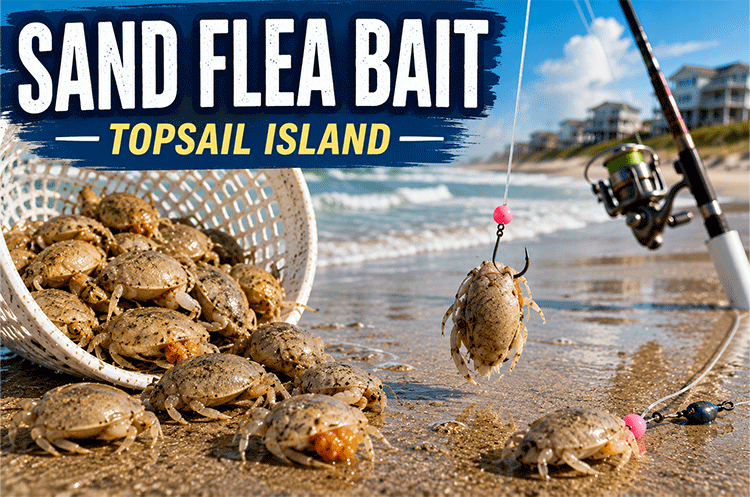
The Hidden Goldmine in the Topsail Island Shorebreak
When packing up the family trucks for a day on the beautiful beaches of southeastern North Carolina, most visiting anglers instinctively head to the local tackle shop to load down their coolers with frozen blocks of squid or artificial baits. While those traditional offerings certainly catch their share of panfish, they pale in comparison to a completely free, highly abundant, and lethal alternative hiding right beneath your toes in the surf zone. If you are hunting for a true secret weapon to target high-value coastal species like Sea Mullet (Whiting), Florida Pompano, and heavy Red Drum, look no further than the common Atlantic mole crab—locally known as the sand flea. Learning how to harvest and rig this crustacean reveals why it is widely celebrated as the absolute best surf fishing bait topsail island has to offer.
For families traveling with young children, hunting for sand fleas bridges the gap between passive beachcombing and active light-tackle angling. Instead of waiting hours for a bite on stale bait, children can get completely involved in the fishing process by scouting the shoreline and filling the bait buckets themselves. This turns bait collection into an engaging, high-energy beach game that directly feeds your evening surf fishing efforts. Because these small crabs represent the baseline diet for predatory fish navigating our shallow beachfront sloughs, dropping a fresh, live sand flea into the breakers triggers an immediate, instinctual feeding response that artificial options simply cannot replicate.
Why Mole Crabs are the Absolute Best Surf Fishing Bait Topsail Island Offers
Predatory fish that patrol the beach breakers are evolutionary opportunists, but they are also incredibly discerning in clear water columns. As breaking waves continuously crash into the sandbars along Surf City and North Topsail Beach, the high-velocity churning water physically unearths colonies of sand fleas from their micro-burrows. Fish like pompano and sea mullet use this dynamic wave energy to their advantage, cruising directly into the turbulent shorebreak to pick off these disoriented, tumbling crabs. Because sand fleas represent a high-protein, easily accessible meal, they are universally preferred by local surf species over almost any other forage.
Furthermore, sand fleas possess native evolutionary traits that make them an exceptional choice for the angler:
- Scent and Visual Accuracy: A live sand flea continuously kicks its specialized digging legs when pinned to a hook, sending distinct mechanical vibrations and rich scent trails through the foaming white water that draw fish from long distances.
- Shell Resilience: Unlike delicate fresh shrimp or soft worm sections that are easily picked clean by small bait-thieving blue crabs and pinfish within seconds, the durable chitinous shell of a sand flea protects the hook point, ensuring your presentation remains completely intact until a target gamefish strikes.
Local Geographic Connection: Because beach structural shifts and longshore currents directly control where these crab colonies cluster and how fish enter the breakers, pairing your bait hunts with active water movement is essential. To master how water cycles position these feeding zones along our beachfronts, read our foundational anchor analysis, What Tide is Best for Fishing Around Topsail.
Step-by-Step: Turning Sand Flea Harvesting Into a Family Adventure
Hunting for sand fleas does not require expensive gear or complex equipment; it simply requires timing, a basic plastic sand rake or wire mesh colander, and a pair of observant eyes. Kids excel at this process because they are already close to the sand and naturally curious about coastal marine life.
- Locate the Receding Wave Windows: Walk down to the wet intertidal zone where the waves are actively advancing and retreating across the slope of the beach. Stand completely still and watch the thin sheet of water as a wave drains back out to sea.
- Spot the Telltale V-Wakes: As the receding water sweeps over the sand, look for clusters of tiny, inverted “V-shaped” ripples or small disturbances cutting through the water film. These miniature wakes are created by the feather-like antennae of sand fleas poking upward to filter-feed on microscopic plankton.
- Execute the Rapid Dig Protocol: The moment you spot a cluster of wakes, move in quickly before the next wave hits. Sand fleas are lightning-fast diggers that burrow backward into the wet sand. Dig your hands or a specialized metal bait rake roughly 2 to 4 inches deep directly into the sand cluster and lift the matrix upward.
- Sift the Surf Shells Away: Hold your rake or handful of sand directly in the next incoming wave wash, allowing the clean water to sift the loose sand particles completely through the mesh openings. You will be left with a collection of smooth, oval-shaped crabs scurrying in reverse across the bottom of the frame.
- Select the Premium Orange Berried Crabs: Sort through your catch with the kids. While all sand fleas are effective, prioritize keeping the medium-sized females that display bright orange egg masses—known as berries—underneath their tail flaps. Predatory fish are highly attracted to this orange coloration, making berried females the premier choice for your hook.
Advanced Rigging: Presenting Sand Fleas to Beach Predators
Once your bait buckets are filled with live, scurrying crabs, you must present them naturally to ensure success. The absolute standard framework for presenting the best surf fishing bait topsail island provides is a classic two-hook dropper configuration, commonly referred to as a **North Carolina Surf Float Rig** or a **Double-Hook Bottom Rig**.
Construct your rigs using a 20-pound clear fluorocarbon leader line to remain completely invisible in the clear ocean breakers. Tie on two short dropper loops spaced roughly 12 inches apart, and decorate each loop with a small, high-visibility pink or chartreuse foam float bead. These micro-floats serve a critical tactical dual-purpose: they provide a visual target for curious fish navigating through muddy surf, and they gently lift your sand fleas just off the immediate ocean floor, keeping them floating perfectly in the strike zone while preventing hungry bottom crabs from burying them in the sand.
To hook a sand flea correctly without killing it, hold the crab face up between your fingers. Insert a small #2 or #4 sharp circle hook directly through the rear digging apron on the bottom of the shell and push it upward until the hook point exposed cleanly through the top of the hard main shell. Do not hook them from side to side, as this punctures vital organs and causes the bait to die instantly. An ethically hooked, live sand flea will continuously kick its legs into the current, presenting an irresistible, natural target for cruising fish.
| Beach Target Species | Preferred Sand Flea Size | Optimal Surf Structural Zone | Rigging Specification |
|---|---|---|---|
| Florida Pompano | Small to Medium (Dime-Sized) | The shallow inner shore-break trough | #4 Circle Hook with a Pink Float Bead |
| Sea Mullet (Whiting) | Small (Pea-Sized) | Deep outer sloughs behind sandbars | #2 Long-Shank Hook with zero float lead |
| Red Drum / Black Drum | Large (Quarter-Sized / Berried) | Deep white-water rip current cuts | 1/0 Circle Hook on a heavy Carolina Rig |
Preservation and Sustainable Beach Stewardship
Keeping your freshly harvested sand fleas healthy throughout a long, hot summer afternoon requires mimicking their natural environment. Never submerge sand fleas completely inside a bucket of stagnant seawater; they will rapidly exhaust the dissolved oxygen levels and drown within an hour. Instead, place them inside a shaded bait bucket filled with 2 inches of damp, loose beach sand and cover them with a layer of cool, wet seaweed. This setup keeps their gills perfectly moist and cool, allowing them to remain highly active and kicking for over 24 hours.
Because these creatures represent a foundational link in our local marine food web, practicing sustainable collection methods ensures our local fisheries stay robust for future generations. Only harvest what you realistically plan to use for your immediate fishing session. If you have leftover sand fleas at the end of your beach day, get the kids together and release them back into the receding wash lines, allowing them to instantly burrow back into the sand and continue their vital life cycle. To learn how to safely collect other highly effective local live bait options across our sound-side marshes before heading out, review our step-by-step master guide, Bait School: Choosing And Using The Best Live Baits For Topsail Success.
Book a Professional Surf Fishing Specialist
Successfully learning to read shifting coastal sandbar cuts, tracking elusive migratory pompano schools through changing surf conditions, and mastering complex long-casting techniques carries a steep learning curve for visiting families. Hiring an experienced, licensed local charter guide ensures you completely skip the grueling trial-and-error phases, stepping directly onto the beach equipped with premium surf tackle configurations, specialized long-distance rod setups, and expert local coaching. Explore our verified, comprehensive Topsail Island Charter Captains Directory to partner with a premier beach fishing specialist and secure your coastal booking today!
Plan Your Next Family Fishing Adventure
Whether you’re introducing a child to fishing for the very first time or planning your next family outing, explore our fishing resources to find the best seasons, current fishing conditions, family-friendly techniques, and experienced local captains who enjoy fishing with anglers of all ages.
🎣 Planning a trip to the NC coast? Before you book a boat down south, check out why Topsail vs. Wilmington fishing offers a better backwater experience. 🎣
Own a Fishing Charter Around Topsail Island?
Get your business in front of local anglers searching for fishing charters, guides, and inshore adventures on Topsail.Fish. Our directory listings are designed to help captains improve online visibility, increase bookings, and build a stronger local presence.
Professional listings start at just $12/month.