Playing & Landing Fish Safely on Light Tackle
There is nothing quite like the thrill of hooked into a powerful fish while using light tackle. Whether you are targeting speckled trout in the sound or sight-casting to redfish on the flats around Topsail, light gear offers a level of sensitivity and excitement that heavy tackle simply cannot match. However, using lighter lines and smaller reels means there is a much smaller margin for error. To successfully bring a fish to the boat without snapping your line or harming the fish, you must master the art of the “finesse” fight. Playing and landing fish on light tackle!
1. Let the Drag Do the Work
When fishing with light tackle, your reel’s drag system is your best friend. Before you even make your first cast, ensure your drag is set to approximately one-third of the line’s breaking strength. A common mistake beginners make is tightening the drag during the fight. On light tackle, a sudden surge from a fish against a locked drag will result in an instant “pop.” If the fish wants to run, let it. Keeping steady pressure while allowing the fish to tire itself out against the resistance of the drag is the key to victory.
2. Use the “Power” of the Rod
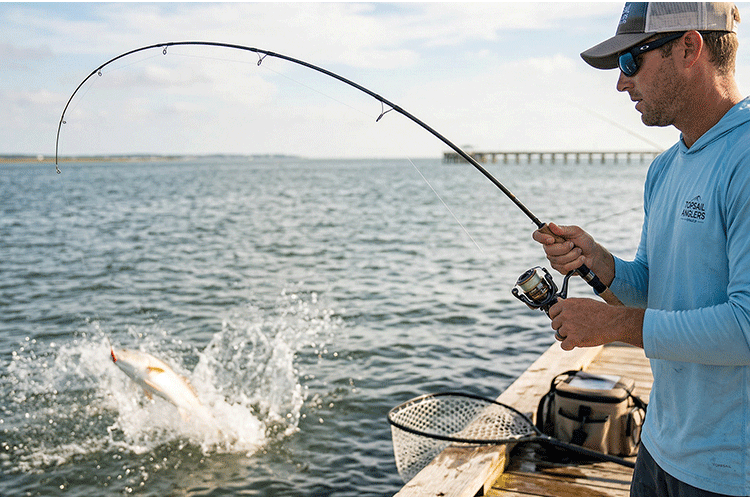
Your fishing rod is designed to act as a shock absorber. When playing a fish, keep the rod tip up—usually at a 45-degree angle. This allows the blank of the rod to absorb the head shakes and sudden lunges that light monofilament or braid might not handle alone. Never “point” the rod directly at the fish, as this creates a straight line from the reel to the hook, putting 100% of the pressure on the knot and line.
3. The Art of the Follow | Playing & Landing Fish Safely on Light Tackle
If a large fish decides to take a long run, don’t just stand your ground. If you are on a boat or a kayak, you may need to maneuver to follow the fish to prevent getting “spooled.” By reducing the distance between you and the fish, you maintain better control and reduce the amount of line stretch and water resistance acting against your tackle.
4. Landing and Conservation | Playing & Landing Fish Safely on Light Tackle
Landing the fish is the most critical moment. As the fish nears the shore or boat, it will often give one last “death-run.” Be prepared to dip your rod tip to account for this. Always use a rubberized landing net to protect the fish’s slime coat if you plan on a release. Avoid lifting the fish out of the water by the line; on light tackle, this is the easiest way to lose your trophy and leave a hook in the fish’s mouth. Keep the fish in the water as much as possible, snap a quick photo, and let it swim away to fight another day.
Mastering light tackle takes patience and practice, but once you land your first over-slot Reddrum on 8lb test, you’ll never want to go back to the heavy stuff!
Grow your charter business with an SEO-optimized listing in our Captains’ directory. For just $12/month, we help you reach more anglers and secure the consistent bookings you need to thrive.
Join the Topsail.Fish Directory Today!

Topsail Fish | Topsail Island Fishing Guides | Topsail Island Fishing Captains | Topsail Island Fishing Charters | NC Wildlife Resources Commission
Keep Building Your Topsail Fishing Skills
Want to put this technique to work on your next trip? Use these Topsail.Fish resources to check current fishing activity, match your tactics to the season, review local conditions, and find more step-by-step fishing guides.
🎣 Planning a fishing trip to coastal North Carolina? Before choosing a charter destination, discover why many anglers prefer Topsail Island’s less crowded waters, productive back bays, and outstanding inshore and surf fishing opportunities.
🎣 Planning a trip to the NC coast? Before you book a boat down south, check out why Topsail vs. Wilmington fishing offers a better backwater experience. 🎣
Own a Fishing Charter Around Topsail Island?
Get your business in front of local anglers searching for fishing charters, guides, and inshore adventures on Topsail.Fish. Our directory listings are designed to help captains improve online visibility, increase bookings, and build a stronger local presence.
Professional listings start at just $12/month.