The Workhorse of Traditional Saltwater Bottom Fishing
Walk onto any oceanfront fishing pier or survey the rod holders lined up along the beaches of North Topsail, and you will see one classic configuration deployed more than any other: the traditional high-low bottom setup. Learning how to tie a double hook bottom rig is a fundamental skill that underpins your entire saltwater angling foundation. This time-tested design lets you present two completely independent baits simultaneously at different depths right along the ocean floor, creating a concentrated scent trail that bottom-feeding fish find impossible to ignore.
While commercial tackle shops sell thousands of pre-made bottom rigs constructed of heavy wire plastic sleeves and high-visibility metal snaps, these retail rigs have severe limitations. The bright metal arms create massive visual warnings that spook wary, larger species in clear shallow water, and the stiff wire arms foul easily in heavy currents. Tying your own double-hook bottom rigs utilizing clean, un-sleeve monofilament or premium fluorocarbon results in a highly stealthy presentation. This hand-tied approach offers superior knot strength, excellent hydrodynamic profiling in fast tides, and total flexibility to customize hook spacing to match what is biting around Topsail Island.
Step-by-Step Guide: Construction of a Double-Hook Bottom Rig
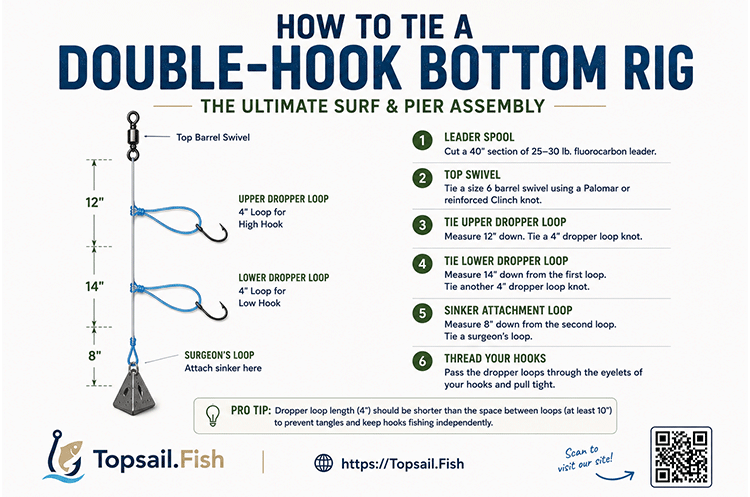
To ensure your double-hook presentation casts efficiently without wrapping around your shock leader, precise distances between your structural connections must be maintained. Follow these step-by-step assembly instructions:
- Leader Spool Separation: Pull out a continuous 40-inch section of 25-to-30-pound clear fluorocarbon leader line. Cut the line cleanly with a pair of sharp rigging shears, checking the entire length for any manufacturer blemishes or structural kinks.
- Top Swivel Integration: Tie a heavy-duty size 6 barrel swivel to one end of your leader material using a reinforced Clinch knot or a Palomar knot. This top swivel will receive your main running line, absorbing all line twist as your rig rolls through the surf zone.
- Tie the Upper Dropper Loop: Measure exactly 12 inches down from the top barrel swivel. Form a 4-inch loop and tie a standard, multi-wrap dropper loop knot. For an exhaustive, close-up look at the wrapping mechanics needed to secure this knot barrel correctly, read our companion tutorial on how to tie a dropper loop for surf fishing. Pull the standing lines firmly in opposite directions to seat the knot barrel tight against the main core. This becomes your “High” hook arm.
⚓ Free Printable Companion Resource: Want to keep this structural double-hook layout handy at your rigging bench or taped inside your beach cart? We have converted this complete structural dimensions blueprint into a high-definition, printable format. Download our Printable Double-Hook Bottom Rig Specification PDF to keep on your boat or pier cart.
Pro Rigging Tip: Always make sure the physical length of your dropper loops is shorter than the vertical distance between the loops themselves. If your loops are 4 inches long, they must be spaced at least 10 inches apart. This structural gap ensures that the upper hook can never drop down far enough to tangle around the lower hook assembly.
- Tie the Lower Dropper Loop: Measure 14 inches further down the standing leader material from your first knot. Form another 4-inch loop and tie your second dropper loop knot. This forms your “Low” hook arm, positioning your bottom bait directly in the feeding zone of sand-grubbing species.
- Sinker Attachment Loop: Move 8 inches down from your second loop and tie a simple, strong surgeon’s loop at the very end of the line. To rig up, loop the line directly through the brass eyelet of a 2-to-4-ounce pyramid or spider sinker, trapping the weight securely at the base of the framework.
- Thread Your Hooks: Compress the loops and pass them directly through the eyelets of your hooks, pulling the loop over the hook points to lock them in place using a standard loop-to-loop connection. For general bottom species, long-shank hooks or size #2 to #1 circle hooks are ideal choice metrics.
Target Demographics: What Bites a Double Bottom Rig?
The double-hook bottom rig is structurally optimized for species that feed by scent and graze strictly along the ocean floor or inside deeper sandbar depressions. Understanding your target species helps you fine-tune your bait presentation choices:
- Sea Mullet (Whiting / Kingfish): These delicious structural surf staples travel in large schools directly inside the shallow whitewash. They possess small down-turned mouths designed to crush tiny crustaceans. Baiting your bottom hooks with small pieces of fresh bloodworm or shrimp will keep your rods bent consistently.
- Black Drum: Often found patrolling close to pier pilings or deep inlet sloughs, juvenile “puppy” black drum rely heavily on smell. A double-hook bottom rig packed with fresh, crushed blue crab chunks or peeled shrimp tails pinned securely to the sand is the absolute gold standard for tracking them down.
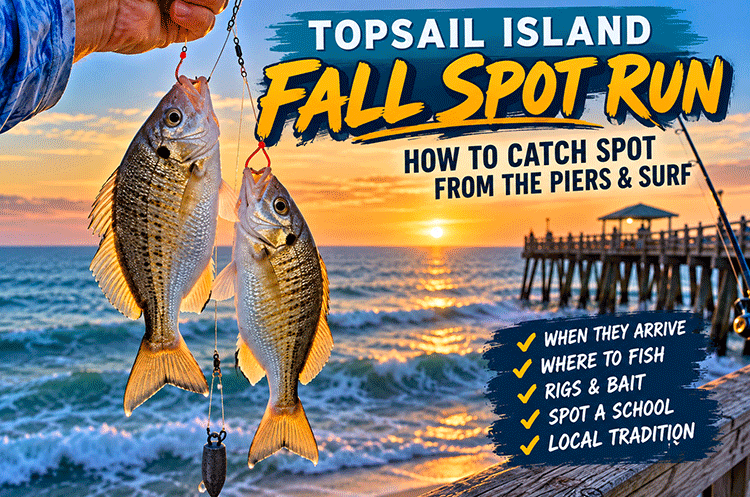
- Spot and Croaker: Arriving in massive seasonal numbers across the North Carolina coast, these schooling fish feed aggressively. Because they compete heavily for food, a double presentation frequently results in exciting “double-header” hookups where fish slam both hooks simultaneously.
Knot Configurations vs. Commercial Hardware
Many novice anglers wonder why hand-tying is superior to utilizing metal snaps and pre-packaged wire configurations. The answer comes down to structural dynamics, hydrodynamic drag, and stealth properties.
| Rig Attribute | Hand-Tied Monofilament / Fluorocarbon | Commercial Wire Pre-Made Rigs |
|---|---|---|
| Visual Stealth | Virtually invisible; zero metallic glare to spook older, cautious fish. | High visibility; heavy wire and plastic beads can cause bait-rejection. |
| Hydrodynamic Drag | Sleek profile slices through strong longshore lateral currents cleanly. | Bulky wire acts like a sail, catching grass and forcing weights to drag. |
| Knot Flexibility | Absorbs heavy shock loads; loops allow baits to swim naturally in current. | Rigid arms cause baits to spin unnaturally, twisting line easily. |
Maximizing Performance Around Topsail Bars
To unlock the full potential of your double-hook rig, pay close attention to your sinker choice and casting strategy. If the longshore lateral current is sweeping heavily from south to north along the beach, a standard smooth-sided pyramid weight will slide across the sand, dragging your baits out of the productive sloughs. Switch to a specialized “hatch” or four-sided pyramid weight to anchor your presentation firmly in place.
Cast your rig directly into the deep “ditch” located between the dry sand beach and the first breaking sandbar. Leave your line taut and place your rod securely inside a sand spike. To gain a deeper understanding of how local surf breaks and beach topography concentrate bottom schools throughout the year, refer to our comprehensive layout manual, What Tide is Best for Fishing Around Topsail.
For procuring high-performance terminal tackle accessories such as fluorocarbon spools and specialized bait hooks, consider checking our verified roster of local experts in the Topsail Island Fishing Directory. To learn advanced rigging methods for matching specific organic baits to your new double-hook configuration, read our blueprint, Bait School: Choosing And Using The Best Live Baits For Topsail Success. If you want to skip the learning curve entirely and find the best hidden fishing holes along the island with local experts, browse our verified Topsail Island Charter Captains Directory to book a trip.
Keep Building Your Topsail Fishing Skills
Want to put this technique to work on your next trip? Use these Topsail.Fish resources to check current fishing activity, match your tactics to the season, review local conditions, and find more step-by-step fishing guides.
🎣 Planning a fishing trip to coastal North Carolina? Before choosing a charter destination, discover why many anglers prefer Topsail Island’s less crowded waters, productive back bays, and outstanding inshore and surf fishing opportunities.
🎣 Planning a trip to the NC coast? Before you book a boat down south, check out why Topsail vs. Wilmington fishing offers a better backwater experience. 🎣
Own a Fishing Charter Around Topsail Island?
Get your business in front of local anglers searching for fishing charters, guides, and inshore adventures on Topsail.Fish. Our directory listings are designed to help captains improve online visibility, increase bookings, and build a stronger local presence.
Professional listings start at just $12/month.