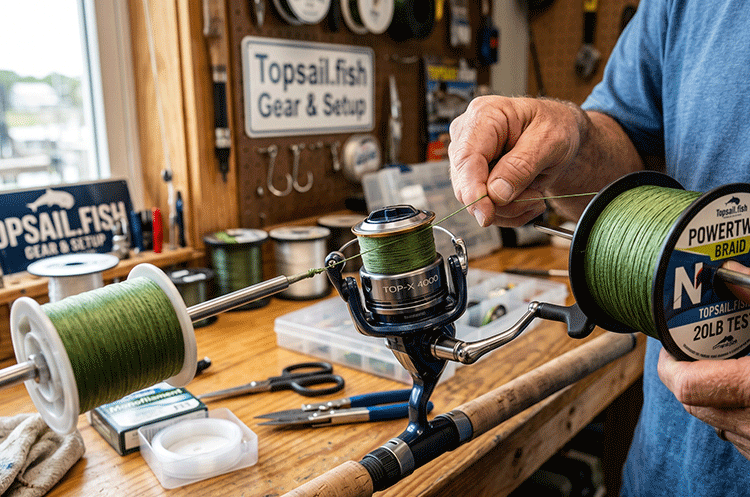
How to Properly Spool Braid on a Spinning Reel
Knowing how to properly spool braid on a spinning reel can make a big difference in casting distance, line control, and overall fishing success. Braided fishing line is popular with inshore anglers because it is strong, thin, sensitive, and casts well. Around Topsail Island, braid is a great choice for targeting speckled trout, red drum, flounder, bluefish, and other coastal species.
However, braid does not behave exactly like monofilament. Because it is slick and has very little stretch, it must be spooled correctly to avoid slipping on the reel, digging into itself, or creating wind knots.
Start With Monofilament Backing
The first step is to add a small amount of monofilament backing to the spinning reel spool. Braid can slip around a bare spool, especially under pressure. A short layer of mono gives the braid something to grip.
Tie the mono to the reel spool using an arbor knot. Reel on enough mono to cover the spool surface, usually about 10 to 20 yards depending on the reel size. You do not need to fill half the reel with backing unless you are trying to save money on braid.
Connect the Braid to the Backing
After the mono backing is on the reel, connect the braid to the backing using a strong line-to-line knot. A double uni knot is a good choice for many anglers because it is simple and reliable. More advanced anglers may prefer an FG knot or Alberto knot.
Trim the tag ends closely so the knot passes smoothly onto the spool. Once connected, you can begin winding the braid onto the spinning reel.
Keep Steady Tension on the Line
Braid should be spooled tightly. Loose braid can dig into itself later when you hook a fish or make a hard cast. Hold the line with steady pressure using a soft cloth, glove, or your fingers while reeling slowly.
Make sure the braid is going onto the reel evenly. Do not rush this process. Smooth, firm pressure is the key to a clean spool.
Do Not Overfill the Spool
Fill the spool until the braid is about 1/8 inch below the spool lip. Overfilling a spinning reel is one of the most common causes of wind knots and loops. Underfilling the spool can reduce casting distance, but overfilling usually creates more problems.
When in doubt, leave a little extra space at the edge of the spool. This is especially helpful when fishing windy conditions around the surf, inlets, or open water near Topsail Island.
Add a Leader
Most anglers using braid on a spinning reel also add a fluorocarbon or monofilament leader. The leader provides abrasion resistance and is less visible to fish. For inshore fishing, a leader between 15 and 30 pounds is common, depending on the target species and structure.
Connect the leader to the braid with a strong knot such as an FG knot, Alberto knot, or double uni knot. A leader length of 18 inches to several feet works well for many local fishing situations.
Final Check Before Fishing
Before making your first cast, check that the braid is tight, even, and not overfilled. Open and close the bail manually instead of turning the reel handle to close it. This helps reduce loose loops that can become knots during the next cast.
Properly spooling braid on a spinning reel gives you better control, longer casts, and fewer frustrating line problems. Whether you are fishing the surf, docks, creeks, or marsh edges around Topsail Island, a correctly spooled reel helps you spend more time fishing and less time untangling line.
Browse our Directory of Topsail Island Fishing Captains to find an inshore specialist for your May trip.
Are you a Topsail Area Captain?
Grow your charter business with an SEO-optimized listing in our directory. For just $12/month, we help you reach more anglers and secure the consistent bookings you need to thrive.

Keep Building Your Topsail Fishing Skills
Want to put this technique to work on your next trip? Use these Topsail.Fish resources to check current fishing activity, match your tactics to the season, review local conditions, and find more step-by-step fishing guides.
🎣 Planning a fishing trip to coastal North Carolina? Before choosing a charter destination, discover why many anglers prefer Topsail Island’s less crowded waters, productive back bays, and outstanding inshore and surf fishing opportunities.
🎣 Planning a trip to the NC coast? Before you book a boat down south, check out why Topsail vs. Wilmington fishing offers a better backwater experience. 🎣

Are you a Topsail Area Captain?
Grow your charter business with an SEO-optimized listing in our directory. For just $12/month, we help you reach more anglers and secure the consistent bookings you need to thrive.